
By Handband Community Team · Schools & Wellbeing
Updated 4 June 2026 · 10 min read
Updated 4 June 2026 · 10 min read
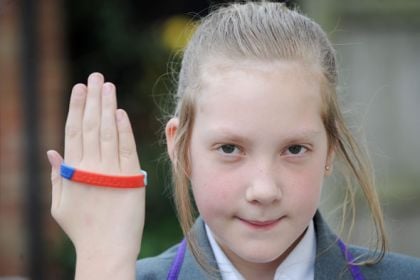
Updated 4 June 2026. Anti-Bullying Week is one of the most impactful awareness moments in the school calendar — but only when schools turn it into something pupils can see, hold and remember. At Trenance Learning Academy in Newquay, children made their own wristbands as part of Anti-Bullying Week, and the simple act of designing, wearing and explaining a band became the lesson itself.
This guide is for primary and secondary schools that want to run a meaningful anti-bullying campaign anchored around wristbands. We cover the activity ideas Trenance used, year-by-year activity planning, professional band options for whole-school rollouts, design tips, links to UK and Australian frameworks, FAQs and a five-step plan you can run next term.
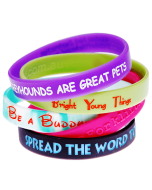
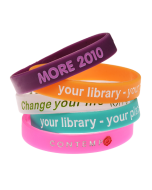
Bulk custom colour wristbands and custom debossed wristbands are the two off-the-shelf options that schools use alongside the make-your-own activities for whole-school impact.
The Trenance Case Study: Children Designing Their Own Anti-Bullying Bands
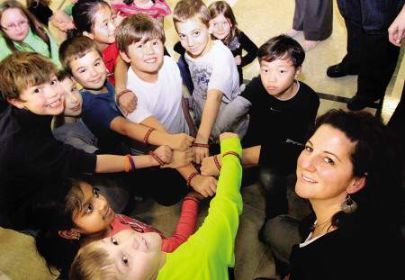
Trenance Learning Academy chose a hands-on approach. Rather than buy bracelets and hand them out, every year group made their own bands based on a topic linked to their curriculum. The bands then became wearable evidence of what the children had learnt about bullying that week.
What each year group did
- Foundation (Reception): Bands made from beads and pipe cleaners — focus on counting and recognising different colours.
- Year 1: Glow-stick bracelets — anchored to a "light and dark" topic, exploring how kindness brings light into someone's day.
- Year 2: Paper-chain bracelets decorated as part of a "celebrations" topic — celebrating friendships.
- Older years: Designed slogans, picked colours and discussed why they matter — leading into a celebration assembly where each class shared their meaning.
Each child went home wearing what they had made, with a story to tell about it. That story-plus-object combination is far stickier than a one-off assembly.
Why Wristbands Work So Well for School Anti-Bullying Campaigns
Wristbands give an anti-bullying message three things most other classroom resources don't: visibility, longevity and personal ownership.
- Visible reminder. Worn on the wrist all day — not stuck in a backpack or on a wall display.
- Conversation-starter. "What's on your band?" opens up a discussion at home that the school can't have for them.
- Whole-school marker. When every child wears one, the message is normalised — bullying becomes the outlier, not the unspoken default.
- Cheap and durable. A bulk run of silicone bands costs as little as $0.40 per child for a whole school.
- Inclusive. Works for every age group from Reception through to Year 12 — the message, not the band, gets older with the child.
Recommended for you
Products related to this article
Hand-picked to go with what you just read.
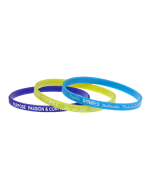
Make-Your-Own vs Professional Wristbands — Which Approach to Use
Both approaches have a place. Many schools combine them — a make-your-own activity during the week to build understanding, plus a professionally printed band that the whole school wears all year as a reminder.
Make-your-own activities
- Beads + pipe cleaners (Reception/Year 1)
- Glow sticks shaped into bracelets
- Friendship bracelets — string, knots, embroidery floss
- Paper chains and decorated card-stock bands
- Older years: design-a-band activity where students sketch their own slogan + colour, then a small batch is printed using their design
Professional wristbands
- Custom colour silicone wristbands — pick the colour, print the slogan
- Custom debossed wristbands with the school's chosen slogan
- Skinny debossed wristbands — subtle daily reminder for secondary students
- Phat 1-inch bands — bold message, premium feel for student leaders

Year-Group Anti-Bullying Activity Plan
An effective anti-bullying week mixes activities by age. Younger pupils need tactile, sensory activities; older pupils need to discuss, debate and design.
Reception & Year 1 (ages 4-6)
- Bead-and-pipe-cleaner bracelet making, with each bead representing a friend in the class
- "Light up someone's day" lesson with glow-stick bands
- Storytime with picture books about kindness
Year 2 & Year 3 (ages 6-8)
- Paper-chain friendship bracelets — each link names one classmate
- Discussion of feelings using colour-themed wristbands
- Role-play short scenarios on standing up for a friend
Year 4-6 (ages 8-11)
- Design-a-band activity — pupils sketch slogans and colours, the best is printed
- Class survey on what kindness looks like at lunch
- Year-buddy program — older pupils mentor younger ones, wristband as marker
Year 7-12 (secondary)
- Anti-bullying campaign run by student leadership team — design, order, distribute
- Cyber-bullying awareness with social media examples
- Restorative-circle workshops paired with wristband distribution
Five-Step Anti-Bullying Wristband Rollout for Schools
Step 1: Lock the dates and theme
In the UK, Anti-Bullying Week runs in mid-November and is coordinated by the Anti-Bullying Alliance. In Australia, the National Day of Action against Bullying and Violence runs in August. Order your bands 3-4 weeks before the date to allow for shipping and distribution.
Step 2: Pick a slogan
Short, memorable, positive. Examples: "Be Kind", "Stand Up", "We Are One", "Make a Noise", "Together Strong". Avoid negative framing ("No Bullying") in favour of positive action ("Be Kind").
Step 3: Choose your band style and colour
Purple is the international anti-bullying colour. Blue, green and yellow are also common. Use bulk custom colour wristbands for the whole-school rollout, or custom debossed for a premium feel.
Step 4: Plan classroom activities
Map activities by year group (see plan above). Distribute the band at the end of each activity, paired with the day's lesson takeaway.
Step 5: Reinforce after the week
The biggest mistake is treating Anti-Bullying Week as a one-off. Pupils should keep wearing the bands all year. Refer back to the week in PSHE/wellbeing sessions throughout the term.
What the Research Says About School Anti-Bullying Programs
Independent research consistently shows that school-wide anti-bullying programs work best when they are visible, repeated and involve the whole school community — not just one assembly.
- Olweus Bullying Prevention Program (Norway): Schools using the program reported a 20-70% reduction in bullying incidents over 2 years.
- UK Anti-Bullying Alliance: Anti-Bullying Week 2024 reached over 80% of UK schools, with whole-school visual campaigns showing the strongest impact.
- Australian Federal Bullying Statistics: One in four Australian students aged 4-9 report being bullied weekly — visible whole-school programs reduce reports.
- Cochrane Review (2019): Comprehensive school-wide programs (not single events) had the strongest reduction in both bullying behaviour and victimisation.
The implication is clear — a wristband is not the program; it's the visible marker of an ongoing program. Pair the band with year-round PSHE/wellbeing content.
Funding Your School's Anti-Bullying Program
Most schools have a small PSHE/wellbeing budget that covers wristbands. If yours doesn't, here are alternative funding routes.
- Parent fundraiser: Sell premium phat 1-inch bands at parents' evening for $5; the surplus funds bulk standard bands for every child.
- Local sponsor: Approach a local business — many will fund a whole-school anti-bullying rollout for $500-$1,500 with their logo on the inside of the band.
- Council / community grant: Local councils often have small wellbeing/community grants of $250-$2,000 specifically for school programs.
- PTA/PTFA contribution: Many parent associations earmark funds for wellbeing weeks — propose anti-bullying as the focus.
Cyber-Bullying — The Hidden Challenge for Older Students
For secondary students, the most prevalent form of bullying is now online. Wristbands have a role to play here too — but only if paired with explicit cyber-bullying education.
What to cover
- What cyber-bullying looks like (group chat exclusion, image sharing, hidden posts)
- How to report (school, parent, eSafety Commissioner in Australia, Childline in UK)
- Privacy and data settings on Snapchat, TikTok, Instagram, Discord
- Being an active bystander online vs in person
- Using the wristband as a visible commitment — "I see it, I report it"
Common Mistakes Schools Make
- One assembly, one week, done. Anti-bullying needs year-round reinforcement, not a single date.
- Negative slogans. "Bullies Suck" can become a target — positive framing ("Be Kind") works better.
- No follow-up. If wristbands are handed out without ongoing reference in PSHE, students forget.
- Excluding parents. Send a take-home note explaining the band so the conversation continues at home.
- Ignoring cyber-bullying. For secondary, online bullying is now the primary form — wristbands without online education miss the issue.
The Handband Promise
Handband supplies thousands of primary and secondary schools across Australia, the UK and beyond. Every order is colour-matched to your school's branding, every design goes through a digital proof, and we can quote bulk-school orders within one business day. If you need bands for Anti-Bullying Week, kindness campaigns or daily wellbeing reminders, talk to our team for sample bands and a quick quote.
References & Further Reading
- Anti-Bullying Alliance (UK) — Anti-Bullying Week School Toolkit 2024.
- Bullying. No Way! (Australia) — National Centre Against Bullying resources for schools.
- eSafety Commissioner — Reporting cyber-bullying in Australia.
- Cochrane Database of Systematic Reviews (2019) — School-based anti-bullying interventions.
- Olweus, D. — Bullying at School: What We Know and What We Can Do. Wiley-Blackwell.
Frequently Asked Questions
What date is Anti-Bullying Week?
In the UK, Anti-Bullying Week runs in mid-November and is coordinated by the Anti-Bullying Alliance. In Australia, the National Day of Action against Bullying and Violence runs on the third Friday of August each year.
What colour wristband is best for anti-bullying campaigns?
Purple is the international anti-bullying colour and the colour most associated with Anti-Bullying Week. Blue, green and yellow are also commonly used, and many schools choose their own school colours for whole-school campaigns.
How much does a whole-school anti-bullying wristband campaign cost?
For a school of 300 pupils, expect $120-$200 for bulk custom colour silicone wristbands. Smaller schools (under 100) typically pay $0.80-$1.50 per band. Bulk discounts kick in at 500+ bands — useful for multi-school district campaigns.
What slogan should we put on the wristband?
Short, positive and memorable. Examples: "Be Kind", "Stand Up", "We Are One", "Make a Noise", "Together Strong". Avoid negative framing — positive action slogans land better with children.
Are silicone wristbands safe for primary school children?
Yes — high-grade silicone wristbands are non-toxic, hypoallergenic and free from latex. Always check the supplier's product safety statement and look for compliance with toy safety standards for children under 8.
How long does it take to receive a bulk school wristband order?
Standard turnaround from design approval is 7-14 business days. Rush orders are possible for an extra fee. Order 3-4 weeks ahead of your anti-bullying week to allow for delivery and pre-distribution to teachers.
What follow-up activities work after Anti-Bullying Week?
The best results come from year-round reinforcement: monthly PSHE/wellbeing sessions referring back to the band, restorative circles, year-buddy programs, and a refresh of the band each new school year so the message stays current with new arrivals.

Written by
Founder, Handband
Founder of Handband; specialist in custom wristbands and promotional products for events, schools, charities, and brands.
← Previous
Storm Relief Wristbands: How Schools and Clubs Mobilise
Next →
How Sports Teams Run Disaster Relief Fundraisers (Case Study)
Comment(s)