By Handband Community Team · Community & Disaster Relief
Updated 5 June 2026 · 10 min read
Updated 5 June 2026 · 10 min read
Updated 5 June 2026. When Hurricane Sandy hit the New Jersey shore in 2012, students at Auten Road Intermediate School didn't sit on their hands. They launched a "Proud to be from NJ" wristband campaign that raised funds for multiple Sandy-relief non-profits — and showed every other school what a small team can pull off in days.
This guide is for schools, sports clubs and community groups that want a proven, fast playbook to mobilise after a hurricane, flood, bushfire or earthquake. Below we walk through what worked in the NJ Pride campaign, the standard 14-day mobilisation plan, design tips, charity partnership templates and a list of common mistakes to avoid.
Bulk custom colour wristbands are the workhorse of storm-relief campaigns — cheap at scale, fast to print, and instantly recognisable in school colours.
The NJ Pride Case Study: Students Mobilising After Sandy
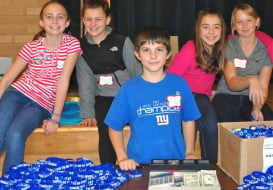
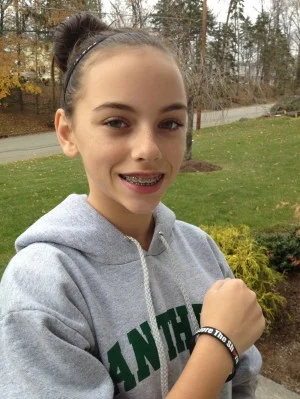
Several school clubs at Auten Road Intermediate School launched the "Proud to be from NJ" wristband campaign in the weeks after Hurricane Sandy devastated the Jersey shore. The bright blue silicone bands carried a message that doubled as state-pride and disaster-relief in a single object.
What the campaign got right
- Multi-club coordination. Several clubs at the school worked together, not in competition — multiplied the sales reach.
- State-pride framing. "Proud to be from NJ" tapped into local identity, attracting buyers beyond the school community.
- Multiple recipient non-profits. Rather than picking one charity, the campaign split funds across several Sandy-relief organisations — broadened the appeal.
- Bright, unmistakable colour. The blue colour stood out on every wrist, in every hallway.
- Fast launch. The campaign rolled out within weeks of the disaster — when emotional engagement was at its highest.
Why Wristbands Are the Default Storm-Relief Fundraising Tool
Wristbands have been the go-to fundraising item for natural-disaster appeals since the original Livestrong campaign. After every major disaster — Hurricane Katrina, Sandy, Harvey, Black Summer bushfires, Cyclone Gabrielle, Türkiye-Syria earthquake — community wristband campaigns have raised meaningful funds.
- Speed. Bulk silicone bands ship within 7-14 days, fast enough to catch the news-cycle peak.
- Cost. 16-35 cents per band at bulk pricing means a $3-$5 sell price yields 85-95% margin for the cause.
- Tangibility. Donors get something physical to wear — easier ask than a straight donation.
- Ongoing visibility. Each band keeps the cause visible months after the news cycle has moved on.
- Multi-channel sale. Sells at school, online, at games, in cafes — anywhere a supporter can drop a few dollars.
Recommended for you
Products related to this article
Hand-picked to go with what you just read.
The 14-Day Storm Relief Mobilisation Plan
Speed matters more than perfection. Most donor attention is captured in the first 14 days after a disaster. After that, focus shifts elsewhere even though recovery often takes years.
Day 0-2: Decide and Coordinate
- Form a small action team (2-5 people across club/school)
- Choose the charity partner (Red Cross, GIVIT, local relief fund) and contact them
- Lock the slogan, colour and design direction
Day 2-4: Order Bands
- Order 500-2,000 bulk custom colour wristbands based on expected reach
- Confirm digital proof, approve design
- Set up payment channel (Stripe link, Square, online checkout)
Day 5-7: Announce
- Email school/club community with the story and "buy here" link
- Post to social media — short story video, payment link in bio
- Personal asks — committee members text 20 people each
Day 7-10: Bands Arrive, Launch In-Person Sales
- Set up a sales table at school events, games, school gate
- Ask local cafes to stock bands at the counter
- Local media outreach (radio, newspaper, community Facebook)
Day 10-14: Peak Push, Close the Loop
- Run a "we're 80% of the way" pulse social post
- Final personal asks
- Transfer funds to charity partner with photo proof
- Post "we raised $X" thank-you to donors
Step 1: Pick the Right Charity Partner
Donor trust hinges on the charity name on the campaign. A well-known partner converts 40-60% better than an unfamiliar local fund.
Top storm-relief charity partners
- Australian Red Cross — leads major bushfire, flood and cyclone appeals
- GIVIT — direct material aid to disaster-affected communities
- Salvation Army Australia — emergency relief and recovery support
- Foodbank Australia — food relief during and after emergencies
- American Red Cross — gold-standard US disaster relief partner
- Local emergency relief fund — state government funds usually surface within 48 hours of a major event
How to approach them
Email or phone the charity's community-fundraising team. State the cause, the school/club, expected number of bands and the planned campaign window. Ask for permission to use their name and request to receive a logo/PDF approval letter so you can prove the partnership to donors.
Step 2: Choose a Slogan and Colour That Captures the Moment
The NJ Pride campaign worked because "Proud to be from NJ" was location-specific, emotion-led and short enough to fit on a band. Vague slogans like "Help Sandy Victims" don't tap into identity the same way.
Slogan formulas that work
- Local pride — "Proud to be from NJ", "Sydney Strong", "Lismore Together"
- Action verb — "Restore the Shore", "Rebuild Hawke's Bay", "Stand With Lismore"
- Hope-focused — "Stronger than Sandy", "Together We Rise", "Hope for Hawke's Bay"
- Solidarity — "One Northland", "We Are NSW", "Aussie Strong"
Colour cues
- Blue — flood and water emergencies
- Orange/red — fire/hurricane emergencies
- Green — environmental restoration
- Yellow — hope and recovery
- State/region colours — for local pride campaigns (NJ blue/yellow, NSW blue, VIC navy)
Step 3: Multi-Channel Sales Push
The biggest predictor of campaign size is how many channels you activate at once. NJ Pride's success came from running every channel simultaneously.
- In school — table at the front office, sold at sport day and assemblies
- Online — Stripe Payment Link or Square Online (live in an hour)
- Social media — every player/student posts a 30-second video, tags 5 friends, includes payment link
- Local press — local radio and newspapers love community fundraisers — pitch the story
- Partner businesses — local cafe, salon, gym agrees to stock bands at the counter
- Game-day / event sales — at every home match or community event
Step 4: Track and Report
Donor trust is built through transparency. Track every dollar and report back within 14 days of campaign close.
- Run a single shared spreadsheet — bands ordered, bands sold, revenue collected, fees, net donation
- Photograph the bank transfer to the charity (with relevant numbers redacted)
- Request a thank-you letter from the charity
- Post a "we raised $X for [cause]" update on every channel that promoted the campaign
- Archive the campaign on the school/club website for credibility on the next one
Other Famous Storm Relief Wristband Campaigns
- Hurricane Katrina (2005) — multiple US school campaigns raised over $10 million via wristbands and similar items.
- Hurricane Sandy (2012-2013) — Stronger than Sandy, Restore the Shore, Proud to be from NJ — dozens of campaigns raising millions combined.
- Hurricane Harvey (2017) — Houston Texans players coordinated wristband campaigns alongside the J.J. Watt $41M fund.
- Australian Black Summer (2020) — green-and-gold wristbands sold by sports clubs nationwide for Red Cross bushfire fund.
- Cyclone Gabrielle (2023) — Hawke's Bay community sports clubs ran a coordinated wristband appeal raising over NZ$50,000.
- Türkiye-Syria Earthquake (2023) — European football clubs sold awareness bands at home matches for international relief funds.
Common Mistakes in Storm Relief Wristband Campaigns
- Waiting too long. The first 14 days drive 70% of donor attention. Start day 1.
- No named partner. Without a recognised charity attached, conversion rates drop sharply.
- Generic slogan. "Help Sandy" is forgettable; "Proud to be from NJ" is not. Be local, specific or hope-focused.
- Single channel. Social only — or only at the school gate — limits sales. Run every channel at once.
- No close-out report. Donors who don't see "$X raised" don't give next time.
The Handband Promise
Handband ships emergency-fundraiser wristbands to schools, sports teams and community groups worldwide. We can quote, design, manufacture and ship a 500-5,000 band run within 7-14 days — fast enough to launch within two weeks of a disaster, when donor attention is still high. Our team handles colour-matching, digital proofs and rush options. Get in touch the day you decide to launch — we'll move fast with you.
References & Further Reading
- Australian Red Cross — Community Fundraising Toolkit (2024).
- American Red Cross — Hurricane Sandy 10-Year Look Back.
- GIVIT — How to support disaster-affected communities effectively.
- Australian Institute for Disaster Resilience — Community-led recovery resources.
- Charity Navigator — Disaster relief giving best practice guidelines.
Frequently Asked Questions
How fast can a school launch a storm-relief wristband fundraiser?
From decision to first sale, 7-14 days is realistic. Bands ship in 7-10 business days from order, and online sales can be live within hours of announcement. Speed matters because donor attention drops sharply after the first two weeks.
How much can a school storm-relief campaign realistically raise?
Small schools (300-500 pupils) typically clear $1,500-$5,000. Larger schools with strong community engagement can hit $10,000-$25,000. Multi-school district campaigns have raised $100,000+.
What's the best wristband design for a storm relief campaign?
Combine a local-pride angle (state or town name), a strong colour matching the cause (blue for floods, orange/red for fire, green for recovery) and a short positive slogan. Avoid generic "Help Victims" language — be specific to the place.
Do we need permission from the affected community?
For most storm-relief fundraisers using generic slogans (e.g. "Sydney Strong"), no formal permission is needed. If you use a specific community name or logo, get sign-off from a local representative or council. Always coordinate with the charity receiving the funds.
How do we handle the money safely?
Best practice: route funds directly through the charity partner. They handle receipts, tax-deductibility and reporting. If you bank the money first, transfer to the charity within 30 days and keep transparent records. Consult your school finance office before launching.
Can we sell to people outside our community?
Yes. A Stripe Payment Link or Square Online checkout means anyone can buy from anywhere. Pair with a small flat shipping fee or absorb the cost in the band price. Many NJ Pride buyers were former residents living interstate.
What if our small campaign feels insignificant?
It isn't. A $2,000 community fundraiser delivers tangible aid — typically meal kits for 100 affected families, or grocery cards for 200. Charities prefer 50 community fundraisers raising $2,000 each over one big campaign promising $100,000.

Written by
Founder, Handband
Founder of Handband; specialist in custom wristbands and promotional products for events, schools, charities, and brands.
← Previous
School Inclusion Wristbands & Spread the Word Campaigns
Next →
Anti-Bullying Wristbands for Schools: A Practical Guide
Comment(s)