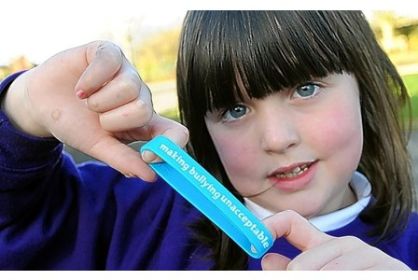
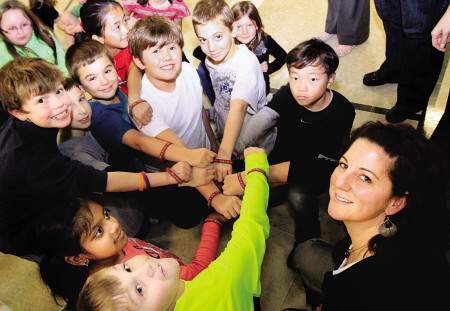
Anti-bullying wristbands give schools a simple, wearable tool for building a kindness culture that lasts beyond a one-off assembly. Instead of asking students to remember a poster on the wall, the band rides on their wrist every minute of the school day — in the playground, at lunch, on the school bus, on the phone in the evening. This guide walks through how anti-bullying wristbands work in real Australian schools, what makes a kindness campaign succeed, and how primary and secondary teachers turn a $3 silicone band into a year-long cultural shift. Handband supplies custom anti-bullying wristbands to schools across Australia, partnering with school welfare coordinators, peer-support programs, and student leadership councils. The patterns here come from real campaigns that reduced reported bullying incidents and built peer-led kindness movements.
Why Anti-Bullying Wristbands Work in Schools
- Wearable commitment. Putting on a band is a public, daily act of choosing kindness. The student becomes their own reminder.
- Peer signalling. A student wearing an anti-bullying band tells a struggling classmate "I’m safe to talk to" without needing a word.
- Visible school-wide standard. When most students wear the band, bullying becomes the visible minority behaviour — a powerful social-norm shift.
- Reinforces specific programs. Bands paired with school-wide kindness curriculum (Bullying. No Way!, Friendly Schools Plus) extend the program’s reach past classroom hours.
- Low cost, high engagement. A school can run a whole-year anti-bullying band campaign for under $1,500 — cheaper than most one-off speaker fees and reaching every student every day.
Designing an Effective Anti-Bullying Wristband
Use blue as the universal colour
Blue is the international anti-bullying colour, recognised globally during National Day of Action Against Bullying (Australia, March) and Anti-Bullying Week (UK, November). A blue band signals the cause without needing explanation.
Short, action-focused message
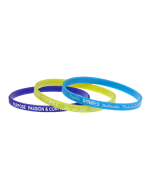
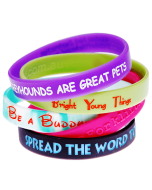
"Be a Buddy Not a Bully", "Stand Up Speak Up", "Kindness Matters", "Friends Not Fights". Three to five words work best — long sentences become invisible after the first week of wear.
Pair with the school name or motto
School name + anti-bullying message turns the band into a piece of school identity. Students wear it with the same pride they wear school colours.
Add a peer-support hashtag
Many schools pair the band with a campaign hashtag (e.g. #KindnessAtOurSchool, #UpstanderNotBystander) that students post during awareness weeks. Bands become a social media catalyst.
Recommended for you
Products related to this article
Hand-picked to go with what you just read.
Running an Anti-Bullying Campaign That Lasts
Launch on National Day of Action (mid-March)
Australia’s National Day of Action Against Bullying happens in mid-March each year. Schools that launch their wristband campaign on this day pick up natural curriculum and media interest.
Distribute through peer-support leaders
Year 11/12 peer-support mentors handing out bands to younger students embeds the band in the existing peer-support program. Students value getting it from a senior they look up to.
Tie to behaviour-specific actions
Pair the band with concrete student actions: "wear this if you commit to inviting one kid sitting alone to join your lunch group this week". The band becomes evidence of the action, not just a statement.
Refresh annually with new colours
Cycle the band design each year so existing students keep wearing the cause while new cohorts get a fresh band that’s theirs. Anti-bullying becomes part of school heritage.
Working With Existing Anti-Bullying Programs
Bullying. No Way!
Australia’s national anti-bullying initiative provides free curriculum materials. Schools partner the program with branded wristbands to extend the reach beyond classroom hours.
Friendly Schools Plus
Curtin University’s evidence-based whole-school anti-bullying framework includes parent and student engagement components — wristbands fit naturally into the student-engagement strand.
Headspace and Beyond Blue
Mental health support agencies often co-brand school anti-bullying campaigns. A wristband linked to crisis-support contact details extends safety net beyond school hours.
School peer-support programs
Peer Support Australia provides school programs where older students mentor younger ones. Anti-bullying bands are a natural extension — the mentor gives the band, reinforcing the program’s aims.
Frequently Asked Questions
Do anti-bullying wristbands actually reduce bullying?
Yes when paired with curriculum-based programs. A wristband alone is a symbol; combined with peer-support training, classroom curriculum (like Bullying. No Way! or Friendly Schools Plus) and clear consequence structures, the band reinforces and extends program impact. Schools running combined approaches commonly report 20-40% reductions in reported bullying incidents over 12 months.
What's the best colour for an anti-bullying wristband?
Blue is the international anti-bullying colour, recognised globally during National Day of Action Against Bullying (Australia, March) and Anti-Bullying Week (UK, November). For LGBTQI+ inclusive anti-bullying programs, purple is common. School colours work well when the campaign is specifically school-branded rather than tied to a wider awareness day.
How many wristbands do we need for a whole-school campaign?
Order at least one band per enrolled student plus 20% spare for new enrolments, replacement and visitors. A 600-student school typically orders 750 bands. Bulk pricing kicks in around 250 units, making whole-school campaigns affordable on a typical PBL (Positive Behaviour for Learning) budget.
Can primary schools run anti-bullying wristband campaigns?
Yes — and they often produce the strongest results. Primary-school students engage with wristbands more enthusiastically than secondary, and primary teachers can tie the band directly to specific kindness behaviours during class. Many primary schools run a band-distribution event during Anti-Bullying Week with parent involvement.
Where do the funds raised from band sales typically go?
Common recipients include the school's pastoral care/welfare program budget, peer-support mentor training costs, guest speaker fees for kindness workshops, or local mental-health charities like Headspace or Kids Helpline. Schools often direct 50% to immediate school program costs and 50% to a chosen mental-health charity.

Written by
Founder, Handband
Founder of Handband; specialist in custom wristbands and promotional products for events, schools, charities, and brands.
← Previous
Road Safety Memorial Wristbands: Honouring Crash Victims (2026)
Next →
School Holiday Activities for Kids: 30+ Ideas Aussie Parents Use (2026)
Comment(s)