Across our 2025-2026 customer-order data, the single largest segment is something we don’t market hard: kids. Specifically, parents, primary schools, and youth groups ordering kids silicone wristbands and children fundraising bracelets for everything from year-level identity to medical-alert safety to school sports wristbands. The actual reasons handbands help kids are simpler and more practical than most parents expect.
This guide walks through the seven concrete ways handbands help kids in 2026 — school fundraising wristbands, anti-bullying kids wristband campaigns, kids cause bracelets for community drives, school identity wristbands for cohort cohesion, kid medical alert wristbands, learning aids, and emotion-regulation bands — with the right Handband product matched to each.
1. School Fundraising Wristbands
The most common kid wristband category. Schools running fundraisers for camps, library upgrades, sports gear, or charity drives use retail wristbands sold at canteen and parent-night. The maths typically works out to ,200-,000 net per 4-6 week campaign at a 400-student school.
- Best wristband: Custom debossed silicone with school name + year, or custom-colour bulk if cost-per-piece is critical.
- Kid acceptance rate: Very high — fits a kid’s lunch money, parents barely notice.
- Read more: Our school fundraising overview covers the full campaign template.
2. Anti-Bullying Kids Wristband Campaigns
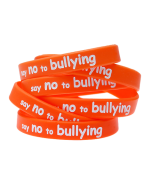
Australia’s National Day of Action against Bullying and Violence (third Friday in March each year) is the biggest single moment for anti-bullying kids wristband orders. Schools also run year-round in-class campaigns using black-and-white striped or orange wristbands with a single phrase like “BE KIND”.
- Best wristband: Say No to Bullying ready-stock orange bands, or custom debossed with the school’s anti-bullying slogan.
- Kid impact: The same-band-on-every-wrist effect normalises “not bullying” as the visible default.
Recommended for you
Products related to this article
Hand-picked to go with what you just read.
3. Children Awareness Wristbands & Cause Bracelets
Kid-led campaigns for sick classmates, family medical bills, or community causes. The peer-driven element — another kid sells you the band — makes children fundraising bracelets disproportionately effective compared to adult-led drives.
See our sixth-grader cancer fundraiser case study for a real campaign that raised k.
4. School Sports Wristbands & Team Identity
Sports clubs, year-level cohorts, debating teams — any kid group with a shared identity. The same wristband on 25 wrists creates the “we’re a team” effect that builds cohesion through the season. Engraved with team name + year for that year’s memorabilia value.
- Best wristband: Custom debossed silicone, team colour, with cohort + year.
- Cost: ~.50- per band at 25-100 quantity.
- Read more: Our installing pride guide for the team-identity rituals.
5. Kid Medical Alert Wristband
An underrated category. Kids with allergies, asthma, diabetes, epilepsy or other conditions wear a debossed silicone wristband engraved with their condition, parent phone, and any critical info. Cheaper, more comfortable, and easier to replace than metal medical-alert bracelets — especially for kids who’d otherwise refuse to wear identification.
- Best wristband: Custom debossed silicone in a high-contrast colour (red for allergies, yellow for caution).
- Engraving: Condition + parent phone + child first name. Skip surnames to save characters.
- Note: For full medical-alert features, our sister brand Mediband offers more rigorous medical-grade alert bracelets.
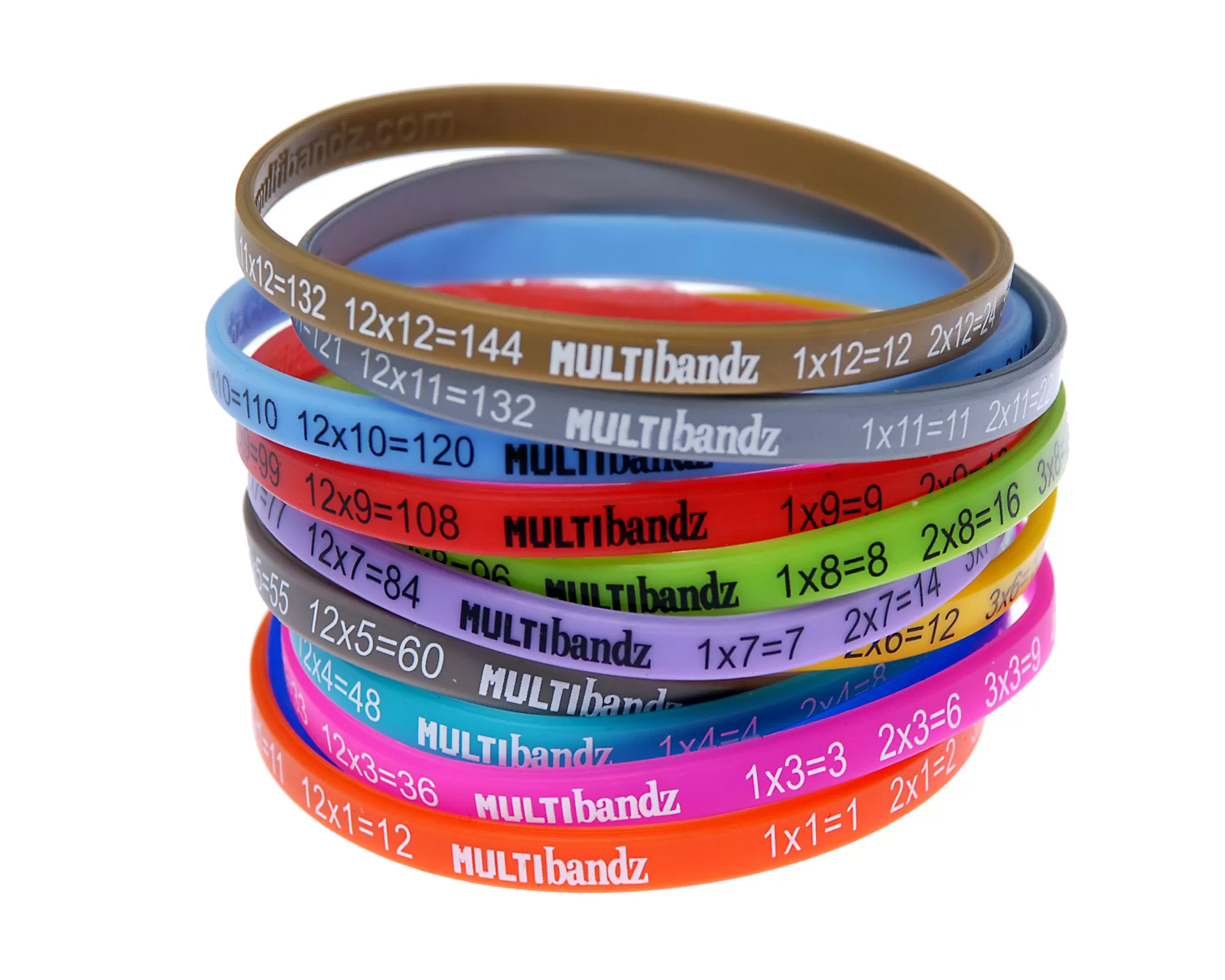
6. Education & Learning Aids (Multibandz, Dividerz, Facts To)
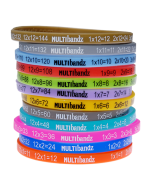
Worn for hours daily, educational wristbands deliver hundreds of micro-retrieval reps without parent supervision. Most-cited use: primary-school maths revision (times tables, division). Also used for state capitals, periodic-table elements, and foreign-language vocabulary.
- Best wristband: Multibandz times-tables (ages 7-11), Dividerz (ages 9-12), Facts To (any subject)
- Cognitive science: Distributed retrieval beats blocked study (Roediger & Karpicke 2006).
- Read more: Our teaching children well guide covers the full evidence base.
7. Emotion Bracelets for Mental-Health & Communication
The Emotion Bracelet is an under-appreciated category. Kids wear a colour-coded band that helps them name how they feel and signal it to teachers or parents. Useful for younger children still building emotional vocabulary, and for kids with autism or anxiety who need a non-verbal way to communicate state.
Browse the Schools category for the full kids-education product range with bulk discounts.
Why Handbands Specifically Help Kids (Not Just Adults)
Three things make wristbands disproportionately effective for kids vs adults:
- Sensory-friendly. Soft silicone is comfortable for sensory-sensitive kids; metal bracelets are often refused.
- economics. Fits a kid’s lunch money. Doesn’t require parental gatekeeping on payment.
- Visible peer effect. Kids notice and adopt what classmates wear faster than adults.
Common Parent Mistakes to Avoid
- Buying the wrong size. Skinny debossed (small kids), regular debossed (most primary), Phat (older kids/teens).
- Engraving full name. First name only for safety; full name + address is privacy risk.
- Forgetting the parent phone. A medical or safety wristband without contact info is half-useless.
- Ordering one band. Kids lose them. Order 3-5 spares per child.
See our keep-children-safe handband piece for the full safety-engraving guide.
Closing Thought
The reason handbands help kids isn’t marketing — it’s that the format genuinely fits how kids interact with objects. Cheap enough they don’t worry about losing them. Soft enough they actually wear them. Visible enough that classmates notice. Whether you’re a parent ordering for a sick child, a school running an awareness drive, or a teacher trying to teach times tables, silicone wristbands punch far above their weight in the kid-centric use cases above.
Frequently Asked Questions
What size silicone wristband is right for kids?
Skinny debossed for ages 4-7 (and small wrists), standard custom debossed for ages 7-11, Phat or full-width for ages 12+. Always check a sample band before bulk ordering — wrist sizes vary widely between kids.
Can kids safely wear a medical alert silicone wristband?
Yes — silicone is safer than metal for kids who climb, play sports, and snag things. Engrave first name, condition, parent phone. Skip surnames and addresses for privacy. For kids with severe conditions (anaphylaxis, seizures), consider both a silicone everyday band AND a metal medical-alert bracelet for redundancy.
How much do school fundraising wristbands typically raise?
,200-,000 net per 4-6 week campaign at a 400-student primary school. Larger schools or multi-band campaigns reach ,000-,000. The variable is sell-through rate (target 80%+) and whether parent-night and sports days are leveraged.
Are educational wristbands like Multibandz actually effective?
Yes — for fluency, not for first-time learning. Multibandz consolidate facts the child has already encountered (times tables, division, capitals). They don't teach the underlying concept, but they deliver enough micro-rep practice to lift fluency 2-3x faster than parent-led flashcards alone.
How many kids wristbands should a school order?
For a fundraising campaign: enrollment × 1.2 (allows 20% buffer for parents, teachers, repeat buyers). For team identity: team size + 20%. For class learning aids (Multibandz): 1 pack per child + 5 spares per class. Quantity discounts kick in around 100 bands.

Written by
Founder, Handband
Founder of Handband; specialist in custom wristbands and promotional products for events, schools, charities, and brands.
← Previous
How Do Others Use Handbands? The 6 Most Common Silicone Wristband Uses (2026 Customer Data)
Next →
University Memorial Wristbands — Tribute Fundraisers (2026)
Comment(s)