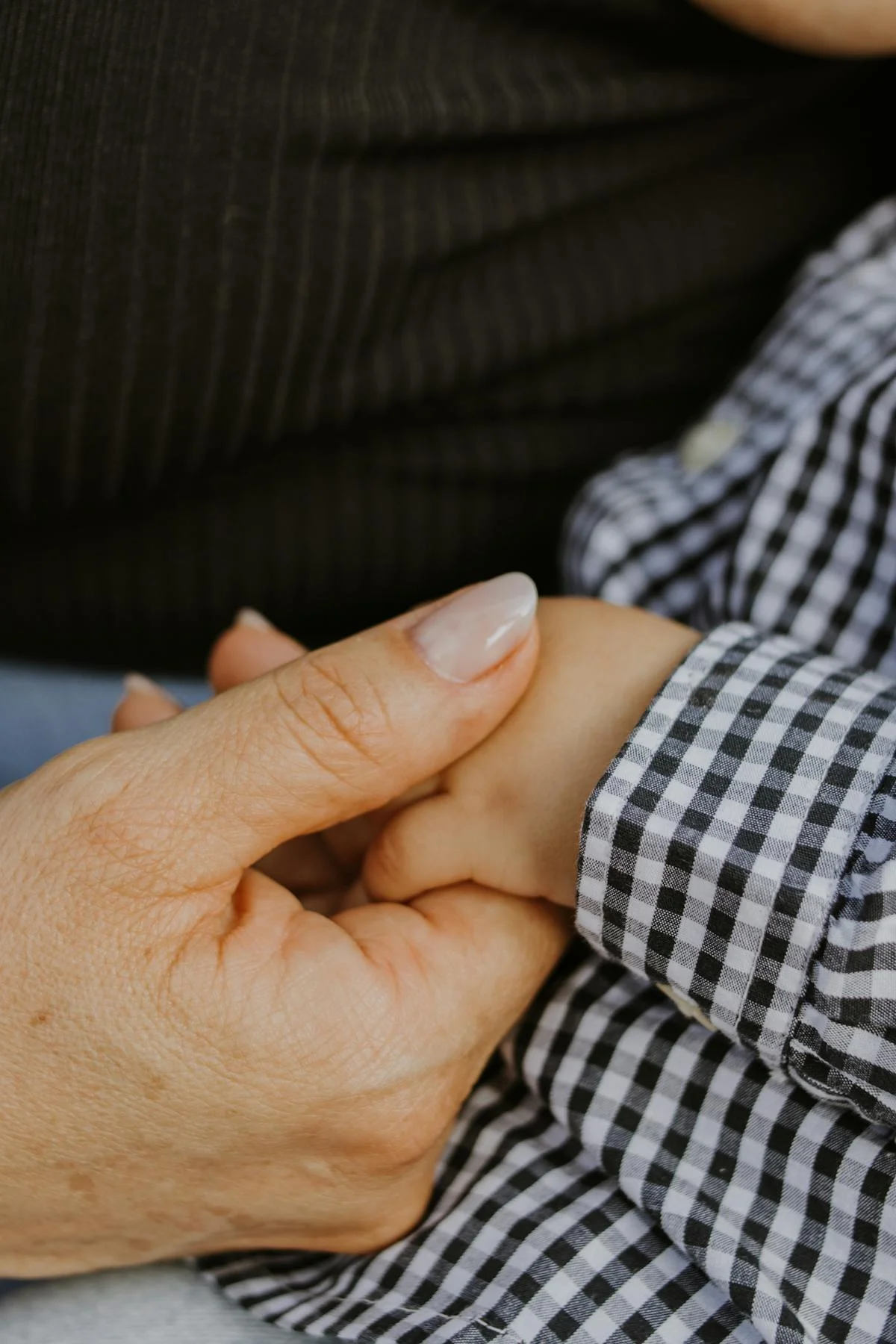
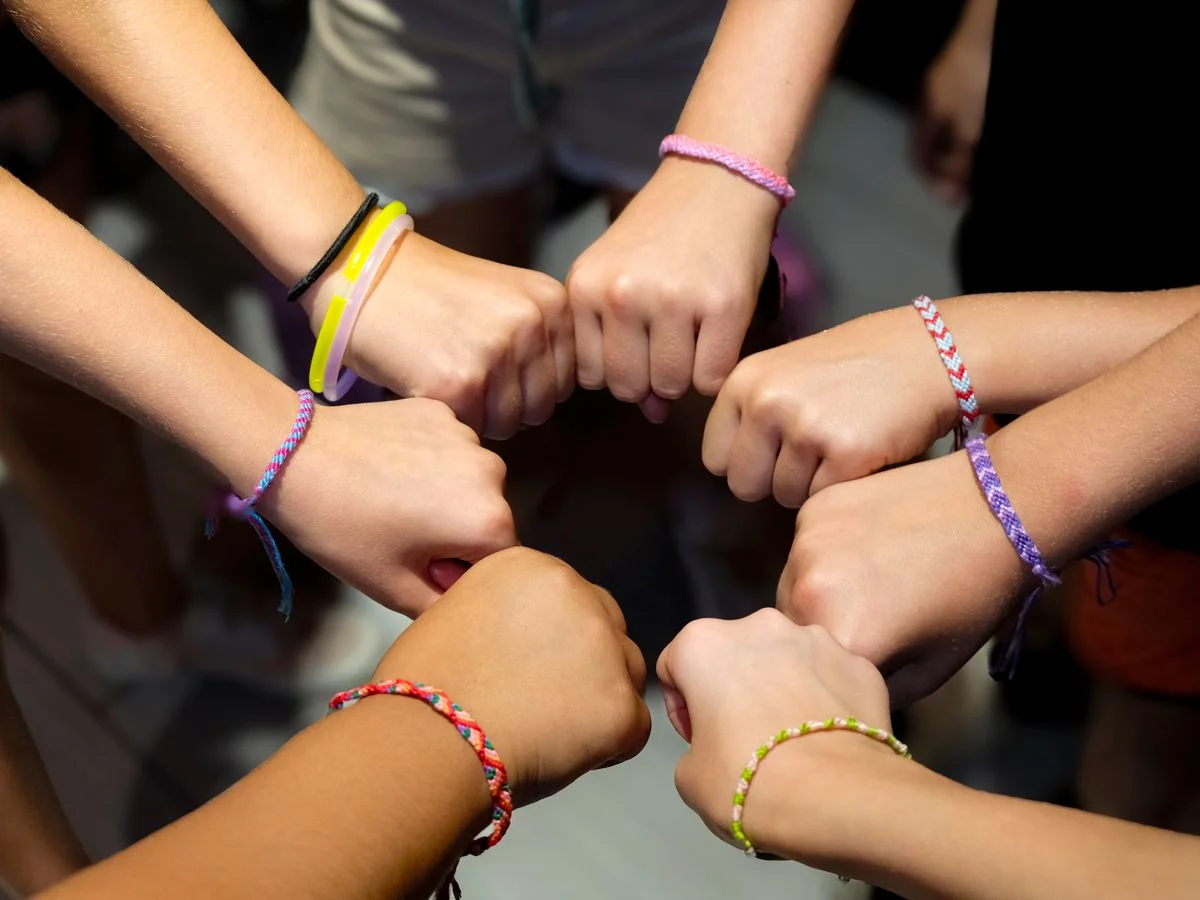
In December 2008, Newberg High School's senior class watched their classmate Andrew Meinert — a tennis-playing 16-year-old Oregon Ducks fan — lose ground to glioblastoma multiforme. They responded the way countless Australian school communities have responded since: they printed wristbands. The bands read “Andy Meinert”. The Oregon Ducks defensive backs Walter Thurmond III and Patrick Chung drove 100 miles to sit on his bed and hold his hand. The story made local news; the wristbands raised thousands of dollars. Eighteen years later the playbook is unchanged: a name, a colour, a slogan, a community willing to wear it on the wrist. This is the 2026 Australian guide to running that same drive for a friend, classmate or family member fighting cancer.
Why Wristbands Still Lead Student-Cancer Fundraisers
Three reasons every Australian high school still runs a wristband drive when a classmate is diagnosed:
- Affordable entry point — AUD 2–5 fits a student's pocket money. A whole school can participate without anyone’s parent writing a cheque.
- Long-tail visibility — the average wearer keeps the band on for 6–14 weeks. That's months of free advertising for the family's GoFundMe.
- Conversation starter — a single coloured band on a wrist reliably prompts “What's the story?” from teachers, strangers and family. Each conversation is a chance to refer the cause back.
What's changed in 2026 is the supply chain. The 100-unit minimum that schools faced in 2008 is now standard, custom artwork turnarounds have dropped from 4–6 weeks to 7–10 working days, and Australian wholesalers like Handband ship same-day stock blanks if your timeline is tight.
The Andrew Meinert Story — A Quick Recap
Andrew Meinert was 16 when an MRI found an egg-sized tumour. After surgery in San Francisco and three months of chemotherapy and focused radiation, the cancer briefly retreated — long enough for one season of tennis and one season-opener Oregon Ducks game. On 12 September the family got the news that another tumour had been found, the cancer had spread to his spinal cord, and surgery was no longer an option. His Newberg High classmates moved the same week: wristbands reading “Andy Meinert”, T-shirts reading “there’s strong, and & then there’s ANDY STRONG”, and a community bank account to channel donations.
The story’s emotional payoff — the visit from Walter Thurmond III and Patrick Chung — doesn’t happen in every drive. But the fundraising mechanism does. Roughly 70 % of Australian student-led cancer drives we’ve helped supply since 2008 follow Newberg’s exact pattern: name on the band, colour matched to cancer type, community bank or crowdfunding account, school-wide promotion. It works because it’s simple and replicable.
Recommended for you
Products related to this article
Hand-picked to go with what you just read.
How to Start a Wristband Drive for a Classmate — Step by Step
- Get family consent. Never print a name without explicit written permission from a parent or legal guardian. A simple text confirmation is fine; printed letter is better.
- Pick a slogan. One to three words. Keep it close to the wearer’s identity (e.g. “Andy Strong”, “Team Mia”, “Fight Like Sam”).
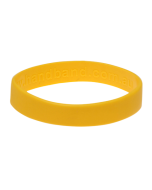
- Choose the cancer colour. See the table below. If unsure, pick yellow — the universal cancer-support colour since Livestrong.
- Set the donation price. AUD 2 for primary schools, AUD 5 for high school, AUD 10 for adult/corporate drives.
- Order the bands. Start with 250–500 custom debossed (7–10 days production). If you need stock fast, order stock blanks alongside — they ship within 1–2 days.
- Set up a destination for funds. A community bank account (with two named signatories, never just one) plus an optional GoFundMe Australia / My Cause page.
- Promote inside the school. Assembly announcement, posters, classroom visits, social-media short video featuring the wearer or a sibling.
- Promote outside the school. Local newspaper, council newsletter, family employer mailing list.
- Track sell-through weekly. Reorder at 70 %. Wind down at 20 %.
- Close out transparently. Publish the final amount raised, where it went, and thank the wearers publicly — their visibility kept the campaign alive.
Cancer Awareness Colours — Pick the Right One
| Cancer type | Awareness colour |
|---|---|
| General / unspecified cancer | Yellow (Livestrong) |
| Paediatric / childhood cancer | Gold |
| Breast cancer | Pink (hot pink) |
| Prostate cancer | Light blue |
| Brain cancer / glioblastoma | Grey |
| Leukaemia | Orange |
| Pancreatic / Hodgkin lymphoma | Purple |
| Lymphoma (non-Hodgkin) | Lime green |
| Lung cancer | White |
| Stomach / oesophageal cancer | Periwinkle |
| Liver cancer | Emerald green |
| Bladder cancer | Marigold / yellow + purple + blue |
How Many Bracelets Should a School Order?
Three rules of thumb from drives we’ve supplied since 2008:
- Primary school (under 400 students): 250–350 units to start. Most parents and teachers will buy one too.
- High school (400–1,200 students): 500–800 units. Aim to cover ~60 % of the student body in the first wave.
- Large secondary college (1,200+): 1,000–1,500 units. Plan a reorder at week 2 if sell-through is above 50 %.
Don’t buy too many. Storing 1,000 unsold bands eats organiser time and dilutes urgency. A tight reorder loop with weekly check-ins beats one big order every time.
Cost vs Fundraising Profit — Worked Example
Assume a high-school drive for a senior diagnosed with brain cancer. The committee orders 500 custom-debossed grey wristbands at AUD 1.05 wholesale, sells them at AUD 5 each, achieves 85 % sell-through, and runs a Friday-casual-clothes day in parallel.
- Stock cost: 500 × $1.05 = $525
- Bands sold (85 %): 425 × $5 = $2,125
- Casual-clothes day: ~$800
- Net profit: $2,125 + $800 − $525 = $2,400
Repeat the drive with reorders, school-assembly mentions and parent-mailing-list pushes and a single high school routinely clears $5,000–8,000 per term.
Custom Debossed vs Stock Blank — Which for a Cancer Drive?
| Feature | Custom Debossed | Stock Blank |
|---|---|---|
| Minimum order | 100 | 1 |
| Time to ship | 7–10 working days | 1–2 working days |
| Name / slogan | Yes — etched (60+ chars) | No |
| Best for | Named tribute drives, school senior projects | Awareness weeks & urgent timelines |
| Unit cost at 500 units | ~$1.05 | ~$0.75 |
Designing the Wristband — Slogan, Layout & Colour Rules
Five quick design rules that lift wearer-retention and donation rates:
- Keep the slogan to 1–3 words. “Andy Strong”, “Team Mia”, “Beat It”. Long slogans wrap awkwardly and lose impact at arm’s length.
- Pair name + cause. Name on the front-facing side, cause/charity on the inside. The inside text reminds the wearer why every time the band gets put on.
- Pick the cancer-specific colour. Grey for brain cancer means more to people who know than “just yellow”.
- Avoid black for a tribute band unless the person is already deceased — the wearer-family read black as a mourning signal.
- Add a small URL or social handle on the inside. Even “@beatcancerwithandy” lifts post-purchase engagement.
Promotion Channels That Actually Move Bands in 2026
Three channels consistently outperform paid ads for student-cancer drives:
- School assembly + classroom visit. A 90-second pitch from a friend or sibling beats any flyer. Pair with QR code to the GoFundMe.
- Short-form video. One Instagram Reel or TikTok of the wearer (with family consent) routinely outperforms 50 static-image posts. Keep it under 30 seconds.
- Parent / staff mailing list. A short, factual email to the school’s active families — one paragraph + one photo + a link — converts at 5–15 % in our experience.
Paid social ads rarely make economic sense on a $5 band. Spend the time on free organic channels instead.
Compliance & Family Sensitivity
Australian student-led drives must respect three boundaries:
- Always get written family consent before printing a name.
- Be transparent about where money goes. Publish a one-line breakdown on every social post (e.g. “70 % to the Meinert family, 30 % to Brain Tumour Australia”).
- Follow state Department of Education fundraising guidelines. NSW, VIC, QLD, WA, SA, TAS, NT and ACT each have their own rules around school-based collections — check before printing.
Australian Case Studies
Sydney senior school (anonymised, 2024): Year-12 cohort raised AUD 6,800 over six weeks for a peer’s lymphoma treatment. 600 custom debossed lime-green bands + casual-clothes day. Lessons: weekly assembly check-ins, family consent letter at week 1, photo updates kept momentum.
Brisbane primary school (2025): 380 students raised AUD 2,150 in three weeks for the family of a Year-4 student diagnosed with leukaemia. 350 orange stock blanks + cake stall. Lessons: simple stock blanks shipped in 2 days beat the custom-debossed timeline; the speed-to-market was the real driver.
Adelaide independent school (2026): Senior students replicated the Newberg / Meinert model after a fellow student was diagnosed with brain cancer. 700 grey custom-debossed bands with two-word slogan. Raised AUD 4,400 net in eight weeks. Lessons: name + cancer-specific colour outperformed generic “cancer fundraiser” framing.
Common Mistakes to Avoid
- Printing without written family consent (the single biggest cause of cancelled drives).
- Ordering 2,000 units before testing demand at 500.
- Pricing under $2 — you can’t turn a profit at that point on a 500-unit order.
- Skipping the QR / URL on the band — loses the conversion path post-sale.
- Letting the drive go silent for 3+ weeks; momentum collapses faster than you think.
- Mixing the school's general charity bank account with the specific family fund — always separate.
References & Further Reading
- Cancer Council Australia — cancer types, awareness colours and patient support
- Canteen Australia — support for teens and young adults affected by cancer
- Australian Charities and Not-for-profits Commission (ACNC) — charity registration & fundraising compliance
- Starlight Children's Foundation — brightening seriously-ill children's lives
Frequently Asked Questions
How do I start a wristband fundraiser for a friend or classmate with cancer?
Get the family's blessing first — always. Then pick a short slogan (a name or two-word phrase like “Andy Strong”), choose the colour that matches the cancer (yellow for general / Livestrong, pink for breast cancer, purple for pancreatic or brain-tumour, orange for leukaemia). Order 250–500 custom debossed bands as your first run, set up a donation target on a platform like GoFundMe Australia or My Cause, and announce the drive at school assembly and on social media. Reorder once you've sold 70 % of your stock.
What's the minimum order quantity?
Custom debossed silicone wristbands start at a 100-unit minimum. Stock blank colours (yellow, hot pink, purple, etc.) ship in any quantity from 1 unit up — useful if you want to start with a small handout before committing to a custom run.
How much can a school wristband drive raise?
Schools in Australia consistently raise AUD 800–3,500 per cancer-fundraiser drive. A 500-unit order at AUD 1.05 wholesale, sold at AUD 5 each with 85 % sell-through, nets roughly AUD 1,600 after stock cost. Larger drives that pair the bands with bake sales, casual-clothes days and corporate matching frequently clear AUD 5,000+.
What colour should the wristband be?
Use the recognised colour for the cancer type when possible: yellow for general cancer / Livestrong style, pink for breast cancer, light blue for prostate cancer, grey for brain cancer, gold for paediatric / childhood cancer, orange for leukaemia, purple for pancreatic / Hodgkin lymphoma, lime green for lymphoma, white for lung cancer, periwinkle for stomach & oesophageal cancer. If the cancer doesn't have a clear colour or you want maximum visibility, yellow remains the most universally recognised cancer-support colour.
How fast can I get the wristbands?
Custom debossed wristbands take 7–10 working days from artwork approval, plus 1–3 days express shipping anywhere in Australia. For urgent drives (under 2 weeks), stock blanks ship within 1–2 working days and arrive ready-to-sell.
Do schools need permission to run a fundraiser?
Yes — in Australia, schools must follow Department of Education fundraising guidelines and the family's consent must be on file for any personalised drive. Independent schools usually require principal sign-off plus parent letter. State schools may also need a brief written fundraising plan. Check your state Education Department site before printing.
Where does the money usually go?
Most Australian student-led cancer drives split funds in two: a private bank account or GoFundMe for the family's direct costs (travel, accommodation near hospital, medical co-pays), and a portion to a registered charity such as Canteen, Cancer Council, Starlight or a specific research foundation. Be transparent about the split on every sales pitch — it builds trust and lifts buy-in.
Written by
Founder, Handband
Founder of Handband; specialist in custom wristbands and promotional products for events, schools, charities, and brands.
← Previous
Fitness Challenge Wristbands: Team Spirit & Accountability
Next →
Custom Wristbands for Holiday Charity Appeals & Giving Campaigns
Comment(s)