By Handband Community Team · Fundraising Specialists
Updated 1 June 2026 · 11 min read
Updated 1 June 2026 · 11 min read
Updated 1 June 2026. Wristband fundraising still works because it gives people a tangible item, a low-friction price point and a way to wear the cause on their wrist. Done well, a 500-band run can clear a clear $1,000-$1,500 in profit, and a 5,000-band campaign can raise well over $14,000.
This guide is for school clubs, sports teams, charities, parent committees and any community group that needs to raise money fast without inventory risk. You will learn proven wristband fundraising ideas, real pricing examples, design and ordering tips, mistakes to avoid and a 7-day marketing sprint to launch your campaign.
Why Wristband Fundraisers Still Work in 2026
Online giving keeps growing, but pure-digital appeals struggle to break through cluttered inboxes. A custom wristband adds three things a donation button cannot: a physical reminder, a conversation-starter and a sense of belonging. Wristbands turn donors into walking ambassadors for the cause.
- Low unit cost, high margin. Bulk custom colour silicone wristbands can land near 16-30 cents each at higher volumes. Sell for $2-$5 and the margin pays for the cause many times over.
- Universally appealing. Wristbands suit any age, gender or audience — perfect for school fairs, sports tournaments, hospital fundraisers and memorial drives.
- Visible loyalty. Every supporter who wears the band is a small, ongoing campaign for your cause.
- Fast turn-around. Most orders ship in 7-14 days, so you can act quickly on time-sensitive causes.
The Numbers: How Profitable Are Wristband Fundraisers?
Numbers help committees believe the case. The table below shows a realistic worked example for a school or club fundraiser using debossed silicone wristbands.
| Volume | Approx Unit Cost | Suggested Sell Price | If Sold Out — Profit |
|---|---|---|---|
| 100 bands | $1.20 | $3.00 | ~$180 |
| 500 bands | $0.55 | $3.00 | ~$1,225 |
| 1,000 bands | $0.35 | $3.00 | ~$2,650 |
| 5,000 bands | $0.16 | $3.00 | ~$14,200 |
Even at the smaller end of the scale, your costs are recovered in the first dozen sales. The bigger the run, the higher the per-band profit margin.

Recommended for you
Products related to this article
Hand-picked to go with what you just read.
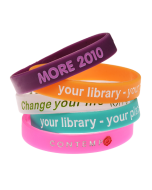
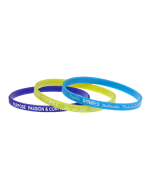
1. Bulk Order, Personal Cause — Build Demand With a Story
The single biggest predictor of fundraiser success is a clear, personal story. People give money to people, not to "the school" or "the club". Pair the wristband with a one-line story, a face, a name, a goal.
Example: rather than "School Year 5 Fundraiser", brand the campaign as "Pippa's Petting Zoo — Year 5 raising $2,000 for the special-needs class library". Print "Pippa's Petting Zoo" on the band. Donors who buy one are part of the story.
Use a small batch of custom debossed wristbands for the first run if your audience is under 200 people, or step up to bulk custom colour wristbands once demand is proven.
2. Annual Event Pre-Sales — Lock In Income Before the Day
If your club already runs an annual event (school fair, charity gala, footy carnival, community walk), don't wait for the day to sell. Pre-sell the wristband as the "entry pass" four to eight weeks ahead. You get the money locked in before weather, illness or the news cycle can derail the event.
How to do it
- Open a simple form (Google Form, Trybooking, Stripe) — pre-pay buys the band and the entry.
- Hand bands out at the door on the day — easy, no last-minute change-handling.
- Sell late-comer entry on the day for $5 more than the pre-sale, to reward early bookers.
Cash-flow advantage: you've recouped order costs before opening day, so anything sold on the day is pure profit.
3. Tiered Pricing — Give Donors Choice
Not everyone wants to give the same amount. Offer three giving tiers so casual supporters can join in cheaply and committed supporters can give more.
- $3 — Skinny debossed wristband. Entry tier, casual support.
- $5 — Standard debossed wristband. Most popular price point.
- $10 — Bundle: wristband + keychain OR wristband + name on the "supporters wall".
The bundle tier alone often lifts average donation by 30-50%.
4. Cross-Sell at Events — Stack Multiple Items
Don't sell wristbands alone. Pair them at the table with cause-related add-ons that take advantage of the buyer's "I'm already donating" mindset.
- Wristband + custom slap band — popular with primary-age kids
- Wristband + branded keychain — adults love a back-pack tag
- Wristband + photo opportunity (mascot, supporter wall)
- Wristband + raffle ticket combo
5. Subscription / Monthly Wristband Drops
Modern donors love subscriptions. Run a monthly or quarterly wristband series — one design per month, each tied to a different sub-cause. Members pay a small monthly fee and receive a fresh band by mail.
This model converts one-time donors into recurring supporters. It also forces design freshness, which keeps the campaign feeling current.
6. Online & Social Media Selling — Reach Beyond Your Neighbourhood
If your audience is bigger than your local catchment, sell online. Set up a simple Shopify, Stripe or Square checkout, then post short videos showing the band on real supporters. Tag local influencers, parents, sports stars and former students.
Channels that work
- Instagram & TikTok Reels — show the cause, show the band
- Facebook community groups — parents, sports clubs, local interest
- LinkedIn — for corporate sponsor pitches
- School / club newsletter — the original channel, still works
7. Corporate Sponsor Tie-Ins
Approach local businesses to sponsor a wristband run in exchange for their logo or name on the band. The business gets brand exposure on every supporter's wrist; you get the band cost covered or subsidised.
Coffee shops, real estate agencies, plumbers, dental practices and local insurance brokers all respond well to this pitch. Bring a sample band to the meeting.
How to Design a Wristband That Sells
A great fundraiser wristband is simple, readable and emotional. Avoid cluttering the band with too much information.
Step 1: Pick one short message
7-12 characters works best. "Pippa Strong", "Beat MS", "Team Lily", "Help Hope". Keep it short — long messages disappear at arm's length.
Step 2: Choose one strong cause colour
Pink for breast cancer awareness, yellow for childhood cancer, purple for epilepsy or pancreatic cancer, blue for autism or anti-bullying, orange for leukaemia, green for mental health or organ donation. People recognise the colour instantly.
Step 3: Choose the right style
Use debossed for premium adult campaigns, colourfill for high-contrast bright bands, printed for full-colour graphics, and embossed for kids' campaigns where they love the raised feel.
Step 4: Order a sample first
Always confirm a digital proof and, if budget allows, a physical sample band before approving the full run. A small upfront investment prevents an expensive print error.
Choosing the Right Wristband Style for Your Fundraiser
Different campaigns suit different styles. Match the band to the buyer.
- Schools & kids — bright custom colour wristbands or fun slap bands
- Sports clubs — durable debossed wristbands in team colours
- Memorial / awareness — skinny debossed in the cause colour
- Corporate / professional — phat 1-inch with logo
- Festivals / events — fabric woven barrel-lock for tamper-proof entry
How Much Should You Charge? (Pricing Worked Example)
Pricing depends on three things: who's buying, what they're used to paying for similar items, and whether the cause feels urgent. Use the table below as a starting point and adjust to your audience.
- Schools (parents): $3-$5 per band — most parents will buy two or three for siblings.
- Sports tournaments: $5 per band — bundled with team-day entry where possible.
- Corporate / awareness campaigns: $10 per band — premium feel, often with a small thank-you card.
- Memorial / urgent appeals: "donation amount of your choice" with $5 suggested — emotional sales lift this higher than fixed prices.
Marketing Your Wristband Fundraiser — A 7-Day Sprint Plan
Don't drift. Compress the marketing into a focused 7-day burst — that's when supporters will buy, and after a week interest drops fast.
Day 1
Email your full member list with the story, the design and a clear "buy here" link. Post the same announcement to your community Facebook group.
Day 2-3
Personal asks — committee members text 20 people each, parents text other parents. Most fundraisers underestimate how much "personal" still beats "broadcast".
Day 4
Post a short video — someone sharing why they wear the band. Authentic, not polished. 30 seconds maximum.
Day 5-6
Sell at the school gate, club training, supermarket carpark or community market. Carry change, an Eftpos terminal or QR code for payment.
Day 7
Close the campaign with a thank-you note and a "we hit $X" celebration post. Acknowledge top contributors by name where they've agreed.
Common Mistakes to Avoid
- Ordering too few bands. Bulk pricing is your friend — under-ordering forces a costly re-order at small-batch prices.
- Generic messaging. "School Fundraiser 2026" is forgettable. "Help Lily Walk Again" is not.
- Hiding the cause. Donors want to know exactly where their money goes. Be specific: "$1,000 covers a new wheelchair ramp" beats "general school funds".
- Selling for 4+ weeks. A short, intense sprint converts more than a long, slow campaign.
- No proof or photos. Always order a digital proof. Confirm exact pantone colour and lettering before approving.
The Handband Promise
Handband is designed in Sydney and supplies thousands of schools, sports clubs and charities every year. Every order is colour-matched to a real pantone swatch, every design goes through a digital proof, and our customer service team replies within one business day.
If you're planning a fundraiser, get in touch — we can help with design, bulk pricing and even lead-time hacks if your event is sooner than expected.
References & Further Reading
- Australian Charities and Not-for-profits Commission — Fundraising best practice guidelines (acnc.gov.au)
- Fundraising Institute Australia (FIA) — Code of Practice for charitable fundraising.
- Pope, J. (2024). Connecting Donors: Storytelling that Raises Money. Wiley.
- Sargeant, A. & Shang, J. (2023). Fundraising Principles and Practice (3rd ed.). Wiley.
- Good2Give — Australia Workplace Giving Industry Benchmarking Report 2024.
Frequently Asked Questions
How profitable is a wristband fundraiser?
At bulk pricing (around 16-35 cents per band) and a $3-$5 sell price, profit margins are typically 80-90%. A 1,000-band run that sells out can clear $2,500-$2,800, and a 5,000-band run can clear over $14,000 in profit.
How many wristbands should we order for our first fundraiser?
For a first-time school or club run, 250-500 bands is a safe starting point. It gets you closer to bulk pricing without the risk of unsold stock. Once you've proven demand, scale up to 1,000-5,000 for the next campaign.
What's the best wristband style for school fundraisers?
Custom debossed or custom colour silicone wristbands work best for school audiences — durable, affordable in bulk and easy for kids to wear daily. For younger primary students, slap bands add a fun novelty factor.
How long does it take to receive a bulk order?
Standard turnaround is 7-14 business days from digital proof approval. Rush orders are usually possible for an extra fee — talk to the supplier before ordering if your event is less than 10 days away.
What information should we put on the band?
Keep it to one short message (7-12 characters) plus an optional cause colour. Examples: "Beat MS", "Team Lily", "Help Hope". Avoid full URLs, phone numbers or long sentences — they're unreadable at arm's length.
How do we promote a wristband fundraiser?
Use a focused 7-day sprint: announce on day 1 by email and Facebook, ask personally on days 2-3, post a story video on day 4, sell in person days 5-6, and close with a thank-you post on day 7. Short campaigns convert better than long, drifting ones.
Can we get sponsors to cover the cost of the bands?
Yes — local businesses like cafes, real estate agencies, dental practices and gyms often sponsor wristband runs in exchange for their logo or name on the band. Bring a sample band to the pitch and you'll close more sponsorships.

Written by
Founder, Handband
Founder of Handband; specialist in custom wristbands and promotional products for events, schools, charities, and brands.
← Previous
Promote Your Sports Club: The 2026 Marketing Playbook
Next →
Kids Party Wristbands: Fun Ideas and a Simple Party Checklist for Parents
Comment(s)