By Handband Community Team · Schools & Charity Fundraising
Updated 6 June 2026 · 11 min read
Updated 6 June 2026 · 11 min read
Updated 6 June 2026. In March 2010, students at Columbus High School in Waterloo, Iowa, organised a 5-kilometre Walk for Water at Hawkeye Community College. The reason was painfully simple: in three north-central Kenyan villages, women and children walked an average of three miles every day just to fetch water. Columbus students decided to walk that same distance — but for fundraising, not survival — and raise $15,333 to install rain-water harvesting at three Kenyan primary schools.
Sixteen years later the Walk for Water remains one of the most powerful school fundraising models in the world. The format is simple: students walk 3-5 km, pledges and sponsorships fund the walk, and 100% of proceeds go to a clean-water charity. This guide shows you how to run one in 2026 — with the Columbus case study as the blueprint, an 8-step rollout plan, design tips, FAQs, and the wristbands that pull it all together.
If your school is planning a clean-water charity walk, charity walk wristbands are the standard entry-pass and participant-recognition tool. Pre-order three to four weeks before the date so bands arrive ready for distribution.
The Original Case Study: Columbus High School (2010)
Columbus was one of 30 schools selected by the Canadian non-profit Impossible 2 Possible to run a Walk for Water during a 10-day Siberian endurance run by adventurers Ray Zahab and Kevin Vallely along Lake Baikal — a lake holding 20% of the world's surface fresh water. The contrast made the campaign land: athletes ran across the largest fresh water body on Earth while three Kenyan villages walked miles for a single jerry-can.
What Columbus did
- Service club led, faculty supported. Senior Grace Moore (service-club president) ran the campaign; campus minister Mary Pedersen and science teacher Sister Marie Gemar held the safety net.
- 5km walk at Hawkeye Community College. The college's interior courtyard hosted the walk — a free, controlled venue.
- Multiple fundraising streams. T-shirts (ecology class), water-bottle sales (National Honor Society), rubber wristbands (student government).
- Art and tech classes built the campaign. Computer-skills and art classes made posters and a promotional DVD.
- Whole-school participation target. The pledge was 100% — every student walked, donated or fundraised.
The numbers
- Goal: $15,333 for rain-water harvesting at three Kenyan primary schools (via Giving Water)
- Companion goal: $15,000 for Ryan's Well to drill two wells and train pump mechanics in Uganda
- Combined target: $30,333 across the 30 participating schools
- Distance walked: 5 km (3.1 miles) — matching the average daily water walk in the affected villages
The lesson: pair the walk distance with the cause. Three miles for three miles. The metaphor sells itself.
Why Walk for Water Still Works in 2026
Today over 700 million people still lack access to safe drinking water (UNICEF, 2024). The Walk for Water format has scaled — World Walks for Water and Sanitation runs in 100+ countries each March, anchored by World Water Day on 22 March.
- Embodied learning. Walking the distance teaches students more about the issue than any textbook lecture.
- High parent participation. Walks are family-friendly events that bring out parents, siblings, alumni — donor reach expands beyond the student body.
- Bulk-pricing economics. Custom colour wristbands at scale keep cost-per-participant under $0.40, so a $5 pledge band yields 90%+ profit for the cause.
- Strong charity partners exist. WaterAid Australia, charity:water, Ryan's Well, Giving Water, UNICEF — all have school-partnership programs.
- Visual storytelling. Walks photograph beautifully — every student in a wristband, every banner, every kilometre tracked. Social-media-ready by design.
Recommended for you
Products related to this article
Hand-picked to go with what you just read.


The Walk for Water Wristband Toolkit
A clean-water charity walk has three natural wristband roles. Use one, two or all three depending on scale.
1. Entry / participant band
Every walker gets a colourful custom colour wristband on registration — proof of entry, scannable at finish line, and a souvenir afterwards.
2. Pledge / donor band
A premium custom debossed wristband for the $20+ donor tier. People who give more get the engraved band — it's the visible thank-you that drives repeat donations.
3. Tyvek single-use band for big crowds
If you're running a public-facing walk where you need to control who's registered (and who's a gate-crasher), Tyvek single-use wristbands work perfectly. Cheap, tamper-evident, and pre-numbered if you want a raffle component.
Step 1: Pick Your Charity Partner
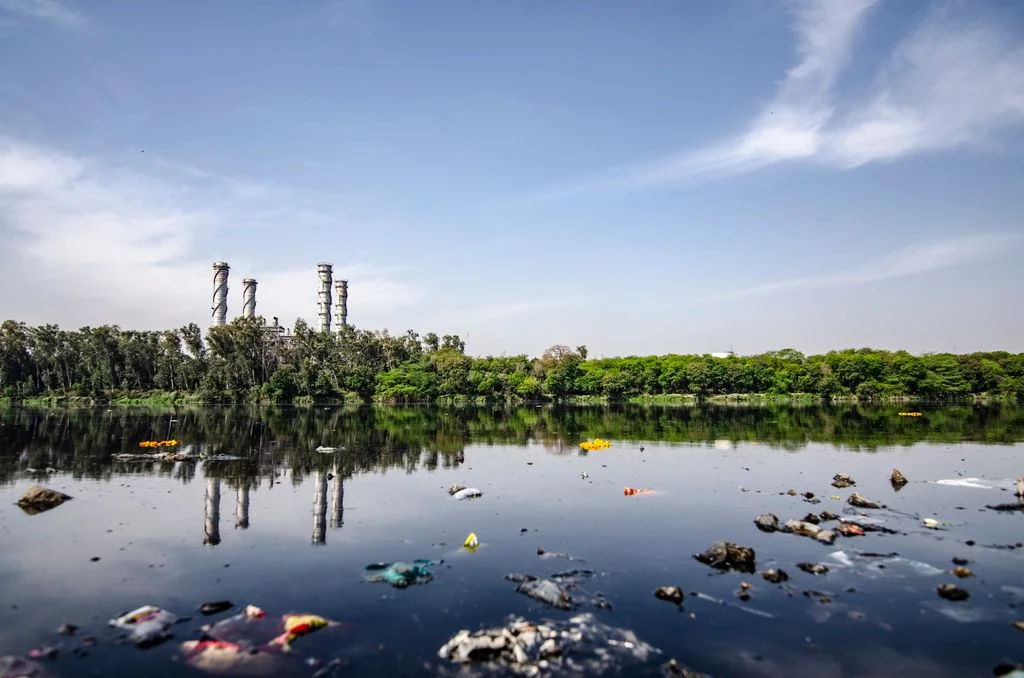
Donor trust starts with a recognised charity. The clean-water sector has well-established partners with school-fundraising programs already built.
Top global clean-water charities
- WaterAid Australia — runs schools program Drop in the Bucket; provides toolkits and digital pledge tools
- charity:water — US-headquartered, 100% public-donation model; transparent project tracking
- Ryan's Well Foundation — Canada-based, drills wells in Uganda, Kenya, Ethiopia (the original Columbus partner)
- UNICEF Water, Sanitation and Hygiene (WASH) — large-scale infrastructure across 100+ countries
- Water.org — micro-loan model for water infrastructure in developing economies
- Local indigenous water organisations — for Australian schools, the Aboriginal Community Controlled water programs are powerful local-issue partners
Email the charity's schools or community-fundraising team three months ahead. Ask for: an official endorsement letter, sample social copy, a recipient story to feature, and bank-transfer details.
Step 2: Anchor the Date to World Water Day
The first Wednesday of March is the regular World Walks for Water and Sanitation date, and 22 March is World Water Day — recognised by every major water charity. Schools that anchor here ride the media wave the charities themselves create.
Other strong anchor dates:
- Term 1 close (final Friday before Easter break)
- Earth Day (22 April)
- National Reconciliation Week (May, Australia)
- Refugee Week (June)
- School fundraiser day (your school's own annual charity calendar slot)
Step 3: Set the Distance and Format
Columbus walked 5 km because that's how far affected Kenyan villagers walked daily. Match the distance to the message.
Distance options
- 3 km / 2 miles — primary schools; family-friendly; 30-45 minutes walk
- 5 km / 3 miles — most secondary-school walks; the Columbus benchmark; ~60-75 minutes
- 6 km / 3.7 miles — the UN-defined average distance for global water collection
- 10 km / 6.2 miles — for senior students and adult supporters; bigger fundraising potential per pledge
Format options
- Loop walk — on school oval or community college courtyard (Columbus model). Easy logistics.
- Point-to-point — finish line at a community landmark. More inspiring but harder logistics.
- Bucket walk — students carry a water bucket for part of the distance. Strongest empathy signal.
- Virtual walk — students log km on their own time over a 7-day window. Strong for remote / hybrid schools.
Step 4: Multi-Stream Fundraising
Columbus didn't rely on the walk alone. Three additional revenue streams ran in parallel: T-shirts, water bottles, wristbands. Each year-group or club owned one stream.
Revenue streams that work for walk-for-water
- Pledge sponsorships — students collect $-per-km commitments from family, neighbours, local businesses. Online pledge tools (JustGiving, GoFundMe, MyCause) make it easy.
- Wristband sales — $3-$5 each for an event-day band; $10 bundle with a water bottle.
- T-shirt sales — $20-$25 each; ecology or art class designs the artwork.
- Refillable water bottle sales — $15-$20 each; National Honor Society or sustainability club leads.
- Corporate sponsors — local plumbers, water-filter retailers, environmental businesses love this category for community presence.
- Bake sale / finish-line stalls — last-mile revenue from walk-day spectators.
Step 5: Use Curriculum to Deepen the Lesson
The Columbus walk worked because art, computer skills, ecology, science and student-government classes all owned a piece of the campaign. The walk became a cross-curricular project, not a single fundraising day.
Curriculum hooks by subject
- Geography — map the water-scarcity regions; track the partner charity's project sites
- Science — water cycle, contamination pathways, filtration methods, sanitation diseases (cholera, diarrhoea)
- Maths — pledge tracking, percentage progress, fundraising-goal calculations
- Health & PE — hydration science, walk training, weight-of-a-jerry-can demonstrations
- Art & Design — poster design, T-shirt artwork, wristband colour scheme
- English / Media — interview the charity partner; write press releases; record promotional video
- Religious / Values education — service, compassion, global citizenship discussion
Step 6: Pre-Order Wristbands & Marketing Material 3-4 Weeks Out
The single biggest planning mistake is ordering bands too late. Bulk silicone wristbands ship in 7-14 business days from artwork approval. Aim for bands to arrive 7 days before walk day so you can distribute at pre-walk assembly.
Walk-day band logistics
- Colour by year-group — primary blue, lower-secondary green, upper-secondary yellow, staff red. Easy crowd visibility.
- Print "[Year] Walk for Water" on every band — turns walk-day photos into instant social proof.
- Add registration table volunteers — 1 per 50 expected walkers, with bands sorted by colour.
- Reserve 10% extra — for last-minute walk-ups, spectators who decide to join, and rainy-day surprise turnout.
Step 7: Run the Walk Day With Discipline
Pre-walk (T-30 minutes)
- Registration table opens, distribute wristbands
- Walker briefing (route, time, water stops, finish line)
- Group photo — everyone visible with bands on
Walk
- Lead walker carries a banner with the fundraising goal
- Water stops every 1.5-2 km (irony intentional — but please provide water at a walk-for-water event)
- Staff sweep at the back to keep the slowest walker safe
- Photographer or student videographer captures every kilometre
Finish line
- Big banner: "[School] raised $X for [Charity]"
- Cool-down, snacks, fundraising recap by student leader
- Public thanks to sponsors, charity partner reps, parent volunteers
- Photo wall with bucket prop and water-stat backdrop — social-media gold
Step 8: Close the Loop & Convert to an Annual Tradition
Annual events out-fundraise one-off events 4-5x over five years. The Columbus walk turned into a multi-year service-club tradition. To make yours stick:
- Post a final "$X raised — thank you" recap within 7 days of walk-day
- Photograph the cheque presentation to the charity partner
- Get a 30-second video from the charity partner showing where the funds are going
- Run a quick post-event survey: what worked, what to keep
- Hand the playbook to a younger student leader so the campaign survives leadership turnover
- Lock the next year's date before exams — pre-order bands and order T-shirts 6-8 weeks ahead
Common Mistakes Schools Make
- No registered charity partner. Donor trust collapses without a known beneficiary.
- Ordering wristbands a week before walk day. Allow 3-4 weeks minimum.
- Adult-led messaging. Students convince students. The principal's newsletter sells fewer wristbands than a student TikTok video.
- Treating the walk as the only revenue. Add merch (T-shirts, water bottles, wristbands) for 2-3x the fundraising.
- Forgetting to close the loop. If donors and pledgers don't see "$X raised — here's the cheque", they won't give next year.
- Ignoring health and safety. Hydration stations, first aid, parent permissions, weather contingency plan — tick them off ahead of time.
The Handband Promise
Handband is designed in Sydney and supplies thousands of schools around the world with charity-walk wristbands. We can quote, design, manufacture and ship a 500-5,000 band run within 7-14 days — fast enough for time-critical school walks. Our team handles colour-matching, digital proofs, sample bands and rush options. If your school is planning a Walk for Water (or any cause-themed walk), get in touch with our team for sample bands and a quick quote.
References & Further Reading
- UNICEF & WHO — Progress on Household Drinking Water, Sanitation and Hygiene 2000-2022 (joint monitoring report, 2024).
- WaterAid Australia — Drop in the Bucket Schools Program toolkit (2024).
- UN-Water — World Water Development Report 2024.
- Ryan's Well Foundation — School fundraising guide.
- charity:water — 100% Model annual transparency report 2023.
- Waterloo-Cedar Falls Courier — Columbus students walking for water awareness (March 2010 — original source).
Frequently Asked Questions
When is World Water Day?
22 March each year. The first Wednesday of March is also the traditional date for the World Walks for Water and Sanitation campaign. Schools that anchor their walks to these dates benefit from the global media wave the major water charities create around them.
How far should our school walk?
The Columbus benchmark is 5 km / 3.1 miles — matching the average daily walk for water in affected Kenyan villages. Primary schools often use 3 km, secondary schools 5 km, and senior students 10 km. The UN-defined global average distance for water collection is 6 km.
How much can a school Walk for Water realistically raise?
Small schools (200-500 students) typically clear $2,000-$5,000. Larger schools (1,000+ students) regularly hit $10,000-$25,000. Multi-school district campaigns have raised over $100,000. The 2010 Columbus + 29 partner schools targeted $30,333 combined.
What's the best charity partner for a school Walk for Water?
WaterAid Australia, charity:water, Ryan's Well Foundation, UNICEF WASH and Water.org all have established school-fundraising programs with toolkits, endorsements and project-tracking. For Australian schools, also consider Aboriginal Community Controlled water programs for a local-issue angle.
How early should we order our wristbands?
3-4 weeks before walk day. Bulk silicone wristbands ship in 7-14 business days from artwork approval. Order earlier to allow buffer for design tweaks and the pre-walk distribution at registration table.
How do we structure the pledge system?
Most successful schools use a $-per-km or flat-donation hybrid. Students collect pledges 2-3 weeks before the walk using online tools (JustGiving, MyCause, GoFundMe). Wristbands serve as proof-of-participation; the pledge is tied to completing the distance.
What other merchandise should we sell alongside wristbands?
The Columbus model added T-shirts ($20-$25), refillable water bottles ($15-$20) and posters. Cross-class ownership (ecology class designs T-shirts; sustainability club sells bottles; student government sells wristbands) doubles or triples total fundraising.

Written by
Founder, Handband
Founder of Handband; specialist in custom wristbands and promotional products for events, schools, charities, and brands.
← Previous
How to Take Your Festival Wristband Off After the Event
Next →
School Inclusion Wristbands & Spread the Word Campaigns
Comment(s)