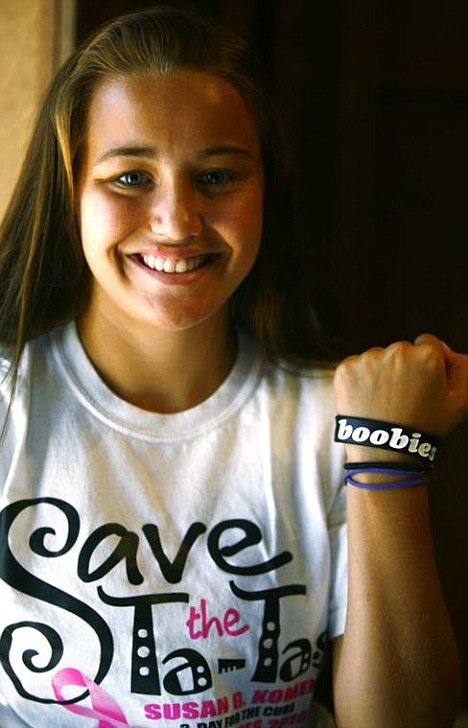
Few promotional products have generated as much public debate as the “I (heart) Boobies!” awareness bracelets. The simple silicone bands — sold to raise funds for breast cancer education and research — ended up at the centre of a years-long US Supreme Court battle over student free speech.
The story is more than a legal curiosity. It’s a case study in why awareness bracelets work, why they sometimes draw resistance, and how schools and communities can use them well without ending up in court.
What the Case Was About
A Pennsylvania school district banned the “I (heart) Boobies!” bands and disciplined students for wearing them. The students sued, arguing the bracelets raised legitimate awareness of breast cancer — a cause specifically endorsed by the Keep A Breast Foundation that produced them.
Federal appellate courts ruled in favour of the students. The bands were protected speech because they were tied to a recognised public-health cause, and the playful wording was deliberately designed to engage younger audiences who otherwise wouldn’t pay attention to dry awareness messaging.
Why Awareness Bracelets Work
The whole reason a school district objected is the same reason awareness bracelets are effective:
- Visible. A band on the wrist is in everyone’s field of view.
- Memorable. A short cause slogan plus a colour creates instant recognition.
- Conversational. People ask “what’s that?” — and the wearer becomes an ad-hoc educator for the cause.
Recommended for you
Products related to this article
Hand-picked to go with what you just read.
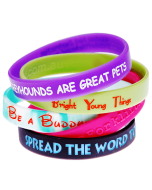
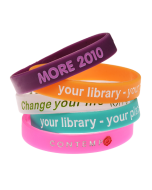
What Schools and Communities Can Learn
The schools that handle awareness bracelet programs well share three traits:
- They engage early. Work with student leaders before the cause week starts. Co-design the campaign so the school is the supporter, not the censor.
- They build structure around the band. Classroom lessons on the cause, an assembly, a charity drive. The band becomes the visible signal of an organised program.
- They publish the rules clearly. If certain words are off-limits, say so before the bands arrive — not after students are already wearing them.
Designing an Awareness Bracelet Campaign
- Pick a recognisable cause colour — pink for breast cancer, orange for anti-bullying, purple for Alzheimer’s, yellow for Livestrong-style cancer awareness, green for mental health.
- Keep the slogan to 1–3 words plus a hashtag or short URL.
- Use debossed engraving so the message lasts the lifetime of the band.
- Pair the band launch with a structured education program at school or workplace level.
Free Speech and Cause Awareness
The legal precedent that came out of the “I (heart) Boobies!” case has made schools and workplaces more thoughtful about how they handle student-led awareness campaigns. Most now welcome them, channel them into structured programs, and use the visible signal of a wristband to anchor a richer educational experience.
Brief our team with your cause, audience and timeline — we’ll come back with a quote, design proof and delivery date.
Frequently Asked Questions
Why do schools sometimes ban awareness bracelets?
Most often, school districts cite dress codes or worry about classroom disruption. The most-cited US case involved “I (heart) Boobies!” bracelets that a school district argued were “lewd.” Federal courts ruled that the bracelets were protected speech because they raised legitimate breast cancer awareness.
Are awareness wristbands considered free speech?
Generally yes — courts in many countries have held that simple cause-related messaging on a wristband is protected expression, especially when the message is clearly tied to a recognised charitable or educational purpose. School-by-school dress codes still vary.
How can a school respond to an awareness campaign without banning bracelets?
The most successful schools work with student leaders to channel the campaign into structured activities — an awareness assembly, classroom lessons, fundraising drives. The bracelet becomes the visible signal of an organised program rather than a unilateral student act.
What information should an awareness bracelet carry?
One short cause-related slogan or hashtag, plus a URL or organisation name. Keep it clear and unambiguous so it’s recognised as a charitable awareness item rather than mistaken for slang or generic merch.
Can a small group order awareness bracelets in custom colours?
Yes. Bulk Custom Colour wristbands ship from as few as 50 units. Custom debossed (engraved) bands ship from as few as 4 units — useful for small student groups, classroom projects or community organisations.

Written by
Founder, Handband
Founder of Handband; specialist in custom wristbands and promotional products for events, schools, charities, and brands.
← Previous
Small Business, Wristbands & Apps: Pairing Physical With Digital (2026)
Next →
Reflective Wristbands: Keeping Pupils Safe on Dark Winter Mornings (2026 Guide)
Comment(s)