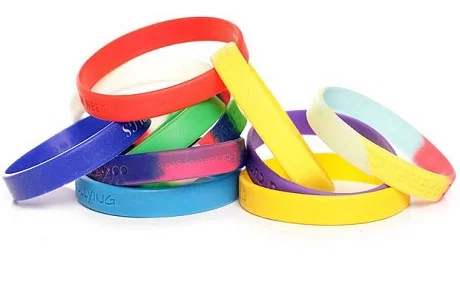
Cause bracelets first went mainstream in 2004 when the Lance Armstrong Foundation released a 1 USD yellow silicone band stamped Livestrong. More than 80 million units later, the humble silicone wristband is still one of the most cost-effective fundraising tools available to Australian charities, schools, sports clubs and community groups. This guide pulls together what we’ve learnt working with hundreds of Australian cause drives since 2008 — what works in 2026, what doesn’t, and how to run a wristband campaign that actually clears a profit.
Why Cause Bracelets Still Raise Cash in 2026
Two decades after Livestrong, silicone wristbands continue to outperform most low-cost fundraising merchandise on three measures: unit margin (60–85 % at retail), repeat-wear visibility (the average wearer keeps a band on for 6–14 weeks), and conversation rate — bands are visible at arm’s length and trigger a question more often than a sticker or pin. The result is a tool that both raises money and raises awareness long after the initial sale.
Lance Armstrong Foundation chief operating officer Betty Otter-Nickerson described it as “a way to show support for a cause at very nominal investment for the person who wants to do that, and have an iconic way to show that as well.” That description still applies in 2026 — the cost-per-impression of a single 2 AUD wristband worn for 10 weeks beats almost any other paid-media spend a small Australian charity could buy.
The Livestrong Story — A Quick Recap
In May 2004 the Lance Armstrong Foundation released a yellow silicone band with the goal of selling 5 million units. By that summer it had blown past the target. Within two years the foundation had distributed more than 50 million bands. Today the foundation still sells around 2 million wristbands a year — a fraction of the 22 million peak in 2005 but enough to keep the symbol “an iconic figure for the cause,” as Otter-Nickerson put it.
The wristband’s lasting power comes from three design decisions the foundation made on day one: a single instantly recognisable colour, a single short slogan, and a deliberately open licensing approach. Trademarks cover the “Livestrong” word and the specific yellow band, but not the wristband concept itself — a choice that let the rest of the sector adopt the format without lawyering up.
Recommended for you
Products related to this article
Hand-picked to go with what you just read.
How Modern Australian Fundraisers Use Wristbands
Today’s Australian cause wristband campaigns fall into five common shapes. Pick the one that matches your audience and budget:
- Awareness drive — blank or simply-printed bands handed out free at events. Goal: visibility, not revenue. Common for mental-health awareness weeks, R U OK? Day, breast-cancer awareness in October.
- Donation incentive — band given in return for a minimum donation (usually 2–10 AUD). The most common school and church fundraiser format.
- Direct retail — bands sold via the charity’s online store at a fixed price. Best for established brands with mailing-list reach.
- Memorial / tribute — custom-debossed bands carrying a person’s name or initials. Sold to family, friends and the wider community; common after the loss of a child, a teen, or a community member to illness or accident.
- Bulk-package — multipacks (5- or 10-pack) shipped to corporate sponsors or chapter networks. Drives volume but reduces per-unit margin.
If you’re running your first campaign, a donation-incentive drive with stock blanks in the recognised cause colour is the lowest-risk place to start. Once you’ve proved the demand you can upgrade to custom-debossed bands carrying your slogan.
Choosing the Right Wristband Style
There are four mainstream silicone wristband styles and each has a different fundraising sweet-spot:
- Standard 12 mm debossed — the Livestrong-style band. Etched lettering, 60+ character capacity, unisex. Best general-purpose fundraising format.
- Skinny 6 mm debossed — popular with school students, teens and runners. Lower material cost but smaller print area.
- PHAT 1-inch (25 mm) — chunky statement band. High visibility but heavier on the wrist.
- Stock blank colours — no printing. Lowest cost, single-unit minimum order. Use when you need volume fast in a recognised cause colour.
Colour Symbolism — Picking a Cause Colour
Recognised cause colours give your drive instant context. Below is a summary of the colours most often used for awareness drives in Australia in 2026. (Confirm with your charity’s peak body before publishing — a few causes share colours, and a colour clash can confuse donors.)
- Pink — breast cancer, women’s health
- Yellow — cancer (general), Livestrong, suicide prevention, support of armed forces
- Purple — Alzheimer’s, lupus, pancreatic cancer, domestic violence, epilepsy
- Red — HIV/AIDS, heart disease, drug-prevention
- Green — mental health, organ donation, environmental causes
- Orange — hunger, leukaemia, self-harm awareness
- Blue — men’s mental health, prostate cancer, bullying prevention
- Black — mourning, memorial, melanoma
- White — peace, anti-violence, right to life
2026 Australian Pricing & Bulk Tiers
Wristband fundraising profit comes from the gap between wholesale unit cost and retail donation price. The table below is indicative for Handband’s 2026 Australian pricing — check the live product page before quoting your trustees:
| Order quantity | Custom debossed | Custom colour | Stock blank |
|---|---|---|---|
| 100 units | from $1.65 ea | from $1.85 ea | from $0.95 ea |
| 500 units | from $1.05 ea | from $1.15 ea | from $0.75 ea |
| 2,000 units | from $0.79 ea | from $0.85 ea | from $0.55 ea |
| 10,000+ units | POA | POA | POA |
At a 2 AUD donation price, a 500-unit custom-debossed drive nets roughly 475 AUD profit after wholesale cost; a 2,000-unit drive nets roughly 2,420 AUD. Volume matters — but only if you can move the inventory.
Custom Debossed vs Custom Colour vs Skinny vs Blank — Side-by-Side
| Feature | Custom Debossed | Custom Colour | Skinny 6 mm | Stock Blank |
|---|---|---|---|---|
| MOQ | 100 | 100 | 100 | 1 |
| Slogan / text | Yes — etched | Yes — etched | Yes — etched | No |
| PMS match | From stock palette | Yes — exact | From stock palette | 14 stock colours |
| Best for | Branded campaigns & memorial drives | Corporate or cause-specific brand colour | Schools, teens, runners | Awareness weeks & small drives |
| Turnaround | 7–10 working days | 7–10 working days | 7–10 working days | 1–2 working days |
How Many Bracelets Should You Order?
The most common first-time mistake is over-ordering. Three quick benchmarks from drives we’ve worked with:
- School fete or club drive (one weekend) — 1 band per 5 attendees; 250 units for a 1,200-person event.
- Memorial drive (community of ~500 close contacts) — 300–500 units, with reorder option after week 2 if sell-through exceeds 70 %.
- National awareness week — start at 2,000 units and use sell-through data from week 1 to size a top-up order.
Leftover stock does not save you money — storing and re-selling unsold bands eats organiser time and dilutes the campaign’s energy. Order conservatively, then top up.
Setting a Fundraising Goal & Tracking Sales
Set the goal in dollars raised, not units sold. Most drives that overshoot units don’t hit profit because they bought their stock at the wrong tier. Use this simple worksheet:
- Pick a per-band donation (usually $2, $5 or $10).
- Estimate sell-through — 60 % is realistic for a first-time drive, 80 % for an experienced one.
- Calculate net profit per tier (donation − wholesale unit cost × expected sell-through).
- Pick the tier whose break-even point matches your worst-case sell-through.
A small spreadsheet or even a paper ledger makes a real difference at week-2 review — you’ll see whether to push harder, reorder, or wind down.
Marketing Your Wristband Campaign
The three best-performing marketing channels for cause wristband drives in 2026 remain unchanged from a decade ago: face-to-face at events, social-media short video (Instagram Reels and TikTok), and email to your existing supporter list. Paid social ads rarely pay for themselves on a $2 band — the unit economics don’t support a $1 click. Instead invest the time in:
- A short founder or beneficiary video showing why the cause matters and what the band means.
- A clear “where the money goes” sentence on every post (e.g. “Every $5 funds a research-grant hour”).
- A simple reorder loop — one email at week 2 to anyone who bought week 1 asking them to gift a band to a friend.
Australian Case Studies
Got Guts — Crohn’s & Colitis Foundation: Sold roughly 100,000 units in a six-month period at AUD 15 per 10-pack online, netting close to AUD 100,000 after wholesale cost. Lesson: bulk packs unlock corporate and chapter buyers that single-band sales never reach.
MISS Foundation (bereavement): Black bands inscribed “In Mourning”, distributed through 77 international chapters, sold at AUD 1 each on top of bulk hospice / hospital orders. Lesson: a clear emotional ritual (in this case a Victorian-era mourning symbol) outsells a generic logo every time.
Australian school drives (anonymised): A Sydney primary school running a once-yearly anti-bullying drive consistently sells 600–800 royal-blue debossed bands at AUD 3 each — net profit per drive AUD 1,400–2,000. Lesson: an annual fixture beats a one-off campaign over a 5-year horizon.
Common Mistakes to Avoid
- Ordering 5,000 units for a first-time drive without a sell-through benchmark.
- Skipping the URL or social-handle on the band (lose the conversion path).
- Pricing below break-even — a $1 band only profits at 5,000+ units.
- Using a colour that clashes with a much larger cause (e.g. white for a small drive in October when breast-cancer pink dominates).
- Forgetting to register the drive with your state fundraising authority (penalties apply in NSW, VIC, QLD, WA).
- Letting bands go silent for 4+ weeks — momentum dies; reorder cycles fix that.
References & Further Reading
- Livestrong Foundation — official site (history of the yellow wristband)
- Australian Charities and Not-for-profits Commission — charity register
- Cancer Australia — public-health information & cause-awareness colours
- Philanthropy Australia — fundraising research & benchmarks
Frequently Asked Questions
How much can a wristband fundraiser realistically raise?
A small school or club drive typically sells 250–500 bands at AUD 2–5 each, netting AUD 400–2,000 after the cost of wholesale stock (around AUD 0.50–1.20 per band at quantity). National causes that pair wristbands with social-media campaigns regularly cross AUD 100,000+ in a season — the Livestrong campaign cited above moved more than 80 million units globally.
What's the minimum order for a custom-debossed cause wristband?
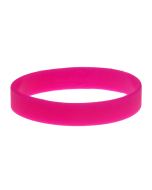
Handband's custom debossed silicone wristbands start at 100 units. Blank stock wristbands (yellow, hot pink, purple, etc.) ship in single-unit quantities, which suits smaller drives or hospital bereavement packs where you don't need branding.
Which cause colour should I pick?
Use the recognised colour for the cause you're supporting — pink for breast-cancer awareness, yellow for cancer / Livestrong / suicide prevention, purple for Alzheimer's, lupus, pancreatic cancer or domestic violence, red for HIV/AIDS and heart disease, green for mental health or organ donation, and orange for hunger or self-harm awareness. Combining the recognised colour with a clear short slogan (one to three words) lifts repeat-wear rates significantly.
How long does production take in 2026?
Standard turnaround in Australia is 7–10 working days from artwork approval for custom debossed and custom colour wristbands, plus shipping. Blank stock colours dispatch within 1–2 working days. For event deadlines under three weeks, contact us before ordering so we can confirm production capacity.
Do I need a charity registration to sell cause wristbands?
If you're a registered charity in Australia, ensure you're listed on the ACNC register and your jurisdiction's fundraising authority before issuing receipts. For unincorporated drives (school fundraisers, friend-and-family appeals), you can usually proceed without registration but you cannot claim tax-deductible receipts. Always check your state authority — rules differ between NSW, VIC, QLD, WA, SA, TAS, NT and ACT.
Are silicone wristbands recyclable?
Pure silicone is technically recyclable but not via standard kerbside services in Australia. The longer a wristband lasts on a wearer's wrist, the better its lifetime impact. For an eco-first drive consider RPET fabric, bamboo or biodegradable elastic fabric wristbands instead of silicone.
What's the best margin — debossed, colour or blank?
Blanks have the highest margin per unit because there's no setup cost: bulk wholesale around AUD 0.40–0.80, retail at AUD 2–5. Custom debossed and custom colour bands include a one-off mould or PMS-match cost so margins improve at higher volumes. For first-time drives under 200 units, blanks usually win on profit; for 500+ units custom debossed becomes more cost-effective.

Written by
Founder, Handband
Founder of Handband; specialist in custom wristbands and promotional products for events, schools, charities, and brands.
← Previous
Fundraising Wristbands: How Much Can You Raise?
Next →
Custom Wristbands for Retail & Shopping Centre Kids Clubs
Comment(s)