
Some days you wake up and the goal is obvious. Most days you don’t. The mortgage doesn’t care that you’re tired, the kids don’t care that you didn’t sleep, and the gym doesn’t care that work was a disaster. So how do people actually keep going when motivation is gone?
The honest answer: they don’t rely on motivation. They rely on cues, anchors, and tiny visible reminders that say “you decided this when you were thinking clearly — trust that version of yourself.” This article unpacks the behavioural-science research on perseverance and shows where a wristband fits into your toolkit.
Why Motivation Is the Wrong Goal
Motivation is an emotion. Emotions are weather — they pass. If your plan to keep going requires you to *feel motivated*, you’re building on sand. Researchers like BJ Fogg (Stanford Behaviour Design Lab) and Wendy Wood (USC) have spent decades showing that what actually works is removing friction and adding visible cues.
Cues beat willpower. Always. The brain is lazy by design — it follows the path with the shortest cognitive cost. If your “keep going” signal lives only in your head, it competes with every other thought. If it lives on your wrist, it doesn’t need to compete — you literally see it 30+ times a day.
The Three Things People Who Keep Going Have in Common
Looking across the studies, three patterns repeat:
- A specific identity statement. Not “I want to lose weight” but “I’m someone who walks daily.” Identity-based goals stick. Outcome goals collapse.
- A visible daily cue. Wristband, ring, sticker on the bathroom mirror. Something that catches your eye before you’ve had time to negotiate with yourself.
- A check-in ritual. A 30-second daily moment to ask “did I do the thing today?” without judgement. Just data.
A debossed wristband happens to deliver all three. The engraved phrase is your identity statement. Wearing it is the visible cue. Glancing at it before bed is the check-in. Total cost: .
Recommended for you
Products related to this article
Hand-picked to go with what you just read.
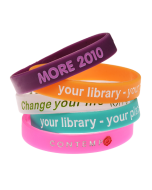
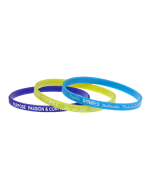
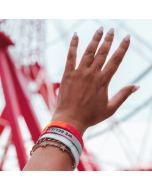
What to Engrave: The 6-Word Identity Test
Your debossed message has roughly 25 characters. That’s about 6 words. Use them on identity, not outcome:
- Bad: “LOSE 10KG BY JUNE” (outcome, time-bound, fragile)
- Good: “I WALK DAILY” (identity, present-tense, repeatable)
- Bad: “DON’T QUIT” (negative, vague)
- Good: “ONE MORE REP” (specific, action-oriented, doable)
- Bad: “BE BETTER” (no edge)
- Good: “BREATHE FIRST” (specific, immediate, body-anchored)
Spend 20 minutes choosing your phrase. Type it in caps and read it aloud. Does it feel like *you* or like a self-help slogan? You’ll know.
The Habit-Stacking Trick That Works for Most People
Habit stacking (James Clear, Atomic Habits) means anchoring a new behaviour to an existing one. The wristband is your anchor object. Choose three daily check-points where you already do something automatic, then add a 5-second wristband-glance ritual:
- Morning coffee → glance at wristband → one specific intent for the day.
- Lunch → glance → how am I doing on the intent?
- Brushing teeth at night → glance → did I do it?
After 30 days, the wristband is no longer a reminder — it’s the trigger that makes the check-in feel weird if you skip it. That’s the goal.
Dealing With the Inevitable Slump
Day 17 is the slump day. Look at the data — when 100,000 New Year’s resolutions were tracked by Strava in 2019, attrition spiked between days 14 and 21. Almost everyone who quits, quits in this window.
Three rescue tactics:
- Halve the goal, don’t pause it. Walking 5 minutes beats not walking. Your wristband doesn’t care if it’s 5 or 50.
- Tell someone. Texting one friend “I’m struggling, kept going anyway” creates accountability.
- Re-read your engraving aloud. You wrote it on a clear day. Trust that.
For more on visible-cue strategies, our handbands and healthy living piece breaks down the cue science. The complaining is bad for you guide covers a related habit-replacement protocol, and our resolutions guide has 9 templates ready to engrave.
Beyond Personal Goals: Team Perseverance
The same approach works for teams. Sports clubs, sales teams, school cohorts — anyone with a shared goal. A team wristband with the season’s slogan creates social accountability. Quitting feels harder when 30 other people on the field are wearing the same band.
See our study-goals guide for school-team examples and how wristbands inspire students for the classroom version. Browse our Branding category for team-pack pricing or the Fundraising category if your team-goal funds a charity at the same time.
A Note on Burnout
If “keep going” means “ignore exhaustion and push through,” that’s a path to burnout, not perseverance. The research is clear: real perseverance includes recovery cycles. Sleep, weekends off, real holidays. A wristband shouldn’t be a guilt-trigger when you rest. It’s a reminder of who you’re trying to be — and that person also rests.
If you’re feeling persistently flat for more than 2-3 weeks, please talk to your GP or call Lifeline 13 11 14. Wristbands are a habit tool, not a mental-health intervention.
Frequently Asked Questions
How does a wristband actually help me keep going?
A wristband is a visible cue your brain catches involuntarily 30+ times a day. Each glance is a free reminder of your decision — no willpower required. It works on the same behavioural-science principle as bedtime alarms or post-it notes, but you can’t lose it because it’s on your body.
What's the best message to put on a motivation wristband?
Identity-based phrases beat outcome goals. “I walk daily” outperforms “Lose 10kg.” Use present-tense, body-anchored, 4-6 word phrases. Avoid negatives (“don’t quit”) — the brain processes them poorly.
How long should I wear a motivation wristband?
Behavioural-habit research suggests 21-66 days for a behaviour to become automatic, depending on complexity. We recommend wearing the wristband daily for at least 30 days, then assessing whether you still need the cue. Many users keep wearing them for years — the cue keeps working as long as the goal still matters.
Will a wristband fix my motivation problem?
No. A wristband is a behavioural-cue tool that supports an existing decision. If you haven't decided what you want yet, a wristband won’t reveal it. Spend the time choosing your phrase — that’s where the work is. The wristband makes the decision visible, not the decision itself.
Can I get a custom motivation wristband for my team?
Yes — team packs of 50+ get bulk pricing on custom-debossed wristbands. Pick a single team-identity phrase, choose a colour that matches your branding, and order in your team's size mix. Most team orders ship within 7-10 business days.

Written by
Founder, Handband
Founder of Handband; specialist in custom wristbands and promotional products for events, schools, charities, and brands.
← Previous
Teens Fundraise for Cancer: How Schools & Youth Groups Run Wristband Campaigns (2026)
Next →
Multibandz Reviewed by Dadzclub: Why Australian Parents Trust the Times-Tables Wristbands (2026)
Comment(s)