Are Wristbands Eco-Friendly? Bamboo, RPET, Silicone & Tyvek Compared
By Handband Community Team · Handband
Updated 5 May 2026 · 12 min read
Updated 5 May 2026 · 12 min read
Updated May 2026. Are wristbands eco-friendly? The honest answer: it depends entirely on the material, the production method and how long each band stays in use. This guide compares the four main wristband materials — silicone, bamboo fabric, RPET recycled fabric and tyvek paper — on biodegradability, recyclability, lifecycle carbon footprint and certifications.
If you organise events for environmentally-conscious brands, schools or charities, the material choice signals your sustainability commitment to attendees. With Gen Z prioritising sustainability in 73 percent of purchase decisions (Deloitte, 2024), choosing the right wristband material has measurable brand value beyond the environmental impact itself.
Quick Eco-Friendliness Summary
Best for biodegradability
Bamboo fabric — decomposes in 6–12 months commercial compost. Closest thing to a fully biodegradable wristband.
Best for plastic diversion
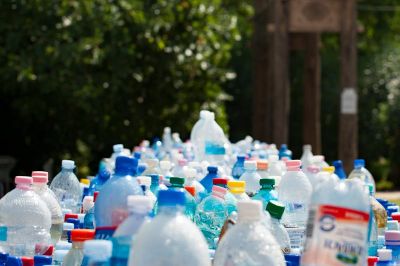
RPET (recycled PET) — each band diverts ~2 plastic bottles from landfill. Strong sustainability story.
Best for long-term reuse
Silicone — 3–5 year wear life means one band replaces hundreds of single-use bands over its lifetime.
Best for paper recyclability
Tyvek — accepted in standard paper recycling streams (it's technically #2 HDPE but municipal recyclers handle it).
Silicone Wristbands: The Long-Life Champion
What silicone is made from
Medical-grade silicone is a synthetic polymer derived from silica. Contains no BPA, no phthalates, no latex. Inert to skin contact, hypoallergenic, chemically stable for decades.
Lifecycle benefits
A well-used custom silicone wristband lasts 3–5 years of daily wear. Over that period, one band replaces what could otherwise be hundreds of single-use bands at different events.
Recyclability
Silicone is technically 100 percent recyclable but not accepted in most kerbside recycling. Use specialised silicone-recycling programs (TerraCycle in many countries) or commercial silicone recyclers for bulk drops. See our silicone recycling guide.
Decomposition timeframe
In landfill conditions, silicone takes 50+ years to break down. Long-life reuse is the better sustainability strategy than end-of-life disposal.
Bamboo Fabric Wristbands: The Biodegradable Choice
What bamboo wristbands are made from
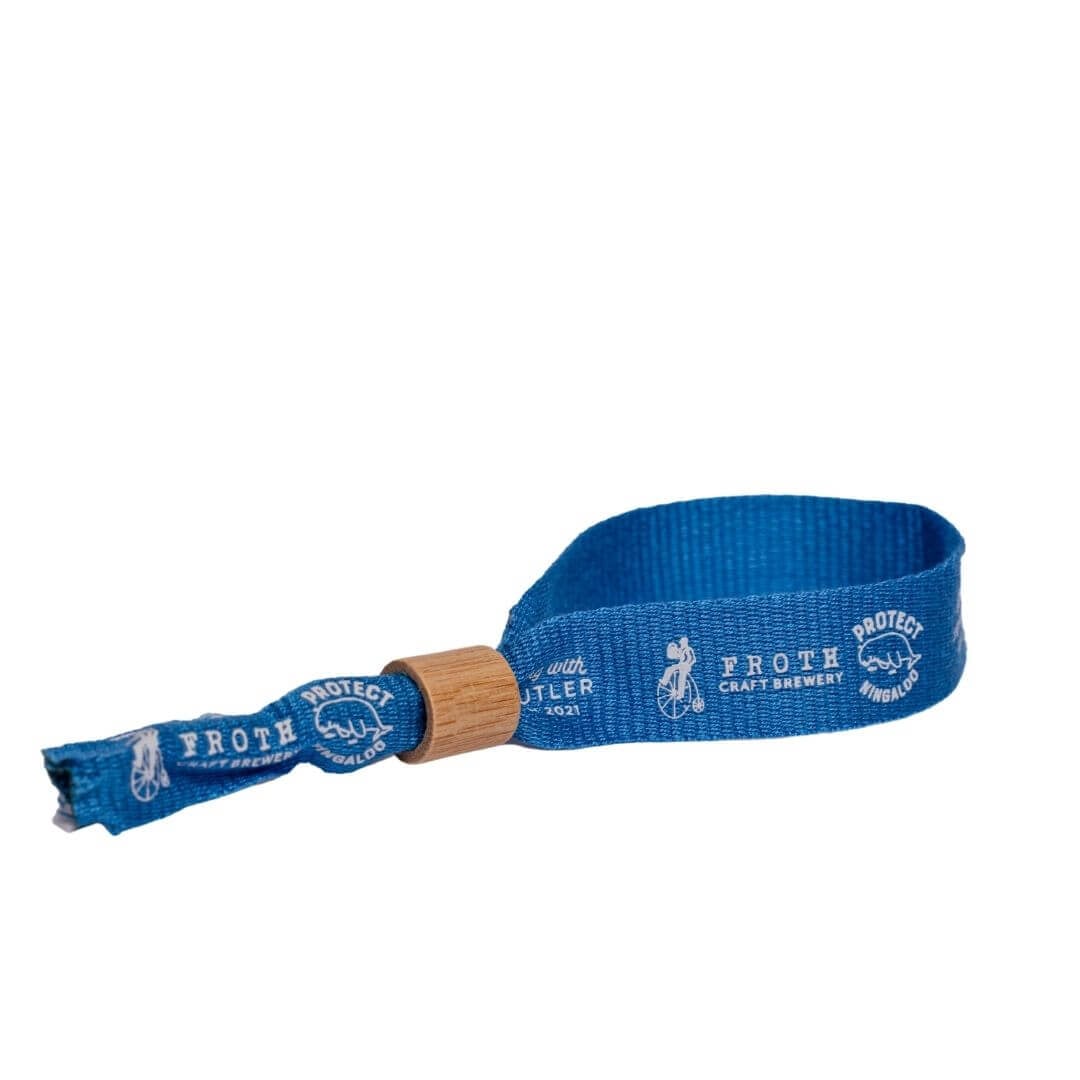
Sustainable bamboo fibre blended with a small percentage of cotton or polyester for durability. Bamboo absorbs CO2 during growth and decomposes in commercial compost within 6–12 months.
Sustainability credentials
- Biodegradable in 6–12 months commercial compost
- Bamboo plant absorbs 4× more CO2 than equivalent timber
- Naturally antibacterial and hypoallergenic
- Renewable resource (bamboo regrows in 5 years vs 30+ years for hardwood)
- OEKO-TEX or GOTS certification available
Best for
Environmental conferences, sustainability brand activations, eco-festivals, organic food events.
RPET (Recycled PET) Wristbands: Plastic-Diversion Choice
What RPET is made from
Recycled PET wristbands are woven from yarn spun out of recycled plastic bottles. Each band diverts approximately 2 plastic bottles from landfill.
Sustainability impact
- ~2 plastic bottles diverted from landfill per band
- Lower production-energy footprint than virgin polyester (~50 percent less)
- Reduces ocean-bound plastic when sourced from coastal-collection programs
- Same durability as standard polyester (years of wear)
Best for
Brands with public "recycled content" commitments, corporate ESG events, schools teaching circular-economy concepts, festivals partnering with ocean cleanup organisations.
Limitations
RPET is still a plastic — not biodegradable. Recycle at end of life through standard polyester streams.
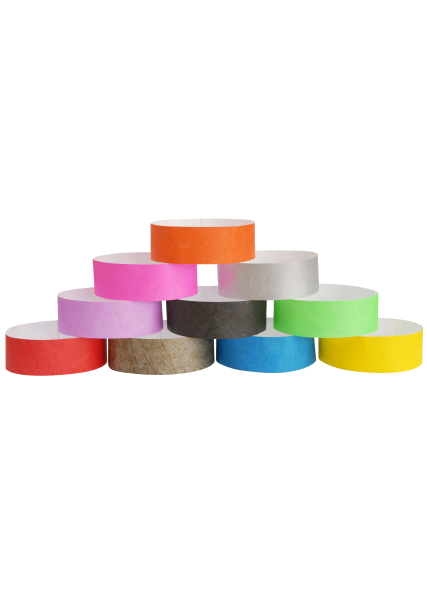
Tyvek Paper Wristbands: The Recyclable Single-Use Option
What tyvek is made from
Tyvek is a synthetic paper made from high-density polyethylene (HDPE, #2 plastic) fibres bonded under heat and pressure. Technically not paper, but recyclable in paper-stream programs in most municipalities.
Sustainability profile
- Recyclable in standard paper/plastic streams (check local council)
- Lowest material weight per band (under 5 grams vs 15 grams for silicone)
- Lowest carbon footprint per single-use event
- NOT biodegradable — persists in landfill for decades if not recycled
Best for
Single-day events where reusable bands don't make sense, cost-sensitive applications, when recycling infrastructure is available at the venue.
Sustainable Wristbands for Eco-Conscious Events
Bamboo, RPET, low-material designs and recyclable options — pick the most planet-friendly band for your event.



Lifecycle Comparison Table
Which Eco-Friendly Wristband Should You Choose?
For a single-day event with recycling infrastructure
Tyvek paper bands — cheapest, lowest material weight, recyclable at end of event.
For a multi-day festival
RPET woven fabric — durable for 3+ days continuous wear, strong sustainability story.
For a sustainability conference or eco-brand activation
Bamboo fabric — only truly biodegradable option, supports messaging.
For long-term wear (awareness, charity, employee bands)
Custom silicone — 3–5 year lifespan dramatically reduces per-event environmental cost.
For schools and youth programs
Mix — silicone for daily-wear house bands, bamboo for one-off green-week events, tyvek for school fete one-day access.
Reducing Wristband Waste at Your Event
1. Order accurate quantities
The biggest single source of wristband waste is over-ordering. Use last year's attendance plus 10 percent buffer, not 30 percent.
2. Choose reusable slider closures
Non-locking slider fabric bands can be loosened and re-distributed to next year's attendees. Reduces per-event material consumption by 80 percent over multi-year reuse.
3. Set up return-and-reuse bins
Branded bins at venue exits labelled "Return for next event". Even 20 percent return rate diverts thousands of bands from landfill at major festivals.
4. Highlight the eco angle in messaging
If you're using bamboo or RPET bands, say so. Print "Made from recycled bottles" or "Biodegradable in 6 months" on the band itself or accompanying signage.
Certifications to Look For
OEKO-TEX Standard 100
Tests textiles for harmful substances. Confirms no chemical residues remain in the band.
GOTS (Global Organic Textile Standard)
For fabric bands — certifies organic fibres, fair labour, ecological production.
Global Recycled Standard (GRS)
For RPET bands — verifies the recycled-content claim is genuine and traceable.
FSC certification
For paper/tyvek bands — confirms responsibly-managed forest source pulp.
Related Reading
- 10 Creative Ways to Recycle & Upcycle Silicone Wristbands
- How to Clean Silicone Wristbands: 6 Easy Methods
- Shop bamboo + RPET fabric wristbands
- Shop recyclable tyvek paper bands
References & Further Reading
- Deloitte Global Gen Z and Millennial Survey (2024) — Sustainability Preferences in Youth Purchasing.
- Ellen MacArthur Foundation (2023) — Circular Economy in Event Industry Report.
- OEKO-TEX Association — Standard 100 Certification Guide.
- Global Organic Textile Standard — GOTS Version 7.0 Standard.
- Textile Exchange (2024) — Preferred Fibre & Materials Market Report.
- TerraCycle — Silicone Recycling Program Australia.
Frequently Asked Questions
Quick answers from the Handband team
Are silicone wristbands eco-friendly?
Silicone itself is technically 100 percent recyclable but most kerbside recycling programs don't accept it. The biggest sustainability benefit of silicone bands is their long lifespan — 3–5 years of daily wear, vs single-use tyvek that's binned after one event. From a lifecycle perspective, a well-used silicone band is more eco-friendly than 365 single-use bands.
What is the most eco-friendly wristband material?
Bamboo fabric wristbands are the most biodegradable (decompose in 6–12 months in commercial compost). RPET (recycled PET) wristbands are most plastic-diverting (each band diverts ~2 plastic bottles from landfill). Tyvek paper bands are recyclable in standard paper streams. Each has a different sustainability profile — choose based on whether you prioritise biodegradability, recycled content or recyclability.
What are RPET wristbands made from?
RPET (Recycled Polyethylene Terephthalate) wristbands are made from yarn spun out of recycled plastic bottles. Each band diverts approximately 2 bottles from landfill. They look and feel identical to standard woven fabric bands but carry a strong sustainability story for your event communications.
Are bamboo wristbands actually biodegradable?
Yes — bamboo fabric wristbands made from natural bamboo fibre (blended with a small percentage of cotton or polyester for durability) decompose in commercial compost in 6–12 months. Pure bamboo with no synthetic binders decomposes in home compost in 12–18 months. Look for OEKO-TEX or GOTS certification.
Can silicone wristbands be recycled?
Yes, but not through standard kerbside recycling. Use specialised silicone-recycling programs (TerraCycle accepts silicone wristbands free of charge in many countries). Bulk event organisers can ship leftover bands to commercial silicone recyclers who grind and re-mould the material.
Is Tyvek paper biodegradable?
Tyvek is technically recyclable (#2 HDPE) but not biodegradable — it's a synthetic polymer that lasts indefinitely in landfill. Recycle it through paper-stream programs that accept #2 HDPE. For true biodegradability, choose bamboo fabric or compostable paper alternatives.
How can I reduce wristband waste at my event?
Order accurate quantities (last year's count + 10 percent buffer, not 30 percent), choose reusable slider closures over single-use barrel locks, set up return-and-reuse bins at exits, opt for biodegradable bamboo or recycled RPET materials, and consider 'lend-don't-give' models where the band is part of your venue infrastructure.
Aug 14, 2023

Written by
Founder, Handband
Michael founded Handband to give event organisers, charities, sports clubs, and brand teams a simpler way to source custom wristbands and promotional products. The team has supplied wristbands to festivals, schools, fundraisers, and corporate activations world-wide.

Share on Facebook

Share on X

Share on Pinterest
Comment(s)
Related posts