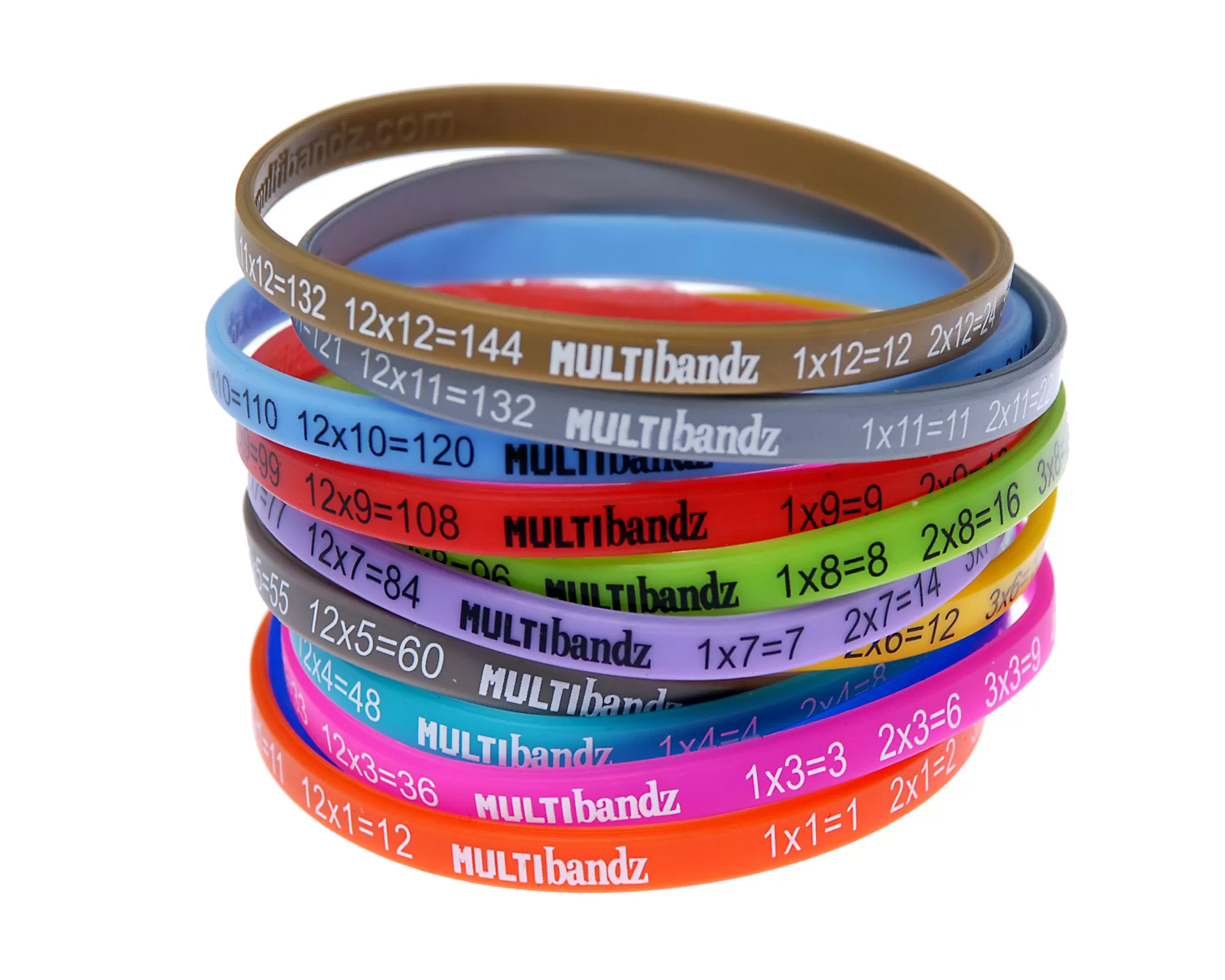

Getting kids into the study habit is one of those parenting challenges where the answer is simple but the execution is hard. Educational research consistently shows that what matters isn’t how long a child studies but how reliably they study at the same time, in the same place, every day. Building study habits kids actually keep is mostly about removing friction, not adding willpower.
This guide walks through what works in 2026 for primary school study skills, the daily routines that researchers like Wendy Wood, BJ Fogg, and Carol Dweck have validated, and where Handband’s educational wristbands fit as low-friction focus tools for children. Whether you’re a parent who has tried (and failed) to enforce homework consistency tips, or a teacher building classroom-wide study schedule for kids, the patterns below are durable across age groups.
Why Most Kids Study Routines Fall Apart
Three failure modes show up repeatedly in conversations with parents:
- Inconsistent timing. Study time slides from 4pm Monday to 7pm Tuesday to skipped Wednesday. The brain treats inconsistency as “optional”.
- Wrong session length. Either too long (60+ min for an 8-year-old) or too short (5 min just to tick the box). The sweet spot is 10 min per grade level.
- No transition cue. The kid goes from Roblox directly to homework with no ritual marking the switch. The brain doesn’t know it’s study time.
The fix isn’t willpower or threats. It’s building friction-removal patterns the brain treats as automatic.
The 4-Pillar Study Routine for Children
Highly-effective parents and primary teachers we’ve interviewed share four pillars:
- Same time daily. 4:30pm or 5pm, weekdays. Weekends optional or shorter.
- Same place daily. Kitchen table, study desk, or living-room corner — consistent.
- Same length, age-appropriate. Year 1: 10 min. Year 4: 30 min. Year 7: 60 min. Set a timer.
- Same closure ritual. A small treat, free play, screen time. The reward signals “you did the work.”
Inside that scaffold, what they actually study matters less than the consistency. A child who reads 20 minutes a day, every day, for a year, becomes a reader. A child who reads for 2 hours one Sunday and zero the rest of the week doesn’t.
Recommended for you
Products related to this article
Hand-picked to go with what you just read.
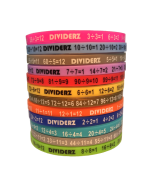
Where Educational Wristbands Fit: The Study Cue Multibandz Effect
Multibandz, Dividerz, and Facts To wristbands aren’t a replacement for the routine — they’re the friction-removal layer that makes the routine easier to start and easier to keep.
- Visible study cue. Putting on the wristband at 4:30pm becomes the transition signal between play and study.
- Spaced retrieval all day. The kid glances at the band 30+ times daily, each glance is a 0.5-second retrieval rep.
- No parent supervision required. Once the kid puts the band on, the brain does the practice automatically.
- Visible progress. A 12-band Multibandz set lets the kid “graduate” from one times-table to the next, providing a sense of forward motion.
See our teaching children well guide for the deeper evidence base and the Multibandz remembering-maths article for the cognitive-science foundation.

Step-by-Step: Building Study Habits Kids Will Actually Keep
A 4-week setup that consistently works for primary-school students:
- Week 1. Pick the time, place, and length together. Let the kid choose the wristband design (gives them ownership). Start at 50% of target length to build success.
- Week 2. Hit target length. The wristband-on-then-start-timer ritual now feels normal.
- Week 3. The kid starts the routine without a parent reminder. Timer beeps; closure ritual happens; routine ends.
- Week 4. Routine is automatic. Now you can add complexity (different subjects on different days, longer sessions, more challenging material).
The 4-week mark is the milestone. After that, the routine maintains itself with much less parent intervention.
Homework Consistency Tips That Work
- No homework on Friday afternoon. Kids need the cognitive break. Saturday morning works better.
- Snack first. A hungry kid can’t focus. 10 min decompression + snack before homework.
- Phones and tablets out of the room. Even silenced, they fragment attention. Phone goes to a basket on the kitchen counter.
- Water bottle visible. Hydration affects focus. A clearly-visible water bottle within reach removes one excuse to leave the desk.
- Wristband on, timer on. Two visible cues that say “study time has started.”
Read our handbands help kids overview for the broader use-case context and the learning times tables guide for maths-specific routines.
What to Do When the Routine Breaks
Even good routines break — illness, holidays, family stress. The recovery pattern that works:
- Don’t lecture. Lecturing about the missed days teaches the kid that breaks = guilt. Recovery should feel neutral.
- Restart at 50% length. If you were doing 30 min sessions, restart at 15 min for 3-5 days.
- Re-engage the wristband ritual. Putting on the band again signals “we’re back”.
- Build back to full length over 1-2 weeks. Don’t try to compensate by making sessions extra-long.
When Your Kid Genuinely Hates Studying
Sometimes the routine works mechanically but the kid hates the activity. Three common causes and fixes:
- Material is too hard or too easy. Talk to the teacher about adjusting difficulty.
- Anxiety about getting it wrong. Praise effort and process, not result. “You stuck with that for 25 min” beats “you got it right”.
- Underlying learning difficulty. If 4-6 weeks of solid routine produces no progress, ask the school about an educational-psychologist assessment.
Browse the Schools category for the full educational wristband range.
A Note on Screens and Study
The Royal Australian and New Zealand College of Psychiatrists guidelines suggest under 2 hours of recreational screen time per day for school-age children. Total avoidance isn’t realistic in 2026, but balancing screen with active or creative play is the goal — and protecting the daily study window from screens specifically is the highest-impact rule.
The wristband is a low-tech tool that doesn’t add screen time. That’s a feature, not a bug.
Closing Thought
Getting kids into the study habit is mostly about reducing friction, not adding pressure. A consistent time, place, length, and closure ritual — supported by a silicone wristband as the visible transition cue — outperforms hours of nagging. After 4 weeks of consistent execution, the routine carries itself. The wristband is the friction-removal layer; you’re the parent who set up the system.
Frequently Asked Questions
How long should kids study each day?
Roughly 10 minutes per grade level. Year 1: 10 min. Year 4: 30 min. Year 7: 60 min. Year 10: 90 min spread across subjects. Beyond those numbers, returns drop sharply and the kid learns to dislike studying.
What's the most important factor in building kids study habits?
Consistency. Same time, same place, every weekday. Length matters less than reliability. A 15-minute daily session beats a 90-minute Sunday-only marathon for long-term skill building.
Do educational wristbands actually help kids learn?
For fluency and consolidation, yes. Multibandz, Dividerz, and Facts To wristbands deliver hundreds of micro-retrieval reps daily — exactly what cognitive science (Roediger and Karpicke) shows is the most effective way to consolidate facts. They don't replace teaching new concepts but they accelerate fluency.
How do I help my kid restart the study routine after a break?
Restart at 50% of target length for 3-5 days, then build back to full length. Don't lecture about the missed days; the recovery should feel neutral. Re-engage the wristband-on transition cue to signal that the routine is back.
When should I worry that my kid's study struggles are more than just willpower?
If 4-6 weeks of consistent routine, age-appropriate material, and supportive environment produce no measurable progress, talk to the teacher and consider an educational-psychologist assessment. Conditions like dyslexia, dyscalculia, and ADHD are common and well-supported once identified.

Written by
Founder, Handband
Founder of Handband; specialist in custom wristbands and promotional products for events, schools, charities, and brands.
← Previous
Teen-Led Community Fundraiser Wristbands (2026)
Next →
Yellow Awareness Wristbands: Why Cause Bracelets Still Matter Today
Comment(s)