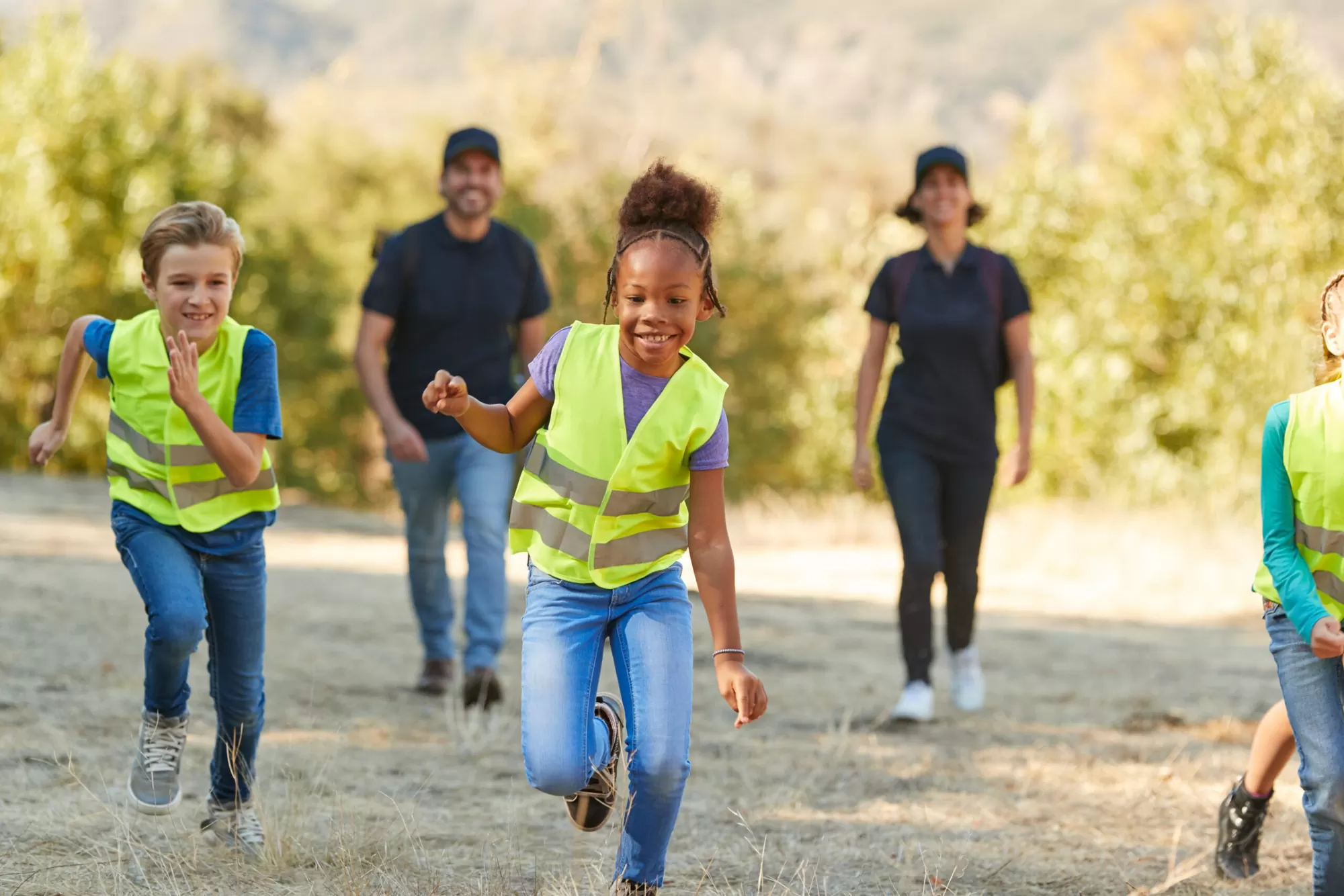

Every parent and teacher reading this has the same goal: help kids achieve their best. The hard part isn’t the goal — it’s knowing which interventions actually move the needle and which are just well-marketed busywork.
This guide covers what the educational-research literature consistently identifies as high-leverage approaches for primary-school children, where wristband-based learning aids fit into the picture, and what to do when standard approaches stall. We’re not selling magic — we’re mapping the evidence.
What “Achieving Their Best” Actually Means
Educational researcher John Hattie’s landmark meta-analyses (Visible Learning) identified the highest-impact factors on student achievement. Most of them are surprisingly mundane:
- Self-reported grades (effect size 1.44) — kids predicting their own performance.
- Spaced practice (effect size 0.71) — short, frequent retrieval beats marathon study sessions.
- Feedback (effect size 0.70) — specific, timely feedback on what they did vs the standard.
- Teacher clarity (effect size 0.75) — the kid understanding what success looks like.
Notice what’s missing: expensive tutoring, fancy apps, “learning style” matching. Those rank low or have negative effect sizes. The high-impact things are simple, repeatable, and cheap.
Where Wristbands Fit: The Spaced-Practice Angle
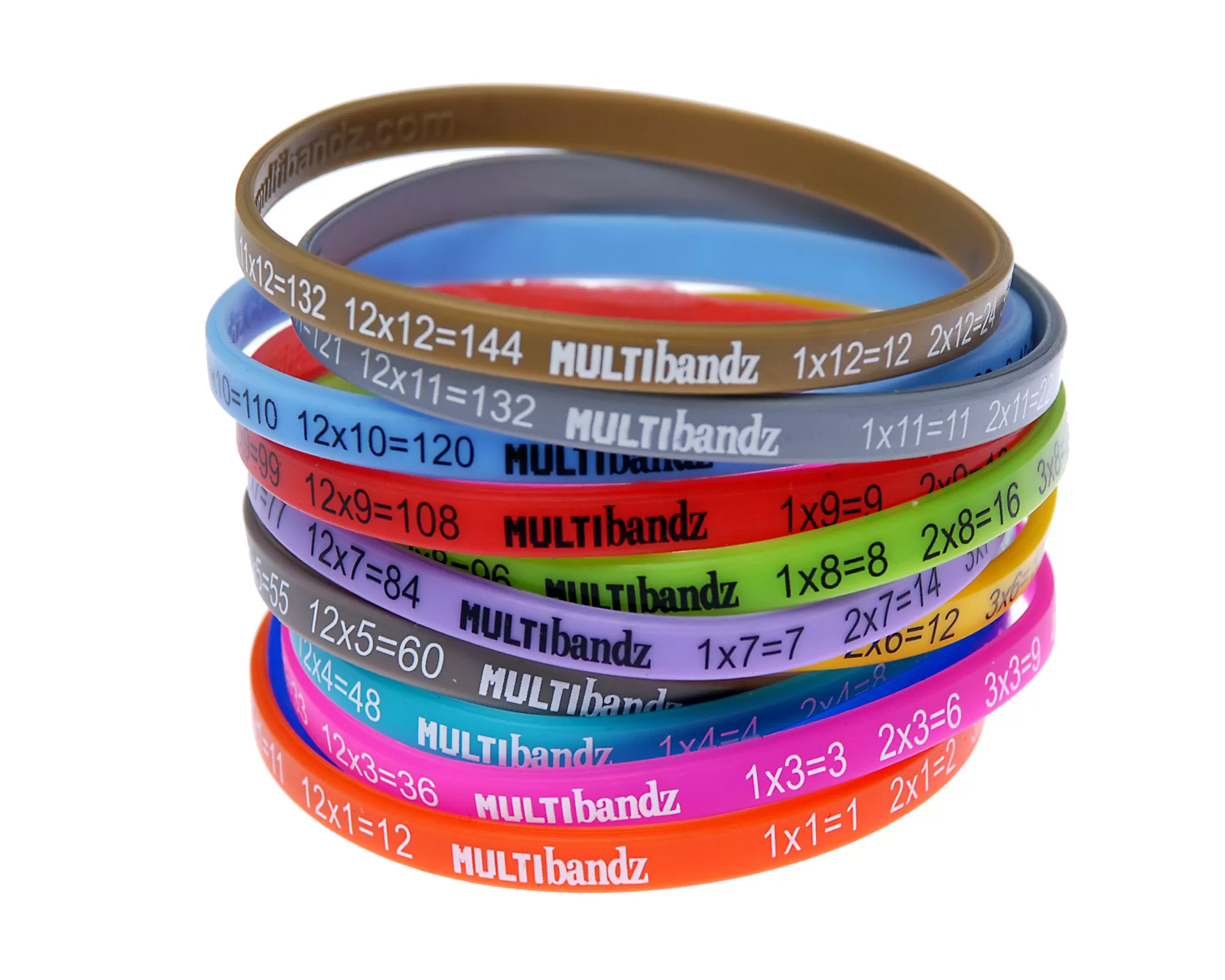
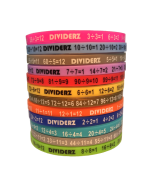
Multibandz, Dividerz, and Facts-To wristbands are essentially “spaced practice on the wrist.” The kid wears a band with content they need to memorise. Each glance is a 0.5-second retrieval rep. Across 8 hours of wear, that adds up to hundreds of micro-rehearsals, with zero parent involvement after the morning “put your maths band on” reminder.
The cognitive science is robust. From Roediger and Karpicke’s 2006 testing-effect work onwards, the literature has consistently shown short, distributed retrieval beats blocked-practice sessions for long-term retention. A wristband simply makes the distribution automatic.
Read our Multibandz remembering-maths article and our learning times tables strategy for the structured curriculum approach.
Recommended for you
Products related to this article
Hand-picked to go with what you just read.
The Three Things That Actually Help Most Kids Achieve
Looking across hundreds of conversations with teachers and parents:
- Stable sleep. A 9-year-old needs 9-11 hours. Most under-perform because they’re tired, not because they’re struggling cognitively.
- A predictable daily structure. Same time, same place, same expectation. Kids thrive on routine.
- An adult who notices. Specific, non-generic praise (“you stuck with that maths problem for 20 minutes” not “you’re so smart”).
Everything else is downstream of those three. The wristband is just a tool that supports the second item — it gives the kid something visible to associate with their daily learning routine.
Building the Study Habit Without the Battle
Most parents struggle with the homework battle. Three approaches that lower the temperature:
- Same time, same place. Kitchen table, 4:30pm, every weekday. Routine removes negotiation.
- Time-boxed sessions. 20 minutes for under-9s, 30 minutes for 10-12. After that, stop — even if work isn’t finished.
- Visible reward of *effort*, not result. Sticker chart, wristband, written acknowledgment — for showing up, not for getting answers right.
See our getting-kids-into-the-study-habit guide for the full session template.
Beyond Maths: Where Wristbands Help Other Subjects
Multibandz cover times-tables. Dividerz cover division. Facts-To wristbands cover everything else — state capitals, periodic table elements, foreign-language vocabulary, historical dates.
The format is the same: short factual content, on the wrist, exposed to the kid hundreds of times a day without effort. We’ve had teachers order Facts-To bands for HSC chemistry students, primary-school geography, and Indonesian-language vocabulary.
Browse the Schools category for full education product range or the Schools Multibandz subcategory for bulk-school options.
The Emotion Bracelet for Non-Academic Achievement
“Achieve their best” isn’t only academic. Some kids’ biggest growth area is emotional regulation — naming what they feel, asking for help, calming themselves.
The Emotion Bracelet is an under-appreciated tool. Each colour represents a feeling state. The kid moves the band to the colour that matches how they feel. Over weeks, the kid develops a vocabulary for feelings — which is a precondition for all the other skills (resilience, persistence, focus) that drive academic achievement.
When Standard Approaches Aren’t Working
If you’ve done the basics — sleep, routine, attention, learning aids — and a kid is still struggling, three steps:
- Talk to the teacher. Schedule a 20-minute meeting and ask “what do you see?” The teacher sees the kid 30+ hours a week.
- Ask about a learning assessment. Dyslexia, dyscalculia, ADHD — all are far more common than parents realise. An educational psychologist assessment costs 00-700 and reveals a lot.
- Don’t double down on more of the same. If 30 minutes of homework isn’t working, 60 won’t either. Change the approach.
Closing Thought
Helping kids achieve their best is mostly about getting the boring fundamentals right — sleep, routine, specific praise, predictable structure. Wristbands are a small lever in that bigger system. They make the spaced-practice principle automatic, which is why they outperform flashcards. But they’re not magic — they support a system, they don’t replace it.
The kid who’s rested, has a stable home routine, and gets specific praise for effort will outperform the kid who has every learning aid but none of those things. Order what works for you, and don’t skip the basics.
Frequently Asked Questions
What's the single biggest factor in primary-school achievement?
Sleep. A 9-year-old who consistently gets 9-11 hours per night will outperform a similar peer who gets 7-8. Sleep deficits compound over weeks and present as “not paying attention” or “struggling with reading.”
How do wristbands help kids learn maths?
Multibandz turn passive wear time into hundreds of micro-retrieval reps per day. Each glance reinforces a fact (a times-table, division equation) without feeling like study. The cognitive science (Roediger & Karpicke) shows distributed retrieval is far more effective than long study sessions.
Should I praise my kid for effort or for results?
For effort, specifically. “You worked through that for 25 minutes” outperforms “You're so smart.” Carol Dweck's growth-mindset research consistently shows effort-praise builds resilience while ability-praise creates fragile confidence that collapses at the first failure.
When should I worry about my kid's learning?
If standard interventions (consistent routine, sleep, learning aids) don't produce noticeable progress over 4-6 weeks, talk to the teacher and consider an educational-psychologist assessment. Common conditions like dyscalculia and ADHD are under-diagnosed but well-supported once identified.
Are wristbands distracting in class?
Most teachers we've spoken to report the opposite — Multibandz become a calming focal point during quiet desk work. They don't make noise, don't require electricity, and don't need teacher attention to function. Most schools allow them without issue.

Written by
Founder, Handband
Founder of Handband; specialist in custom wristbands and promotional products for events, schools, charities, and brands.
← Previous
Easter 2026 Australia — Kids Activities & Safety Guide
Next →
Run That Event Like a Boss: The 2026 Wristband Toolkit for Australian Event Managers
Comment(s)