What Are Tyvek Wristbands? Materials, Uses, and Why They Are the Best Choice for Events
April 12, 2026

What Is Tyvek and Why Is It Used for Wristbands?
Tyvek is a high-density polyethylene fibre material developed by DuPont. It is best known for combining the properties of paper, film, and fabric into a single lightweight sheet. When used for event wristbands, Tyvek provides an ideal balance of affordability, durability, and functionality. The material is waterproof, tear-resistant, and holds ink remarkably well — making it one of the most popular choices for single-use event wristbands across the globe.
Unlike traditional paper wristbands that dissolve in rain or fall apart after a swim, Tyvek wristbands hold their shape and remain legible throughout the event. Whether you are running a music festival, a community fair, or a multi-day conference, Tyvek delivers performance that paper simply cannot match.
Key Properties of Tyvek Wristbands
Waterproof and Weather-Resistant
One of the defining features of Tyvek is its resistance to water. Standard paper wristbands absorb moisture, causing them to smear, tear, or become unreadable. Tyvek repels water at the surface level, keeping printed information — barcodes, logos, sequential numbering, and event details — fully visible even in wet conditions. This makes Tyvek the go-to solution for outdoor festivals, pool parties, water parks, and any event where attendees might encounter rain or sweat.
Tamper-Evident Design
Tyvek wristbands feature a one-way adhesive closure that cannot be reopened without visible damage to the band. Once applied, the wristband shows clear signs of tampering if removed, making it extremely difficult to transfer between attendees. This tamper-proof quality is critical for access control at events where re-entry management and age verification are important. Security staff can visually confirm whether a wristband is genuine and intact with a single glance.
Lightweight and Comfortable
Despite its durability, Tyvek is incredibly lightweight. At events that last many hours or multiple days, attendee comfort matters. Tyvek wristbands weigh almost nothing and sit flat against the skin without chafing or causing irritation. This is a major advantage over heavier alternatives such as silicone or fabric wristbands for single-day applications.
Inkjet vs Laser Printing on Tyvek Wristbands
Inkjet Printable Tyvek
Inkjet printable Tyvek wristbands are designed for use with standard inkjet desktop printers. They are ideal for event organisers who need to print small batches or variable data — such as individual names, seat numbers, or unique barcodes — without investing in commercial printing equipment. The coating on inkjet Tyvek absorbs water-based inks cleanly, producing vibrant and legible output. You can explore our range of Tyvek wristbands to find the right option for your printer setup.
Laser Printable Tyvek
Laser printable Tyvek is engineered to handle the heat generated by laser printers without warping or melting. The toner bonds cleanly to the surface, producing sharp, smudge-resistant text and graphics. Laser-printed Tyvek wristbands are particularly well-suited for high-volume print runs where speed and consistency are priorities. Many event management companies and ticketing services rely on laser Tyvek for printing thousands of wristbands per run.
How Tyvek Compares to Silicone and Fabric Wristbands
Choosing the right wristband material depends on the event type, duration, and budget. Here is a straightforward comparison to help you decide:
- Cost: Tyvek is the most affordable option, making it suitable for large events with thousands of attendees. Silicone and fabric wristbands cost significantly more per unit.
- Reusability: Silicone and fabric wristbands are designed for repeat use and make excellent keepsakes. Tyvek is single-use by design — once removed, it cannot be resealed, ensuring security integrity.
- Customisation: All three materials support custom printing, but Tyvek offers the easiest in-house printing capability. Fabric and silicone typically require professional print setups for quality results.
- Durability: For multi-day events (three or more days), fabric or silicone wristbands may be more appropriate. Tyvek is rated for one to two days of normal wear.
Common Uses for Tyvek Wristbands at Events
Tyvek wristbands are deployed across an enormous range of event types. Their affordability and flexibility make them the standard choice for high-attendance gatherings. Common applications include:
- Music Festivals and Concerts: General admission and VIP tiers can be distinguished by different wristband colours.
- Community Fairs and Markets: Quick to apply at entry gates with minimal staff training required.
- Sports Events: Waterproof performance keeps barcodes readable after athlete sweating or rain exposure.
- Nightclubs and Bars: Age verification and re-entry management for licensed venues.
- Theme Parks and Waterparks: Water resistance ensures wristbands last through rides and pools.
- Corporate Events: Badge-free identification for large conferences and trade shows.
For a broader overview of wristband options for events, visit our events wristbands page.
Ordering Tyvek Wristbands in Bulk
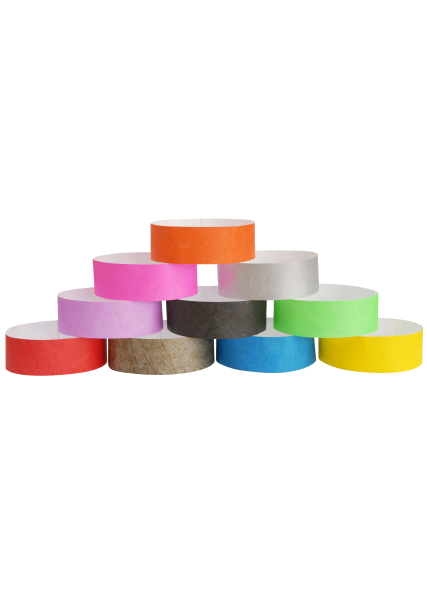
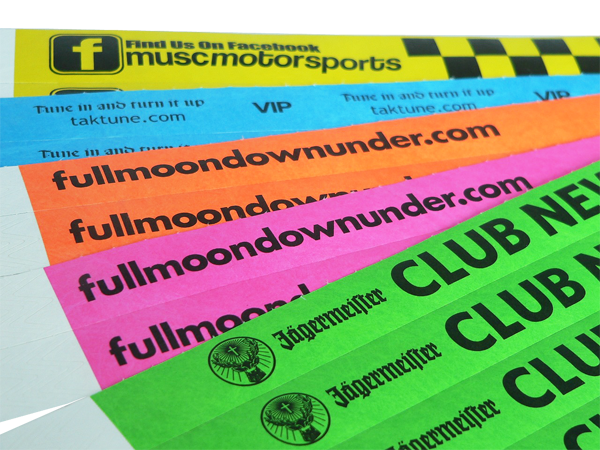
Most event organisers purchase Tyvek wristbands in bulk to bring down the cost per unit. Blank wristbands are available in a wide range of colours, which makes colour-coding different admission tiers straightforward. Custom-printed runs are also available for organisers who want logos, QR codes, or sequential numbering. When ordering in bulk, always confirm your minimum order quantity, lead time, and printing method compatibility.
Browse our full range of wristband products to compare options and quantities.




Sustainability and Disposal of Tyvek Wristbands
Tyvek is made from 100% high-density polyethylene (HDPE), which means it is technically recyclable through specialist plastic recycling programmes. While not all kerbside recycling services accept Tyvek, DuPont has historically operated take-back programmes in various markets. For large events generating significant wristband waste, collecting used wristbands in a central bin for specialist recycling is a practical approach. Compared to laminated paper wristbands, which cannot be recycled due to mixed materials, Tyvek is a more environmentally responsible single-use option.
Tips for Getting the Most from Tyvek Wristbands
- Apply wristbands snugly — loose bands are easier to slip off or share between attendees.
- Use different colours for different admission tiers rather than trying to print all distinctions.
- Print barcodes with sufficient quiet zones (white space around the code) to ensure scanner reliability.
- Store unprinted Tyvek wristbands away from direct sunlight to prevent yellowing of the adhesive.
- Test-print a small batch before your main run to confirm ink adhesion and barcode readability.
Frequently Asked Questions

Share on Facebook

Share on X

Share on Pinterest
Comment(s)
Recent Posts