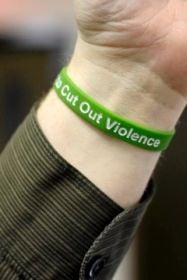
How an "I Will Be Safe" Wristband Campaign Changes School Culture
When South Windsor High School students chose to hand out "I Will Be Safe" wristbands to every student in their year, they did something quiet but powerful: they turned an abstract idea (safety, respect, kindness) into a physical object that every student could see, every day, on every wrist. That's the magic of an anti-bullying wristband campaign — it makes a school's values tangible, peer-driven, and impossible to ignore. The South Windsor story isn't unique. Schools across Australia and the world have run similar campaigns, and the pattern is consistent: when students wear the same visible reminder, behaviour changes.
According to the Australian Government Department of Education data, around 1 in 4 Australian students aged 8-14 report being bullied every few weeks or more often. Programs that move from teacher-led posters to student-led visible campaigns consistently produce stronger results because they shift the social proof — bullying becomes "uncool" not because adults say so but because peers wear the message.
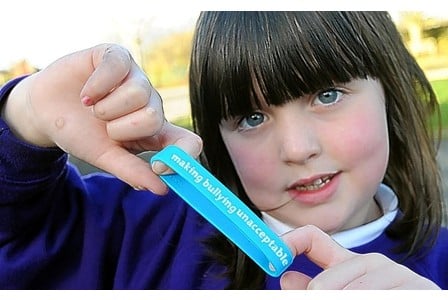
Why Wristbands Work for Anti-Bullying Campaigns
1. They Make the Invisible Visible
Anti-bullying values are abstract. A wristband on every student's wrist makes those values a physical, daily reminder. Students see the band when they raise their hand in class, eat lunch, play sport. The message becomes part of the school's visual identity.
2. They Build Peer Solidarity
When everyone wears the same band, the kids who would otherwise stay silent feel part of a group. The kids who would otherwise bully see they're outnumbered. The shift in social proof matters more than any anti-bullying poster ever could.
3. They Outlast Awareness Weeks
Standard anti-bullying posters, assemblies, and awareness days have a short shelf life — the message fades within weeks. Wristbands worn daily extend that "active reminder" period from weeks to months.
4. They Spread Beyond the School
Students wear the band home, to sport, to friends' houses, to the supermarket. Each new context is another impression of the message. Parents see the band on their child's wrist and ask about it. The conversation expands beyond the school gate.
5. They Cost Almost Nothing Per Student
At bulk order quantities (500+), custom debossed silicone wristbands cost a few cents per band. A school of 800 students can outfit every child for the price of a single pizza party. The return on investment in behavioural change is dramatic.
Recommended for you
Products related to this article
Hand-picked to go with what you just read.
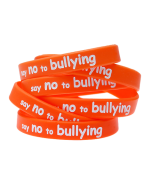
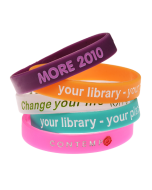
How to Run a Student-Led Anti-Bullying Wristband Campaign
Step 1: Form a Student Committee
The campaign works because students lead it, not teachers. Recruit 5-10 student volunteers across year levels who will own the design, the rollout, and the messaging. Adult supervision should be light — students should feel ownership.
Step 2: Design the Message Together
The wristband text is critical. Popular formats include:
- "I Will Be Safe" — first-person commitment
- "Be a Buddy, Not a Bully" — peer language
- "Kindness Counts" — positive framing
- "R U OK?" — opens dialogue
- "Stand Up, Speak Out" — empowerment
Let students vote between options. The chosen message becomes the campaign's identity for the school year.
Step 3: Pick Colours That Signal "Care"
Orange and yellow are the international anti-bullying colours. Pink works for kindness campaigns. School colours work if the band is also doubling as a school-spirit item. Avoid red (often perceived as aggressive) and black (perceived as serious/funeral).
Step 4: Order with Time to Spare
Custom debossed silicone wristbands take 2-3 weeks from order to delivery. Place the order at least 4 weeks before the launch event. For start-of-year campaigns, order in November/December for early February delivery.
Step 5: Launch With Visible Drama
Don't just hand out bands at recess. Hold a launch assembly where every student receives one at the same time. Have student speakers explain the message. Photograph the moment for social media. The shared experience reinforces the message far more than passive distribution.
Step 6: Reinforce Through the Year
Schedule follow-up moments where the campaign is mentioned again: awareness weeks, assemblies, class meetings, end-of-term wrap-ups. The wristbands themselves do most of the daily reinforcement — but periodic explicit moments keep the message alive.
What to Pair With the Wristband
- A pledge card — students sign a commitment matching the wristband text.
- Class discussions — every term, dedicate one class to talking about how the band's message is showing up day-to-day.
- Parent communication — send home a note explaining what the band means and how parents can reinforce it.
- Reward systems — recognise students who exemplify the band's message (without making it competitive).
- Awareness week events — pair with annual National Day of Action Against Bullying activities.
Other School Safety Wristband Campaigns Worth Considering
- Sun safety bands — yellow with "SunSmart" messaging for warm climates.
- Mental health awareness — green or blue with "R U OK?" or similar.
- Buddy program identifiers — Year 12 student buddies wear distinctive bands.
- Peer support team — student leaders wear identifying bands so younger students know who to approach.
- Reading challenges, sports houses, year groups — secondary uses that build school pride.
Browse our full custom silicone wristband range to start designing your school's campaign. For more student campaign ideas, see our student campaign success stories.
Frequently Asked Questions
Do anti-bullying wristbands actually reduce bullying in schools?
The evidence suggests they help when combined with peer-led implementation, regular reinforcement, and clear behavioural expectations. The wristband alone isn't a magic fix — but it creates daily visible social proof that the school's culture rejects bullying. Schools that pair a wristband campaign with discussion, parent involvement, and follow-up moments consistently report stronger results than schools using posters or one-off assemblies alone.
What's the best wristband message for an anti-bullying campaign?
First-person commitments work best ("I Will Be Safe", "I Will Be Kind", "I Stand Up"). They turn the band into a personal pledge rather than a passive logo. Avoid abstract slogans ("End Bullying Now") which can feel preachy. Keep it short (10-15 characters) so it's readable across the wrist.
How many wristbands should we order for an Australian school of 500 students?
Order 550 to cover every student plus 10% for breakage and late arrivals. If you're including teachers (recommended — adults wearing the band reinforces the message), add 60-80 more. Plan one full reorder partway through the year for replacements as students lose or break their original band.
Should wristbands be voluntary or mandatory in school campaigns?
Voluntary works better. Mandatory wearing turns the band into a compliance item rather than a statement. Most successful Australian school campaigns offer bands free to every student but don't require wearing — and report 80-90%+ voluntary daily uptake within a few weeks, especially when peer-led.
Can primary-school children wear silicone wristbands safely?
Yes. Silicone wristbands are made from food-grade material, contain no metal contact points, and have no choking-hazard small parts. Order youth-size bands (180mm length) for primary children. Toddler-size (160mm) is available for ages 3-6. Bands are waterproof and survive everyday school wear, including sport and play.

Written by
Founder, Handband
Founder of Handband; specialist in custom wristbands and promotional products for events, schools, charities, and brands.
← Previous
Christmas Wristbands for Australian Events & Fundraisers — 2026 Guide
Next →
How to Survive Christmas with Kids: An Australian Parent's Practical Guide (2026)
Comment(s)