Wristbands almost always arrive well before the event. Between delivery and the gate opening they sit somewhere — a cupboard, a car boot, a box under someone's desk — and how they are stored in that window decides whether they go on cleanly on the day or cause a queue.
Storage sounds like a non-problem until a thousand Tyvek bands have absorbed a week of garage humidity, or a box of silicone bands has spent three days in a hot car. Here is how to hold stock so it is usable when you need it.
Store by material, not by event
The three common wristband materials want different things, and storing them together is why problems happen.
Tyvek and paper bands
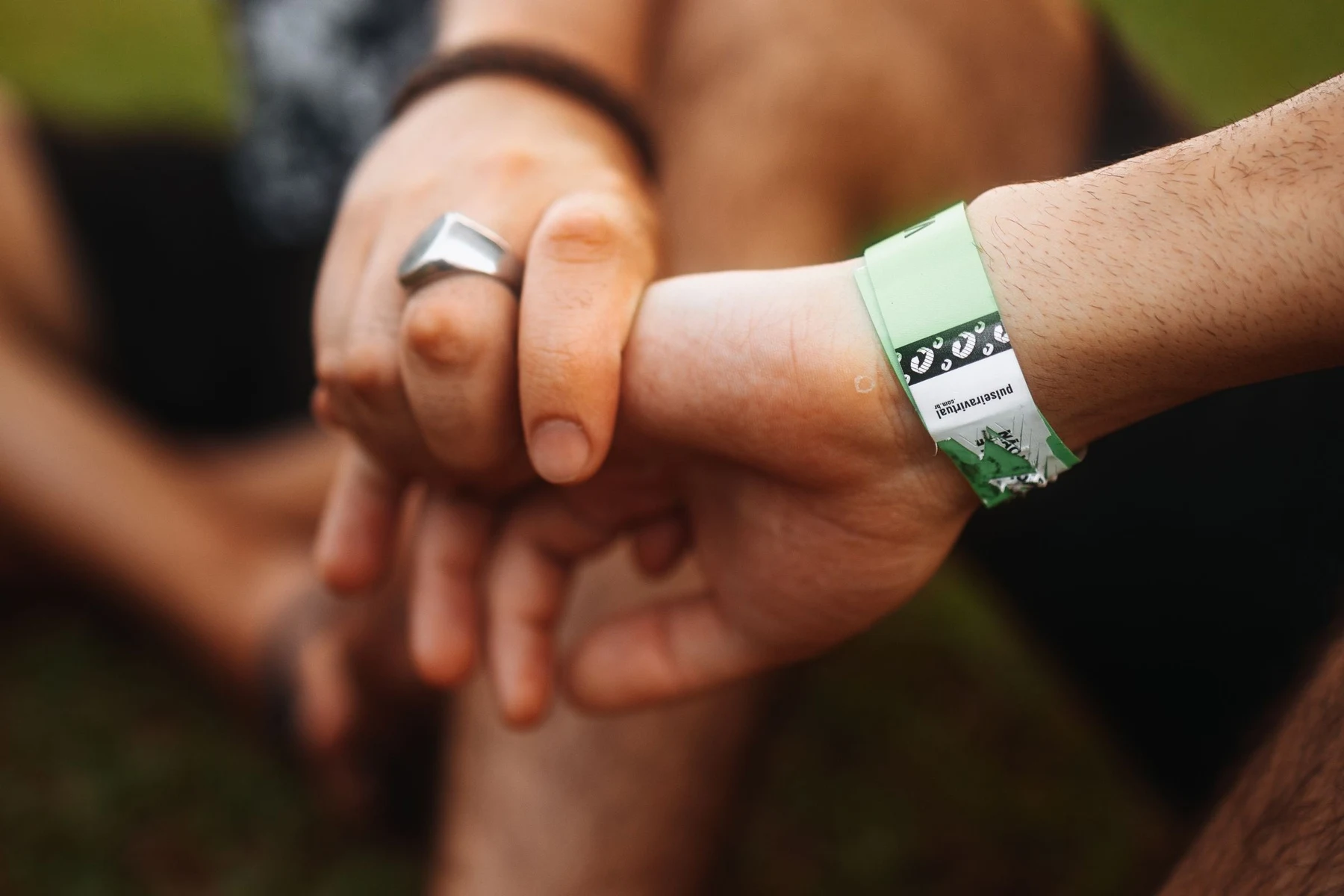
These are the sensitive ones. Tyvek wristbands carry a pressure-sensitive adhesive tab, and that adhesive is what you are protecting. Keep them sealed in their original packaging until the day, somewhere cool and dry, flat rather than on edge.
Heat is the enemy. Adhesive left in a hot car or a sunlit store room softens, and softened adhesive either sticks prematurely inside the roll or loses grab when you finally need it. A band that will not hold is worse than no band, because someone has to re-issue it at the gate.
Silicone bands
Almost indestructible in storage. Silicone tolerates heat, cold and humidity without complaint. The only real storage risk is sustained direct sunlight, which will gradually shift bright colours. Keep the box closed and out of a window and they will be identical in a year.
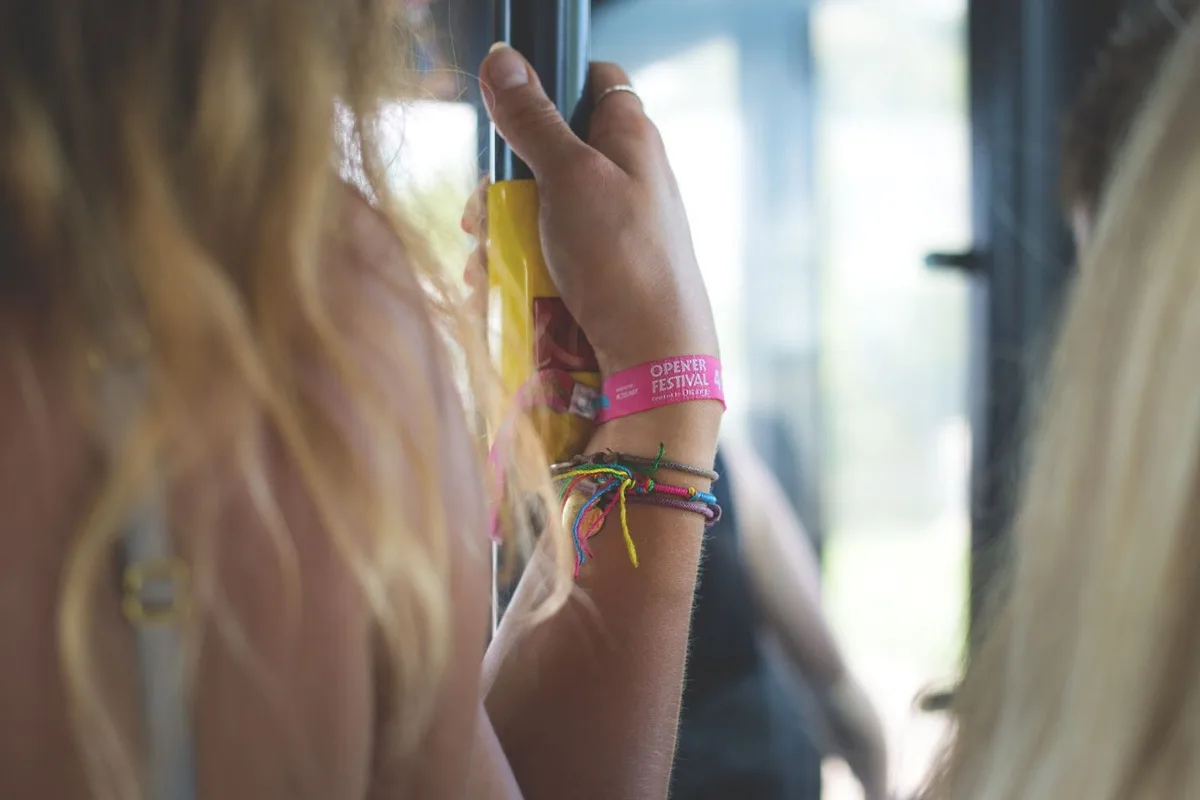
Fabric and woven bands
Store dry and flat. Fabric wristbands resist creasing well, but damp storage can mark light-coloured weaves, and a crushed box will leave fold lines across a printed band.
The four conditions that matter
Cool. Room temperature or below. Not a car, not a shipping container, not a tin shed in February.
Dry. Humidity is the main enemy of adhesive and printed fabric.
Dark. Out of direct sun, which protects colour across every material.
Flat and unsquashed. Keep boxes the right way up and do not stack heavy things on top.
Ordering ahead for a season of events?
We can advise on quantities that balance bulk pricing against how long you will be holding stock. Browse event wristbands or the full wristband range.
We can advise on quantities that balance bulk pricing against how long you will be holding stock. Browse event wristbands or the full wristband range.
Keep them sorted while they are stored
Material condition is only half of it. The other half is knowing what you have.
Keep colours separated and labelled
Multi-day events and tiered access depend on colour meaning something. Bands tipped into one box become a sorting job on the morning of the event, at exactly the moment nobody has time.
Do not break sealed packs early
Leave bands in sealed counts until the day. Opened packs get handled, counted wrong and contaminated with other colours. A sealed pack of 100 is a reliable 100.
Keep a written count
Note what arrived and what has been drawn down. Discovering a shortfall at 7am on event day is avoidable.
Store the spares separately
Keep your overage in its own labelled box. If you ordered ten per cent spare, that spare only helps if someone can find it.
How far ahead should you order?
Far enough that a production or courier delay cannot reach you, and not so far that you are warehousing stock for a year.
For a fixed-date event, ordering two to three weeks ahead gives comfortable margin without a long storage window. For a recurring programme — weekly entry bands, a season of fixtures — a bulk order is usually better value, and silicone handles the longer storage window easily. If you need something this week, the 24-hour dispatch range removes the problem entirely.
Frequently asked questions
How should I store event wristbands before the day?
Cool, dry, dark and flat, in the original sealed packaging. Tyvek bands are the most sensitive because heat and humidity affect the adhesive tab. Silicone is far more tolerant — just keep it out of direct sunlight to protect the colour.
Can I order wristbands months in advance?
Yes, particularly silicone, which stores almost indefinitely in reasonable conditions. For Tyvek, ordering a few weeks out rather than many months reduces the time the adhesive spends in storage. Either way, keep them sealed until the day.
What happens if Tyvek wristbands get hot in storage?
The adhesive softens. It can stick prematurely within the roll or lose grab when applied, meaning bands that will not stay closed. Avoid car boots and unventilated store rooms in summer — a cool indoor cupboard is all that is needed.
Do silicone wristbands go bad in storage?
No. Silicone is chemically stable and does not perish, absorb moisture or go brittle. The only slow change is colour shift from sustained direct sunlight, which a closed box prevents entirely.
How many spare wristbands should I keep?
Around ten per cent over your expected numbers covers damaged bands, re-issues and unexpected arrivals. Store the spares in a separate labelled box so they can actually be found on the day.
Getting them to the venue intact
Storage usually ends with a car journey, which is where carefully stored bands get undone.
Do not leave the box in the car overnight
A closed vehicle in summer reaches temperatures well beyond anything a store room sees. For Tyvek in particular, an overnight stay in a hot boot can soften every adhesive tab in the box. Bring the box inside and load it on the morning.
Transport them flat and secured
A box sliding around a boot arrives with crushed corners and mixed colours. Wedge it, or carry bands in a crate that does not shift.
Take the packing list
Knowing you are supposed to have 400 blue and 200 green is what lets you notice at 8am that one bag never made it, while there is still time to adapt.
Setting up on the day
How bands are laid out at the gate decides how fast the queue moves.
Open one pack at a time
Resist tipping everything into a tub. An opened pack of 100 with a known count is a running tally; a tub of mixed bands is a guess.
Separate colours physically
Different containers, not different corners of the same container. Under time pressure, people grab the nearest band, and a mis-issued access band is difficult to retrieve once someone is inside.
Keep spares out of reach of the main flow
Spares exist for problems, not for convenience. Held separately, they are still there when you need them.
Pre-count into working batches
Counting into batches of 50 before doors open turns reconciliation at the end of the night into arithmetic rather than a recount.
Reconciling what is left over
What happens to unused bands after the event is a storage decision too.
Undated, unbranded bands are genuinely reusable — a plain colour band from a Saturday market works just as well at the next one, so store the remainder properly and count it into your next order. Bands printed with a specific date, sponsor or event name are not reusable and holding them only takes up space; dispose of them rather than letting them accumulate and get mixed into live stock.
The failure worth avoiding is leftover bands from a previous event finding their way into the current one. A band that grants access because it looks close enough to this year's colour defeats the point of having colours at all. Keep finished stock physically separate from live stock, or clear it out entirely.
Record what was actually used against what was ordered. Two or three events of that data tells you your real consumption rate, which is what makes the next order the right size rather than a guess with ten per cent added.
Order event wristbands with time to spare
- Event wristbands — silicone, fabric, Tyvek and LED
- Tyvek wristbands — single-use entry bands
- Fabric wristbands — multi-day durability
- 24-hour dispatch — no storage window needed
Tell us your date and numbers and we will time the run to suit. Designed in Sydney, shipped Australia-wide.

Written by
Founder, Handband
Founder of Handband; specialist in custom wristbands and promotional products for events, schools, charities, and brands.
← Previous
How Jordan died to save his brother
Next →
Custom Wristbands for Trade Shows and Conferences
Comment(s)