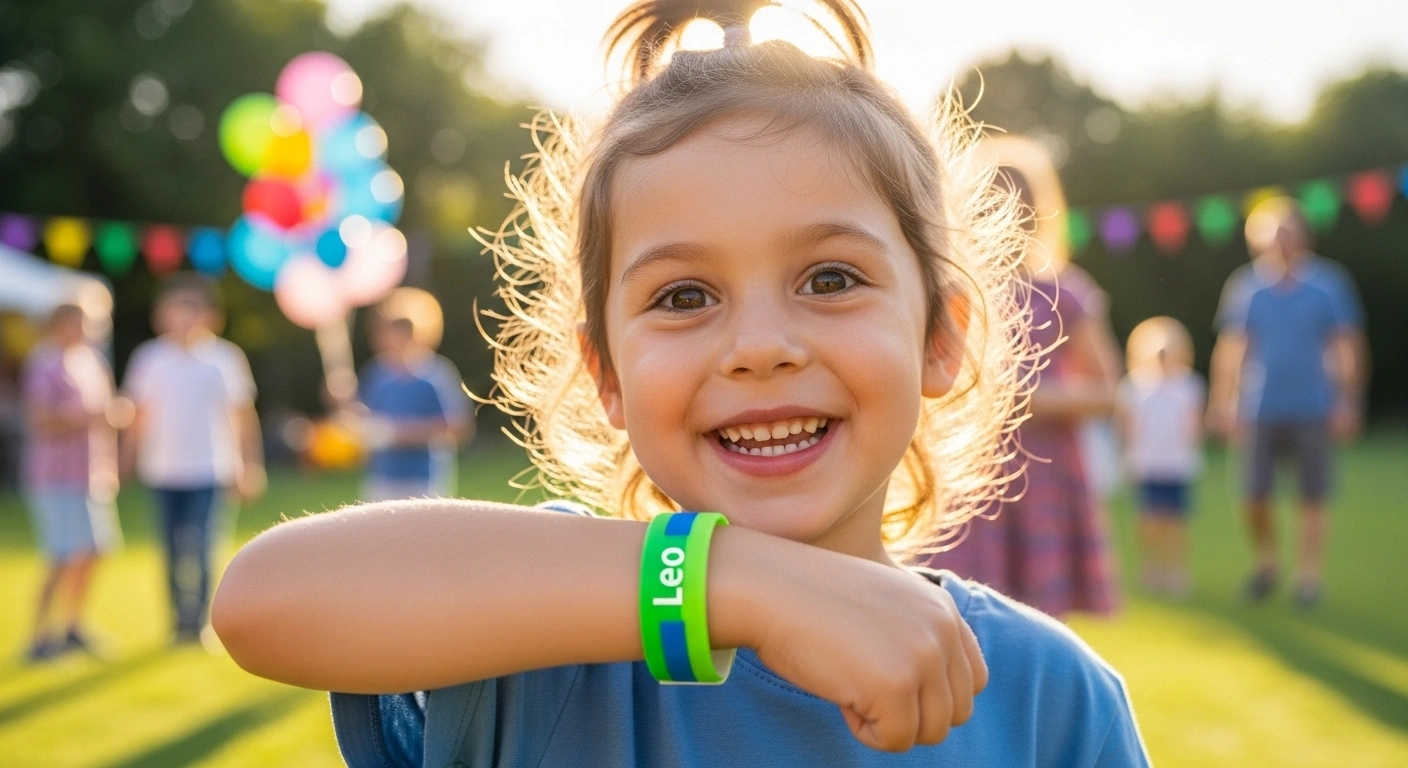
Best Wristbands for Sensory Issues: Comfortable, Safe Options for Autism and Sensory Sensitivities

Why the Right Wristband Matters for Sensory Sensitivities
For people with sensory processing differences — including those on the autism spectrum, those with sensory processing disorder (SPD), or those with heightened tactile sensitivities — the texture, weight, and feel of items worn close to the skin can make a significant difference to comfort and daily functioning.
A wristband that causes constant irritation, itching, or discomfort is not just uncomfortable — for someone with heightened sensory sensitivity, it can be genuinely distressing and interfere with concentration, behaviour, and wellbeing. Choosing the right material, fit, and style is essential.
This guide covers the best wristband options for people with sensory issues, what to look for, and what to avoid — whether for a child with autism, an adult with SPD, or anyone who finds standard wristbands uncomfortable to wear.
What Makes a Wristband Sensory-Friendly?
Not all wristbands are created equal when it comes to sensory comfort. The key factors to evaluate are:
Material Texture
Smooth, consistent materials are best for sensory sensitivities. Rough textures, raised seams, or uneven surfaces can create constant irritation. Silicone is an excellent choice because it has a uniformly smooth texture, no rough edges, and a soft, flexible surface that does not scratch or abrade the skin.
Weight and Bulk
Heavy or bulky wristbands can feel intrusive for people with heightened body awareness. Lightweight options — particularly skinny silicone bands — minimise the sensation of wearing something on the wrist, which many sensory-sensitive individuals prefer. The goal is a band that is easy to "forget" after a few minutes of wear.
Adjustability and Fit
A band that is too tight causes pressure sensitivity issues; too loose and it slides, which can be distracting. Silicone wristbands have inherent elasticity that provides a comfortable, consistent fit for most wrist sizes. For people who need more precise fit control, barrel-lock fabric bands with adjustable closures offer flexibility.
Silicone — The Best All-Round Material for Sensory Issues
For most people with sensory sensitivities, silicone is the best wristband material. Here is why:
- Hypoallergenic — completely free from latex, BPA, and phthalates; very rarely causes skin reactions
- Smooth texture — no rough seams, loose threads, or abrasive surfaces
- Lightweight — especially in skinny widths, barely noticeable after initial fitting
- Temperature neutral — does not retain heat or cold significantly, reducing thermal sensitivity issues
- Waterproof — can be worn through hand-washing, which is important for maintaining hygiene without needing to remove and replace the band repeatedly
Silicone wristbands in narrow widths are particularly suitable — a 6-8mm skinny band sits lightly on the wrist and provides minimal sensory input while still serving its purpose as an ID, reminder, or medical identifier.
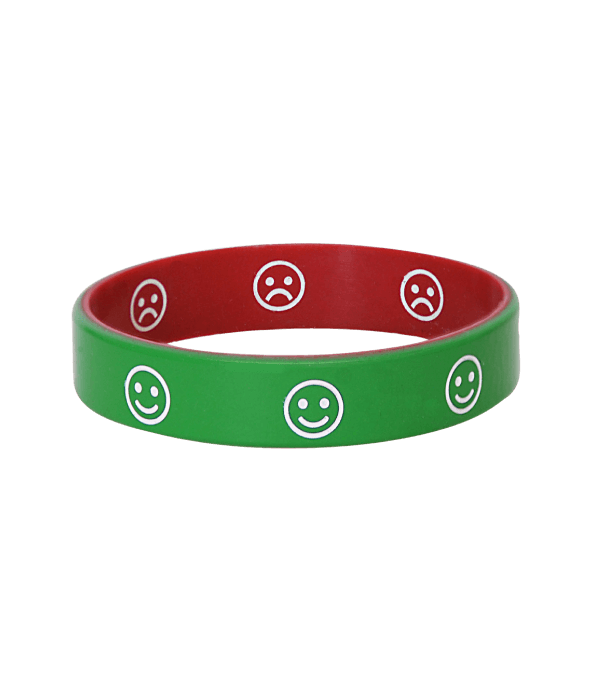


Emotion Bracelets — Purpose-Built for Sensory and Emotional Awareness
Emotion bracelets are a specialised wristband product designed specifically for children and adults who benefit from a physical tool for emotional identification and communication. They typically feature a colour-coded system — each colour corresponding to an emotional state — which allows the wearer to communicate how they are feeling non-verbally by showing or pointing to their band.
For children with autism, selective mutism, or communication difficulties, emotion bracelets provide a simple, low-pressure way to communicate emotional state without needing to find words. Teachers, therapists, and parents have found them valuable in school, therapy, and home settings.
The physical properties of emotion bracelets are typically designed with sensory comfort in mind: smooth silicone or soft fabric, lightweight, and available in sizes suitable for children's smaller wrists.
Medical ID for Autism — A Critical Safety Tool
For non-verbal or minimally verbal individuals with autism, a medical ID wristband is an important safety tool. It communicates critical information — the wearer's name, diagnosis, emergency contact, and any relevant medical information — to first responders, teachers, or strangers who need to assist in an emergency or if the person becomes separated from their carer.
What to Include on an Autism Medical ID Wristband
- The wearer's name
- A clear indication of the condition (e.g., "I have autism — I may not respond to my name")
- An emergency contact name and phone number
- Any additional relevant medical information (allergies, medications)
For sensory-sensitive individuals, the medical ID band itself must be comfortable enough to be worn consistently. A silicone band with debossed text is ideal — the text is permanent (cannot be removed or erased), the material is comfortable for long-term wear, and the band can be personalised to any size including children's and adult sizing.
What to Avoid for Sensory-Sensitive Wearers
Some wristband types are poorly suited to people with sensory issues:
- Rough fabric bands — woven fabric wristbands with exposed thread edges can be rough and irritating for sensitive skin
- Metal clasps or hardware — metal closures can create pressure points and thermal sensitivity (getting hot or cold)
- Tyvek wristbands — the paper-like texture of Tyvek can feel scratchy and the edge of the closure tab may irritate sensitive skin
- Very tight elastic bands — constant compression can be uncomfortable for people with tactile hypersensitivity
- Heavily textured silicone — some novelty silicone bands have patterned or textured surfaces; plain smooth silicone is always preferable
Finding the Right Fit — Sizing Guidance
Correct sizing is crucial for sensory comfort. A band that is too small will create constant pressure; too large and it will slide around and create distracting movement. Most suppliers offer at least adult and youth sizing, and some offer toddler sizing for very young children.
As a general guide: measure the wrist circumference with a tape measure and add 20-25mm for a comfortable fit that allows for the band's natural elasticity. If in doubt, go slightly larger — a slightly loose band is much easier to tolerate than a tight one for sensory-sensitive individuals.
Explore our full range of custom wristbands and silicone options — our team is happy to advise on the best choice for your specific sensory needs.
Frequently Asked Questions
Are silicone wristbands safe for children with autism?
Yes — high-quality silicone wristbands are hypoallergenic, latex-free, and have a smooth texture that is generally well-tolerated by children with sensory sensitivities. Skinny width options minimise the sensation of wearing the band. Always check for food-grade or medical-grade silicone certification.
What is an emotion bracelet and how does it help?
An emotion bracelet is a colour-coded wristband tool that helps children and adults communicate their emotional state non-verbally. Each colour corresponds to an emotion, allowing the wearer to show or point to their current feeling. They are widely used in schools and therapy settings for children with autism, communication difficulties, or emotional regulation challenges.
What type of wristband is best to avoid for sensory issues?
Rough fabric wristbands with exposed thread edges, Tyvek bands (which have a scratchy paper-like texture), and bands with metal hardware or clasps are generally poorest choices for sensory-sensitive individuals. Smooth, lightweight silicone is the most consistently well-tolerated option.
Can I get a medical ID wristband in a sensory-friendly style?
Yes — debossed silicone wristbands make excellent sensory-friendly medical IDs. The information is permanently pressed into the silicone (cannot be removed), the material is smooth and hypoallergenic, and the band is available in sizes for children and adults. Custom text can include name, diagnosis, emergency contact, and any other relevant information.
April 12, 2026

Share on Facebook

Share on X

Share on Pinterest
Comment(s)
Recent Posts