How to Quit Smoking: Motivation Tips, Accountability Strategies, and How Wristbands Help You Stay on Track

Why Quitting Smoking Is So Hard — and How to Change That
Cigarette smoking is one of the most well-documented and hardest habits to break. Nicotine addiction is both physical and psychological — the body craves the substance, and the mind is conditioned by the ritual. Most people who successfully quit do so on their third, fourth, or fifth attempt. The good news is that understanding why previous attempts failed is the most reliable path to finally succeeding.
This guide combines proven cessation strategies with a look at the behavioural science of habit change — including how physical reminders like wristbands can serve as surprisingly effective accountability tools for people trying to quit.
Understanding Your Smoking Triggers
Before you quit, spend one week tracking when and why you smoke. Common triggers include: stress, boredom, coffee or meals, alcohol, social situations with other smokers, and specific times of day (morning routine, after-work wind-down). Your trigger map is your quit plan — because each trigger needs a replacement behaviour, not just willpower.
Replacing the Ritual
Much of smoking addiction is ritual rather than nicotine. The act of stepping outside, having something in your hands, taking a deliberate break — these are behaviours that serve a function. Replacing them with a different physical behaviour (deep breathing, a short walk, a cold glass of water, or even snapping or rubbing a wristband) gives your brain the cue it is looking for without the nicotine.
Evidence-Based Cessation Methods That Work
No single method works for every person, but several approaches have strong evidence behind them. The most effective quit attempts typically combine multiple strategies.
Nicotine Replacement Therapy (NRT)
NRT — patches, gum, lozenges, inhalers, and nasal sprays — reduces withdrawal symptoms by providing a lower-dose, controlled supply of nicotine without the toxins from combustion. Studies consistently show that NRT doubles the odds of successful quitting compared to willpower alone. Combining two forms of NRT (e.g. a patch plus gum) is even more effective than either alone.
Prescription Medication
Medications like varenicline (Champix/Chantix) and bupropion (Zyban) reduce cravings and withdrawal symptoms through different mechanisms to NRT. These require a prescription and medical oversight but are among the most effective cessation tools available. Speak to your doctor if you have tried NRT without success.
Browse our motivational wristbands range — a physical reminder on your wrist can be a surprisingly effective accountability anchor.




The Psychology of Physical Accountability Tools
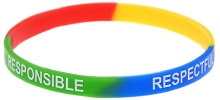
Behavioural science has long recognised that physical anchors — objects we carry, wear, or keep visible — reinforce mental commitments. A motivational wristband with a word like “QUIT,” “STRONG,” or “DAY [X]” creates a repeated visual and tactile cue that reconnects you with your intention every time you notice it.
The Snap Technique
A well-known behavioural technique for breaking habits involves wearing an elastic band or silicone wristband on the wrist and gently snapping it each time a craving hits. The mild physical sensation interrupts the craving loop and redirects attention. It is not a punishment — it is a pattern interrupt that breaks the automatic reach for a cigarette.
Visual Milestone Tracking
Some quitters use a series of wristbands to mark milestones: one colour for day 1 smoke-free, another for one week, another for one month. The visual progression creates a physical record of achievement that is motivating in itself — and the thought of “downgrading” from a further-along band creates a surprisingly powerful deterrent against relapse.
Building Your Support Network
Social support is one of the most significant predictors of successful quitting. Tell the people in your life that you are quitting — not as a pressure tactic, but to create accountability. When your colleagues, partner, or friends know you have quit, slipping back becomes a public act rather than a private one, which significantly increases motivation to hold the line.
Online Communities and Quit Groups
Online quit-smoking communities provide 24/7 support — particularly useful during night-time cravings when there is nobody to call. Members share milestones, strategies, slip-up recoveries, and encouragement. The collective experience normalises the difficulty and reframes slip-ups as part of the process rather than failures.
Managing Relapses Without Giving Up
A relapse is not a failure — it is data. Every time a quit attempt ends, it reveals something: a trigger that was not adequately planned for, a social situation that was harder than expected, a stress event that overwhelmed the strategy. Treat relapse as a learning opportunity rather than evidence that you cannot quit.
Most successful quitters tried and failed multiple times before their successful attempt. The decision to try again — immediately, without waiting for the “right time” — is the single most important factor in long-term success. If you have slipped up, start again today. Put the wristband back on. Recommit.
Celebrating Milestones Along the Way
Quitting smoking has measurable health benefits that begin within hours of your last cigarette and compound over months and years. Mark milestones intentionally: 24 hours, 1 week, 1 month, 3 months, 6 months, 1 year. Celebrate each one with something meaningful — a meal out, a new book, a new wristband — and make the milestone feel earned, because it is.
See our custom motivational wristbands to create a personalised accountability band for your quit journey.
Frequently Asked Questions
How can a wristband help me quit smoking?
A wristband acts as a physical accountability anchor — every time you see or feel it, you are reminded of your commitment to quit. The snap technique (gently snapping the band during a craving) is a recognised pattern-interrupt strategy that breaks the automatic reach for a cigarette. Some people use different coloured bands to mark smoke-free milestones, creating a visible progression that motivates continued effort.
What is the most effective method to quit smoking?
Research shows that combining nicotine replacement therapy (NRT) with behavioural support gives the highest success rates. Adding prescription medication (varenicline or bupropion) to NRT improves outcomes further. The common factor in all approaches is having a plan for cravings before they hit — including physical tools, replacement behaviours, and social support.
How long do nicotine cravings last when quitting?
Physical nicotine cravings peak in the first 3 days and significantly reduce within 2-4 weeks as the body clears nicotine. However, psychological cravings — triggered by habits, stress, and social situations — can persist for months. This is why behavioural strategies (including wristband reminders) remain relevant long after the physical withdrawal phase ends.
What should I do if I slip up and have a cigarette after quitting?
Do not catastrophise. A single cigarette after a period of abstinence is not a reason to abandon the quit attempt entirely. Note what triggered it, adjust your strategy, and recommit immediately. Most successful long-term quitters had multiple slip-ups during their journey. The goal is long-term abstinence, and short-term setbacks are part of the process for most people.
April 12, 2026

Share on Facebook

Share on X

Share on Pinterest
Comment(s)
Recent Posts