Quick answer
Wristband colours are a code set by whoever runs the event or campaign. At festivals, colours mark access tiers, entry days and age checks — each organiser sets their own. On awareness and fundraising bands, the colour stands for a cause — pink for breast cancer, purple for epilepsy, yellow for Daffodil Day. When you order your own bands, the colour is the cheapest signalling system you can buy.
Wristband colours are a quiet code. The same red band can mean a VIP pass at a festival gate or heart research on a fundraising stall. This guide covers the two places the question comes up most — events and awareness campaigns — and finishes with how to pick colours when you are ordering bands of your own.
What do festival wristband colours mean?
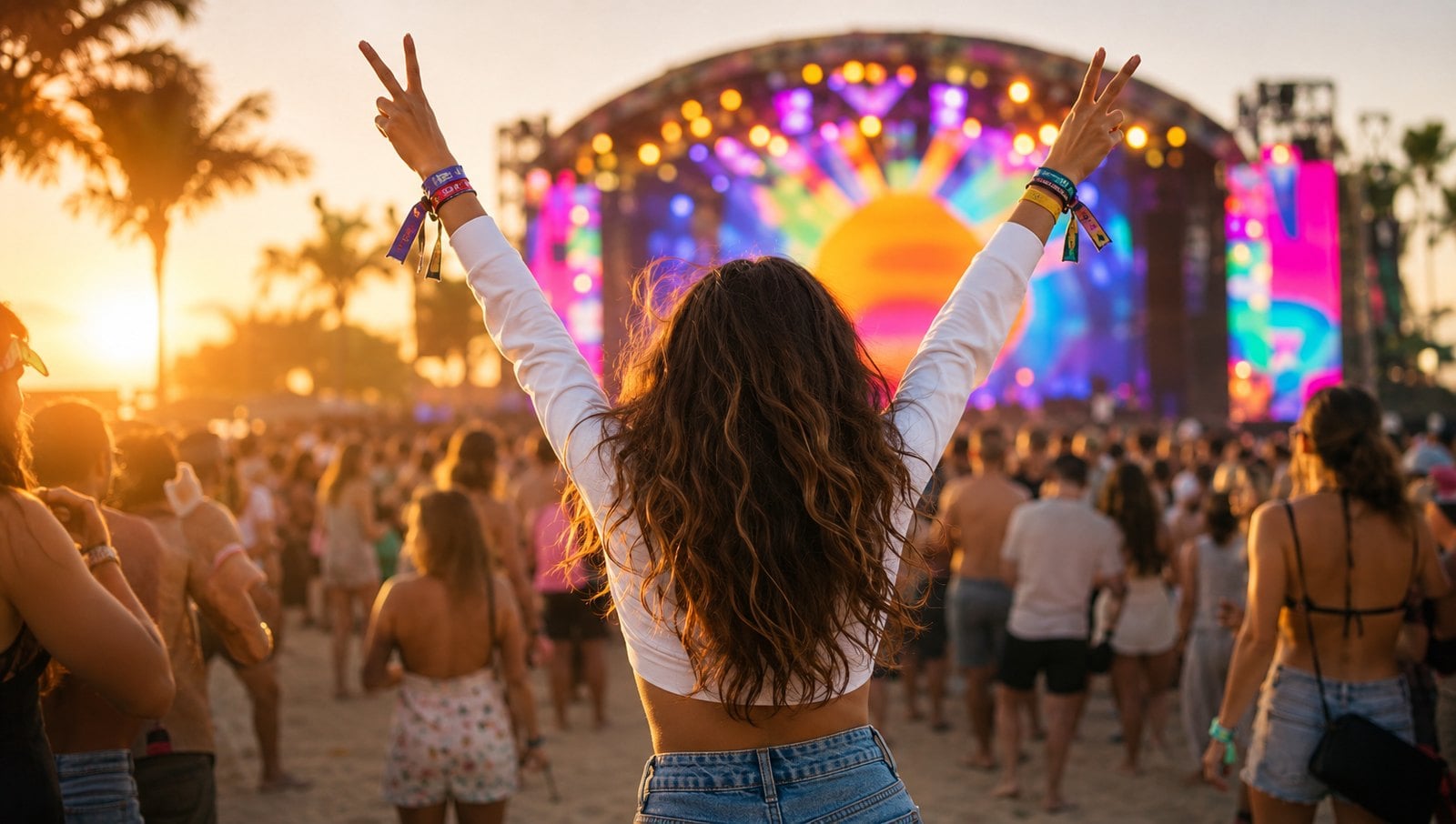
At festivals and events there is no universal colour code — each organiser sets their own. Colours typically separate access tiers: one colour for general admission, another for VIP, others again for artists, crew, media and contractors, so security can read access at a glance. Multi-day events often issue a different colour per day, and licensed events use a distinct band (or a tear-off tab) to mark patrons over 18.
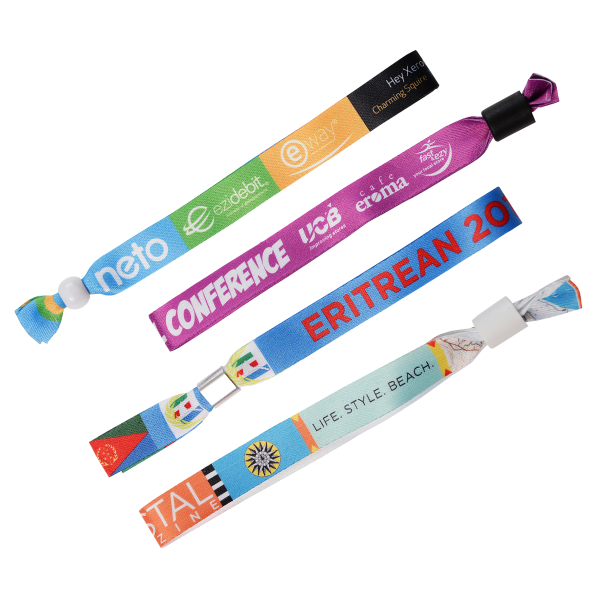
The band type matters as much as the colour. Entry bands are woven fabric with a one-way barrel lock or Tyvek paper with a tamper-evident adhesive tab — single-use by design, so they cannot be passed on. Cashless and access-control events add an RFID chip on top of the colour code. Our festival wristbands page and RFID wristbands guide cover how organisers set these systems up.
How organisers build a colour system that works
A good event colour code follows three rules. High contrast between tiers — security reads bands at arm’s length in a moving queue, so neighbouring tiers should never share a colour family (gold VIP next to yellow GA fails at the gate). One meaning per colour — if red is VIP on Saturday, red is not crew on Sunday. Brief the gate team — a laminated colour key at every entry point costs nothing and stops guesswork. Keep a spare colour in reserve for late additions such as contractor day-passes.
Recommended for you
Products related to this article
Hand-picked to go with what you just read.
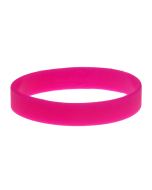
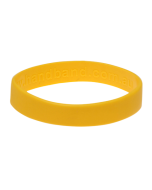
Awareness wristband colours and the causes they stand for
Awareness bands borrow their colours from the ribbon campaigns, so most people read them instantly. Many causes share a colour, so these are the associations most Australians will recognise rather than a fixed rule:
| Colour | Commonly associated with |
|---|---|
| Pink | Breast cancer awareness |
| Red | Heart research; HIV and AIDS awareness (World AIDS Day) |
| Yellow | Cancer support (Daffodil Day); road safety |
| Purple | Epilepsy awareness (Purple Day); pancreatic cancer |
| Blue | Diabetes awareness (the blue circle); prostate cancer |
| Green | Mental health awareness; organ donation |
| Orange | Harmony Week; multiple sclerosis awareness |
| Rainbow | LGBTQIA+ pride and inclusion |
Sold by donation, an awareness band is one of the simplest fundraisers there is — the colour does the explaining and supporters keep wearing the message. Our fundraising ideas guide covers how to build a campaign around one.
One colour, two codes: an access tier at a gate, a cause on a stall. Context sets the meaning — which is exactly why the colour you choose for your own bands is worth a moment’s thought.
Choosing colours for your own wristbands
When you order custom bands, the colour is doing a job — decide what the job is first. Tiers: a different colour per donation level, ticket type or age group is the cheapest access-control system an event can run. Recognition: school house colours, club colours or your exact brand shade — silicone bands can be Pantone-matched, with your message printed or debossed. Association: if your cause has an established awareness colour, use it; if it clashes with a well-known campaign you are not part of, avoid it. Visibility: glow-in-the-dark and LED bands read at night where flat colours disappear.
Custom silicone bands start from a minimum of four per design, so a colour per tier is affordable even for small groups. Tyvek suits high-volume single-day entry. Lead time depends on quantity — typically 10 to 14 business days, with larger runs taking longer and quicker turnarounds available on application.
Design custom silicone wristbands → Coloured Tyvek entry bands →
Wristband colours FAQ
Do festival wristband colours mean the same thing at every event?
No. Each organiser sets their own colour code for access tiers, days and age marking, so a gold band at one festival can mean VIP and at another mean Saturday entry. The colours only need to be consistent inside the one event.
What colour wristband marks under-18s or over-18s at an event?
There is no fixed colour — each licensed event chooses its own. The common pattern is a distinct high-contrast band for patrons who have shown ID at entry, or a tear-off tab removed at the bar, so staff can verify age at a glance without re-checking ID.
What colour should a fundraising wristband be?
Use your cause’s established awareness colour if it has one, or your school or club colours if the money stays local. For tiered giving, pick one main colour plus an accent colour for major donors — silicone bands start from four per design, so small accent runs are affordable.
Can wristbands be matched to an exact brand colour?
Yes — custom silicone wristbands can be Pantone-matched to your brand, school or club colour, with your message printed or debossed. Supply the Pantone reference or vector artwork with your order and the proof will show the matched shade.
Related reading
- Music festival wristbands
- RFID and NFC event wristbands: the complete guide
- Fundraising ideas for Australian schools, clubs and causes
- Wristbands for events: the complete guide
Put your colour to work.
Pantone-matched custom wristbands from four per design — tiers, causes and club colours, designed in Sydney.
Frequently Asked Questions
Quick answers from the Handband team
What do festival wristband colours mean?
At events, colours usually map to access levels and days — general admission, VIP, staff and over-18 drinking bands are each a different colour so staff can check entitlements at a glance.
What do awareness wristband colours mean?
Awareness colours are tied to causes: pink for breast cancer, yellow for cancer support, purple for several conditions, and so on. Meanings can vary by country and campaign.
Does a wristband colour have a fixed meaning?
No single global standard exists. Festival colours are set by each event, and awareness colours can overlap between causes, so context matters.
What colour should I choose for my own custom wristbands?
Match your brand, team or cause colours, and use clearly different colours if you need to separate ticket types or days.
Can I get multiple colours in one order?
Yes — order several solid colours, or choose multi-colour, swirl or segmented bands to combine colours in a single band.
Which colours are easiest to read text on?
Light bands (white, yellow, hot pink) with dark debossed or printed text give the strongest contrast; very dark bands read best with colour-filled or white text.
← Previous
Silent Disco: What It Is, How It Works and How to Run One
Next →
Anti-Bullying Activities and Ideas for Schools
Comment(s)