

Simply Stacie’s 2010 holiday gift guide review opened with one of the most common sentences in paediatric immunology clinics: "Having a child with a chronic condition is frightening enough." Her daughter has severe asthma. Her youngest son is anaphylactic to stinging insects. Holiday season — new houses, unfamiliar food, distant relatives, full attendance at school co-op — multiplied her worry exponentially. The custom-engraved silicone medical alert wristbands she reviewed solved a specific parenting problem: a child’s medical info needs to travel WITH the child, visibly, into every Christmas party, sleepover and ski-trip the holidays bring. This 2026 update revisits Stacie’s family case study and turns it into the practical holiday gift guide for any UK or Australian parent buying medical alert wristbands as part of their child’s safety setup — from age 3 toddlers like Stacie’s youngest, through teen years, into adulthood.
Why medical wristbands belong on holiday gift lists
A holiday gift for a child with a chronic condition has a different definition. Toys break, clothes outgrow, gadgets lose their charge by Boxing Day. A custom-engraved silicone medical alert wristband — choose-the-colour, the-engraved-text, the-favourite-character version — arrives wrapped, is opened with the same Christmas-morning energy as everything else, and provides 365 days of safety until next December’s gift refresh.
Parents of children with anaphylaxis, type 1 diabetes, severe asthma, epilepsy or insect-sting allergy increasingly include medical wristbands in their kids’ stockings — not as a clinical purchase, but as a "kept-you-safe" gift.
Stacie’s case study: 3- and 4-year-olds at home-school co-op
The Simply Stacie review focused on a specific anxiety: kids aged 3 and 4 attending a home-school co-op without their mum. The supervising teacher couldn’t know every family’s specific allergies and medical history by heart. The Handband silicone wristbands solved three problems at once:
- Visibility — bright colour wristband on a 3-year-old’s wrist is impossible to miss.
- Information transfer — condition + treatment + emergency contact engraved.
- Self-acceptance — the kids actually liked wearing them. They reminded Stacie to put them on, not the reverse.
The teacher’s feedback (per the original review): "the kids never even touched or played with the bracelets." Comfortable, accepted, worn 100 % of the time. The opposite of how kids treated metal bracelets in the same era.
Recommended for you
Products related to this article
Hand-picked to go with what you just read.
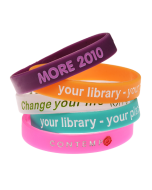
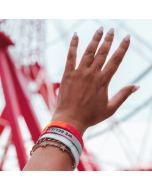
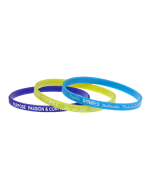
How holiday season multiplies risk
Three holiday-season factors compound for kids with chronic conditions:
- Unfamiliar food — relative kitchens, restaurant menus, school holiday parties, sleepover snacks — full of allergens the parent doesn’t control.
- Carer rotation — new babysitters, grandparents who haven’t kept up with allergen labels, distant cousins running unsupervised play.
- Disrupted routines — missed medication times, irregular sleep, sugar intake spikes, exercise + party-food combinations that trigger food-dependent exercise-induced anaphylaxis.
The visible wristband becomes the single constant.
What to engrave for a child holiday-season wristband
- Line 1: ANAPHYLAXIS / ASTHMA / DIABETES / EPILEPSY — condition first, capital letters
- Line 2: EpiPen Jr / EpiPen Adult / insulin / reliever puffer — treatment
- Line 3: Mum mobile
- Line 4: Dad / GP / babysitter mobile
For Stacie’s family the asthmatic daughter’s band reads:
- SEVERE ASTHMA
- Ventolin + Symbicort in school bag
- Mum 0412 xxx xxx
- Dad 0421 xxx xxx
And her insect-sting-allergic son’s band reads:
- ANAPHYLAXIS — WASP/BEE
- EpiPen Jr in pencil case
- Mum 0412 xxx xxx
- Dad 0421 xxx xxx
Holiday travel preparedness
For families travelling at Christmas:
- EpiPens + reliever puffer + insulin go in cabin baggage with a doctor’s letter.
- The medical wristband stays on the child throughout the flight.
- Photograph the Anaphylaxis / Asthma Action Plan + cloud-back-up.
- Translate the allergen list into the destination language.
- Confirm travel insurance covers both pre-existing conditions.
- Identify the destination’s emergency-services number (911 US/CA, 112 EU, 119 Japan).
- Order spare wristbands so the bag-check-baggage-lost scenario doesn’t leave the child unprotected.
Affordability and the "spares" strategy
The Simply Stacie review highlighted the price point ($3.16 at the time, now closer to $8-15 for current bands). Affordable enough that parents can buy 4 to 6 bands per child:
- 1 on the wrist (primary)
- 1 in the school bag
- 1 at grandparents’ house
- 1 in the holiday-trip carry-on
- 1 spare for when the primary is in the wash
- 1 in the parents’ bag (for parent-trip use of the child band)
Hypoallergenic, sterilisable, food-grade silicone
The silicone used in Handband medical wristbands is the same grade used in:
- Infant pacifiers and feeding spoons
- Kitchenware (bakeware, ice-cube trays)
- Hospital surgical-area equipment
- TGA / FDA / EU-CE compliant medical implements
Bands are dishwasher-safe, can be sterilised in boiling water for hospital admissions, are BPA-free and lead-free.
Soft, comfortable, kids don’t complain
The Simply Stacie review specifically called out the comfort: her 3 and 4-year-old kids “didn’t complain about it being uncomfortable as they have before with the metal bracelets.” This is consistent across thousands of UK and Australian customer reviews:
- No metal-chain pinching the wrist hair
- No clasp catching on sleeves
- No temperature conduction (warm in summer / cold in winter like metal)
- No allergy-on-the-band (nickel sensitivity is common in metal bands)
The forget-to-put-it-on solution
The classic parent problem: forgetting to put the medical ID on the child before leaving the house. Stacie’s breakthrough — “If I forget to put their Mediband on when they will be away from me they actually remind me to get it now” — came from the kids’ investment in the wristband as an identity item. They wore it because they LIKED it, not because they had to.
Reframing strategies:
- Let the child pick the colour. Bright primary colours for younger kids, subtle neutrals or fashion colours for teens.
- Order spares in different colours so they have variety to choose from each morning.
- Establish a "wrist-band on the bedside table at night, wrist-band on the wrist before breakfast" routine.
- Pair with a friendship band or fitness tracker so the medical band is part of a multi-band wrist look.
- Print the wristband-purpose into the family safety conversation so it becomes a normal part of getting ready, not a special-case medical task.
Range of conditions Handband customers engrave
- Anaphylaxis (peanut, tree nut, shellfish, fish, milk, egg, soy, sesame, wheat, latex, penicillin, sulfa, bee/wasp venom)
- Type 1 diabetes / insulin-dependent type 2
- Epilepsy (all forms)
- Asthma (severe or brittle)
- Heart conditions (arrhythmia, anticoagulant therapy, pacemaker recipient)
- Adrenal insufficiency / Addison’s disease
- Coagulation disorders (haemophilia, von Willebrand)
- Autism / non-verbal communication needs
- Dementia (wandering risk + emergency contact)
- Rare diseases (Muckle-Wells, Marfan, EDS, mastocytosis)
Frequently Asked Questions
Quick answers from the Handband team
Are medical wristbands good gifts for kids with chronic conditions?
Yes. Wrapped, opened on Christmas morning, kid picks the colour, then 365 days of safety. Combines kid-friendly gift packaging with practical medical purpose. Most parents now include them in holiday gift lists.
What ages can wear a silicone medical wristband?
From age 3 upwards. Bands are sized for toddlers (3-5), kids (6-10), tweens (11-14), teens (15-17) and adults. Stacie’s case study features 3- and 4-year-olds wearing them at home-school co-op.
Is the silicone safe for sensitive skin?
Yes. Medical-grade, hypoallergenic, BPA-free, phthalate-free, lead-free silicone. Same material used in infant pacifiers, feeding spoons and hospital-sterilisable surgical equipment.
How many wristbands should I buy?
Spares strategy: 4 to 6 per child. One on the wrist, one in the school bag, one at grandparents, one in the holiday carry-on, one spare for wash days, one in the parent’s bag.
Will my child actually wear it?
Yes — let them pick the colour. The Simply Stacie review showed kids became invested in their band as an identity item. They reminded Stacie to put it on, not the reverse.
Can I order more conditions than just allergies?
Yes. Asthma, diabetes, epilepsy, heart conditions, adrenal insufficiency, coagulation disorders, autism, dementia, rare diseases — any condition where treatment depends on context can be engraved.
How much does a customer holiday wristband cost?
Typically AUD $8-15 per band depending on style + customisation. Bulk packs (4+ pieces, up to 50,000) bring per-band cost down significantly. Spares are affordable.
References
- Allergy & Anaphylaxis Australia allergyfacts.org.au
- Anaphylaxis UK anaphylaxis.org.uk
- Asthma Australia asthma.org.au
- Diabetes Australia diabetesaustralia.com.au
- ASCIA Anaphylaxis Action Plan allergy.org.au

Written by
Founder, Handband
Founder of Handband; specialist in custom wristbands and promotional products for events, schools, charities, and brands.
← Previous
Eco Friendly Materials: Best Sustainable Materials Used in Wristbands and Products
Next →
Halloween Trick-or-Treating with Food Allergies - 2026 Guide
Comment(s)