

A care home runs on shift handovers, and agency staff frequently cover shifts without knowing residents by name. A plain coloured wristband gives whoever is on the floor an instant, non-verbal cue about the things that matter at the point of care — dietary restrictions, mobility assistance, supervision level — without anyone having to find the file first.
The problem is the shift you did not plan for
Regular staff know their residents. Agency and relief staff do not, and that is exactly when mistakes happen — a thickened-fluids resident given a normal drink, or someone assisted to stand who should not be. A colour worn on the wrist survives handover in a way a verbal briefing does not.
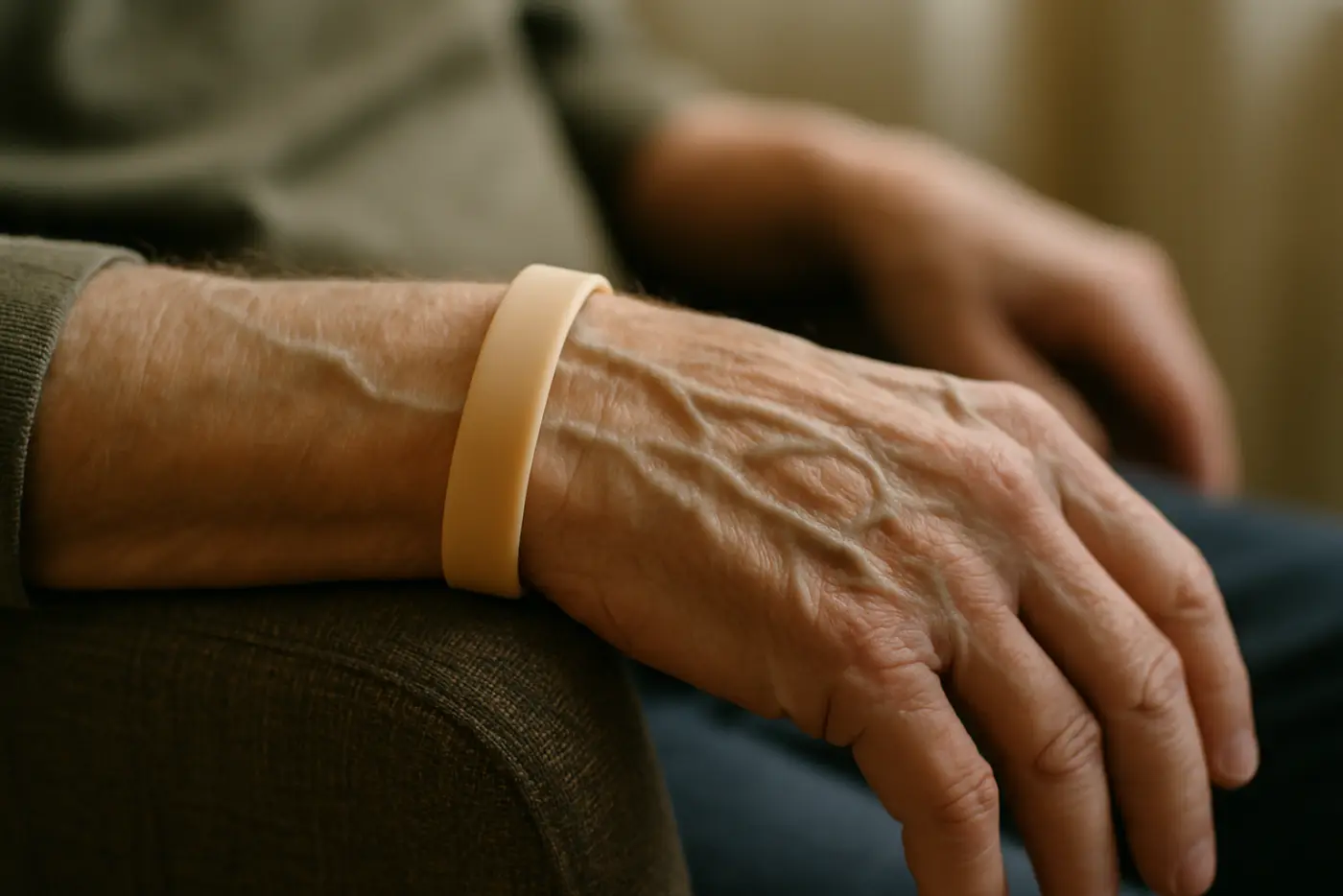
Keep the colour key short and written down
A system with nine meanings is a system nobody remembers. Pick three or four that genuinely change what a carer does at the bedside, write them on a laminated card in every station, and resist adding more. Everything else belongs in the care plan, not on a wrist.
Recommended for you
Products related to this article
Hand-picked to go with what you just read.
Use plain, unmarked bands and hold the key separately
Nothing on the band should identify a condition to a visitor. Plain colour carries the meaning for staff and nothing at all to anyone else. A plain unmarked band keeps the resident's dignity intact while still doing the job for staff.
Comfort on thin skin is a real clinical issue
Older skin tears easily, and a band that is too tight or has a hard edge will cause damage over weeks of continuous wear. Size generously, check the fit at every personal-care round, and choose soft-edged silicone rather than anything rigid or adhesive.
Give each meaning a colour that cannot be confused
The classic failure is two similar shades used for opposite meanings under corridor lighting. Choose colours that stay distinct in dim light and to staff with colour-vision deficiency — a dark band against a high-visibility one is far safer than two mid-tones.
Bands support the care plan, they do not replace it
A wristband is a prompt, not a record. It tells a carer to check, not what the full instruction is. Any home introducing this needs it written into policy, reviewed when a resident's needs change, and audited so bands come off when they are no longer accurate.
Frequently Asked Questions
Quick answers from the Handband team
Why use coloured wristbands in aged care?
Agency and relief staff often do not know residents. A colour gives an instant cue at the point of care that survives handover.
How many colour meanings should we use?
Three or four at most, and only for things that change what a carer does at the bedside. More than that and nobody remembers the key.
Should the condition be printed on the band?
No. Plain colour keeps the meaning between staff and the key card; printing a condition exposes it to any visitor.
Are wristbands safe for fragile skin?
Only if sized generously and soft-edged. Older skin tears easily, so check the fit at every personal-care round.
Which colours work best?
Ones that stay distinct in dim corridor lighting and to staff with colour-vision deficiency. Avoid two similar mid-tones for opposite meanings.
Do wristbands replace the care plan?
No. They are a prompt to check, not a record. The care plan remains the source of truth.
What happens when a resident's needs change?
The band comes off or changes the same day. An out-of-date band is more dangerous than no band at all.

Written by
Founder, Handband
Founder of Handband; specialist in custom wristbands and promotional products for events, schools, charities, and brands.
← Previous
Health Campaign Wristbands for Wellness Programs
Next →
Child Safety ID Wristbands for Family Outings & Events
Comment(s)