
A wristband that slides off a six-year-old's hand halfway through a swimming carnival is not a minor annoyance — it is a lost child wristband, a broken fundraising chain, or a guest who can no longer prove they paid. Sizing is the single most common thing people get wrong when ordering silicone wristbands in bulk, and it is also the easiest to get right once you know the numbers.
This guide covers the standard silicone wristband sizes, how to measure properly, how width changes the way a size feels on the wrist, and what size mix to order when you are buying for a whole school, event or workplace.
Why silicone wristband sizing matters more than people expect
Silicone has very little stretch. Unlike a fabric band or a Tyvek strip, a moulded silicone wristband holds its circumference — that is exactly why it survives months of wear, and exactly why the wrong size is a problem you cannot adjust your way out of. There is no buckle, no clasp and no adjustment hole on a standard band.
Two failure modes come up again and again. Too loose, and the band slips over the hand and is gone within a day. Too tight, and it is uncomfortable enough that people take it off and never put it back on. Either way the band stops doing its job, whether that job is identification, access control or keeping a cause visible.
The fix is not complicated. It is knowing that custom silicone wristbands come in a small number of standard circumferences, and matching those to who will actually be wearing them.
Standard silicone wristband sizes
Silicone wristbands are measured as a flat circumference — the full loop, not the wrist. These four sizes cover almost every order.
Adult — 202mm
The default. If you order a single size for a general adult audience, this is it. It suits most adult men and women, sits comfortably without gripping, and is the size used for the overwhelming majority of event, promotional and cause bands. When someone orders without specifying, this is what they get.
Youth — 180mm
Aimed at roughly ages 8 to 14, and also the better choice for adults with smaller wrists. This size is frequently under-ordered. Secondary schools in particular tend to order all-adult and then discover a chunk of their younger students are swimming in them.
Child — 150mm
For primary-age children, roughly 4 to 8. This is the size that matters most for identification use, because it is the one that actually stays on. A child band that fits properly will not pass over the hand during play.
Toddler — 140mm
For pre-school and early primary. Worth ordering specifically if your event includes under-fives — a 150mm band on a three-year-old is a band on the floor.
How to measure for the right size
You do not need to measure every wrist. You need enough of a sample to know your mix.
The tape method
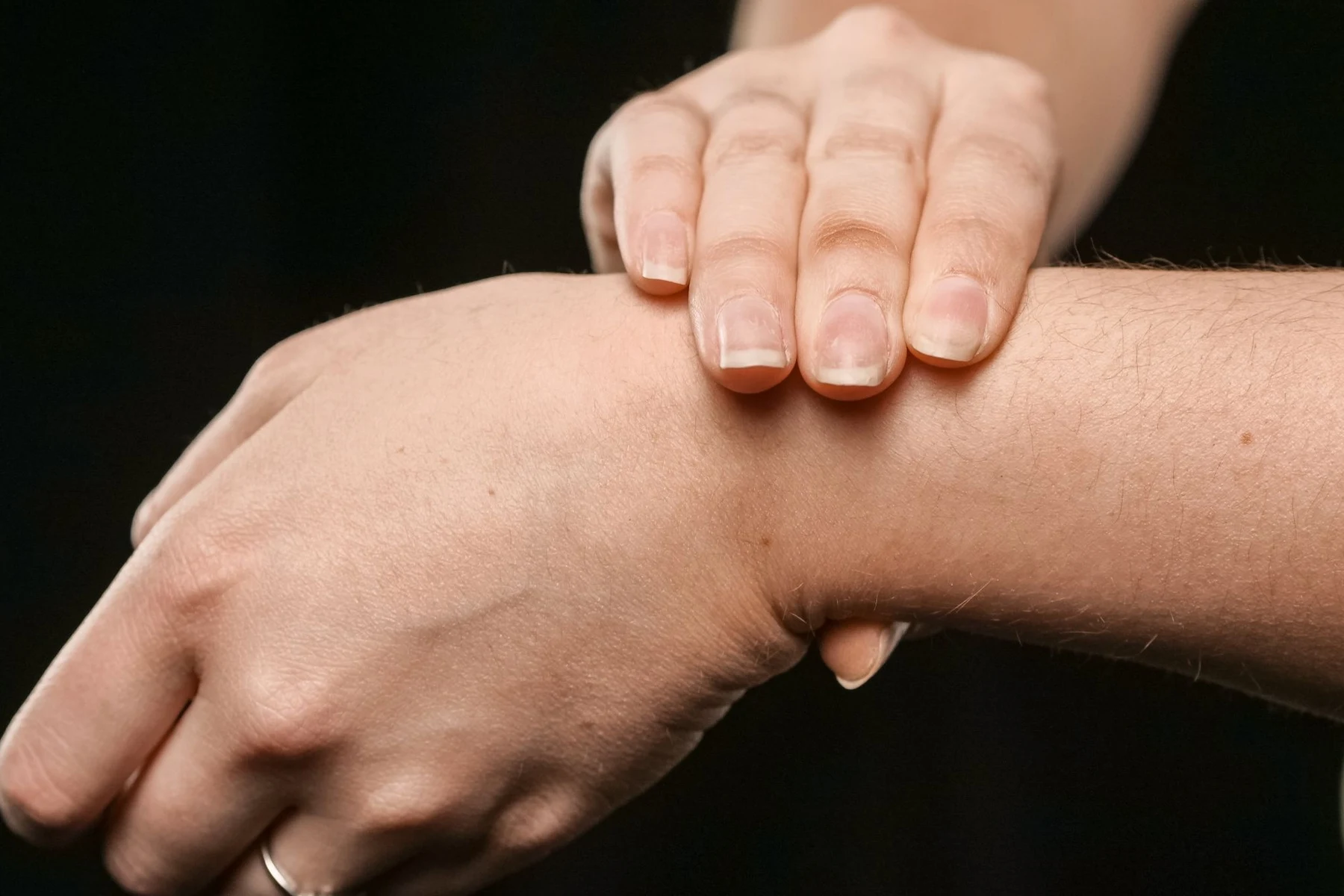
Wrap a soft tape measure around the wrist just below the wrist bone, snug but not compressing. Note the measurement in millimetres, then add roughly 15–20mm for comfortable movement. That figure is the band circumference you want. A 165mm wrist plus 20mm lands you at 185mm, so you round to the 180mm youth band rather than the 202mm adult.
The string method
No tape measure on hand? Wrap a strip of paper or string around the wrist, mark where it overlaps, then lay it flat against a ruler. Same arithmetic afterwards. This is the practical option when you are sizing a classroom and do not want to chase down a tailor's tape.
For a group, measure five or six people across the range you are ordering for — the smallest and largest included — and you will have a reliable picture without measuring everyone.
Not sure which mix to order?
Send us your group size and age range and we will recommend a size split before you commit to a run. Browse custom silicone wristbands or see the full wristband range.
Send us your group size and age range and we will recommend a size split before you commit to a run. Browse custom silicone wristbands or see the full wristband range.
Width changes how a size feels
Circumference is only half the story. The width of the band changes both the fit and how much you can print on it.
A 12mm band is the standard and the safest default — enough room for a readable message, comfortable on almost any wrist. A 6mm skinny band is lighter and popular for layering several colours, but the smaller face limits you to short text. At 19mm and 25mm you get room for longer messages, logos and multi-line text, at the cost of a band that feels more substantial and can sit awkwardly on a small wrist.
The practical rule: the narrower the band, the more forgiving the fit. A 25mm band at child size is a lot of silicone on a small arm, so if you are ordering wide bands for a young audience, size up your sample check before committing.
Ordering for a group: what size mix to choose
This is where most bulk orders go wrong. A single size for a mixed crowd guarantees a portion of unusable bands.
Schools
Primary schools generally want a majority of child bands with a youth allocation for the senior years and a small adult run for staff. Secondary schools flip that — mostly youth and adult. If you are running house colour wristbands for a carnival, order per year level rather than as one block; the difference between a Year 3 wrist and a Year 11 wrist is two full sizes.
Events and festivals
Adult-dominant, with a youth allocation if the event is family-friendly. For event wristbands used as paid-entry proof, err toward the snugger size — a band that can be slipped off intact is a band that can be passed to someone who did not pay.
Workplaces and teams
Adult, with a small youth run for smaller wrists. Nobody wants to be the person whose band spins loosely all day, and a handful of youth bands in the box solves it quietly.
Common sizing mistakes
Ordering one size for everyone. The most frequent and most expensive error. The savings on a single-size run disappear the moment a third of the bands do not fit.
Measuring the wrist and ordering that number. Wrist measurement is not band circumference. Without the 15–20mm allowance you will order a size too small across the board.
Forgetting staff and volunteers. School and event orders routinely count students or attendees and forget the adults running the thing.
Assuming child equals toddler. There are two distinct small sizes for a reason. If under-fives are attending, order toddler bands specifically.
If children will be wearing the bands, it is also worth reading the general guidance on children's product safety published by the ACCC Product Safety before you order, particularly for the under-three age group.
Frequently asked questions
What is the standard silicone wristband size?
202mm adult is the standard. If you order without specifying a size, that is almost always what you will receive. It fits the large majority of adult wrists comfortably and is the right default for general adult audiences.
Do silicone wristbands stretch over time?
Only marginally. Silicone holds its moulded shape through normal wear, which is why it lasts — but it also means a band that is too tight on day one will still be too tight months later. Choose the size you need rather than expecting it to give.
What size wristband should I order for a primary school?
Mostly 150mm child bands, with 180mm youth for the senior year levels and a small run of 202mm adult for teachers and volunteers. Ordering per year level rather than as one block avoids the common problem of senior students receiving bands that are too small.
Can I order more than one size in the same design?
Yes. The artwork and colour stay identical across sizes — only the circumference changes. This is the normal way to handle a school or family event, and it means one design decision covers every age group attending.
How do I measure a child's wrist accurately?
Wrap a strip of paper around the wrist below the wrist bone, mark the overlap, and measure it flat against a ruler. Add 15–20mm for movement. Measuring a few children across the age range you are ordering for is enough to set your mix.
Order custom silicone wristbands in the right sizes
Get the size mix right and a silicone wristband will still be on the wrist months after the event. Get it wrong and you are paying for bands that end up in a drawer.
- Custom silicone wristbands — every standard size, your colours and message
- School silicone wristbands — house colours and carnival bands with per-year-level sizing
- Tyvek wristbands — one-size adjustable for single-day events
- 24-hour dispatch range — when the carnival is this week
Not sure what to order? Tell us the group, the age range and the date, and we will come back with a recommended size split. Designed in Sydney, shipped Australia-wide.

Written by
Founder, Handband
Founder of Handband; specialist in custom wristbands and promotional products for events, schools, charities, and brands.
← Previous
Grandy honoring Va. Tech shootings victim
Next →
Wheaton Baseball to Host Annual White Ribbon Campaign Fundraiser
Comment(s)