
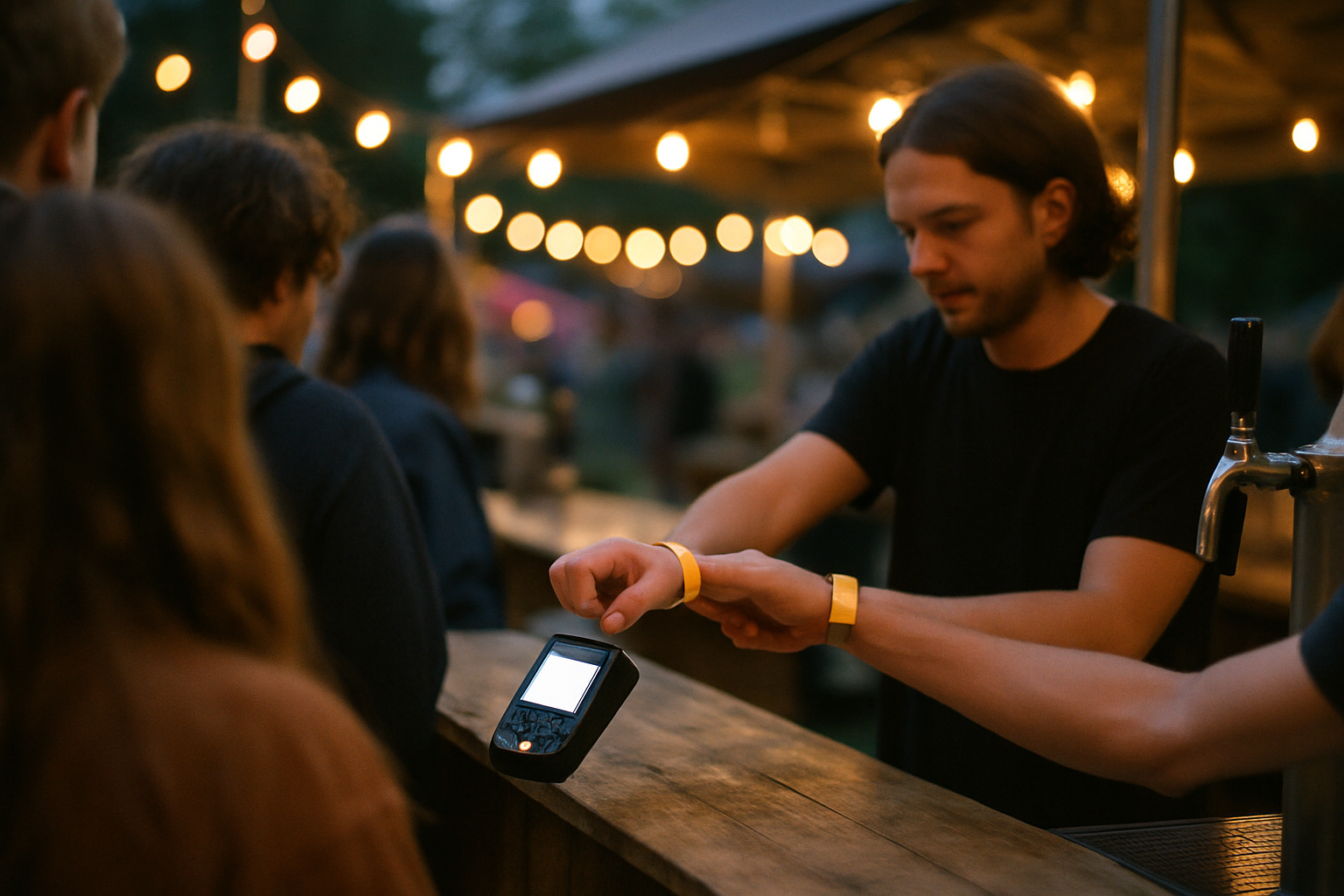
A cashless wristband replaces the wallet at an event: attendees load credit onto a chip in the band and tap to pay. The gain is speed at the bar and less cash on site, but it only pays off above a certain scale — below that, a printed band and a card reader are cheaper and simpler.
What cashless actually changes on the ground
The bottleneck at most event bars is not pouring, it is payment. Removing card taps, PINs and cash handling shortens each transaction to about a second, which compounds across thousands of sales. Queues shorten, staff handle no money, and reconciliation at the end of the night stops being a manual count.
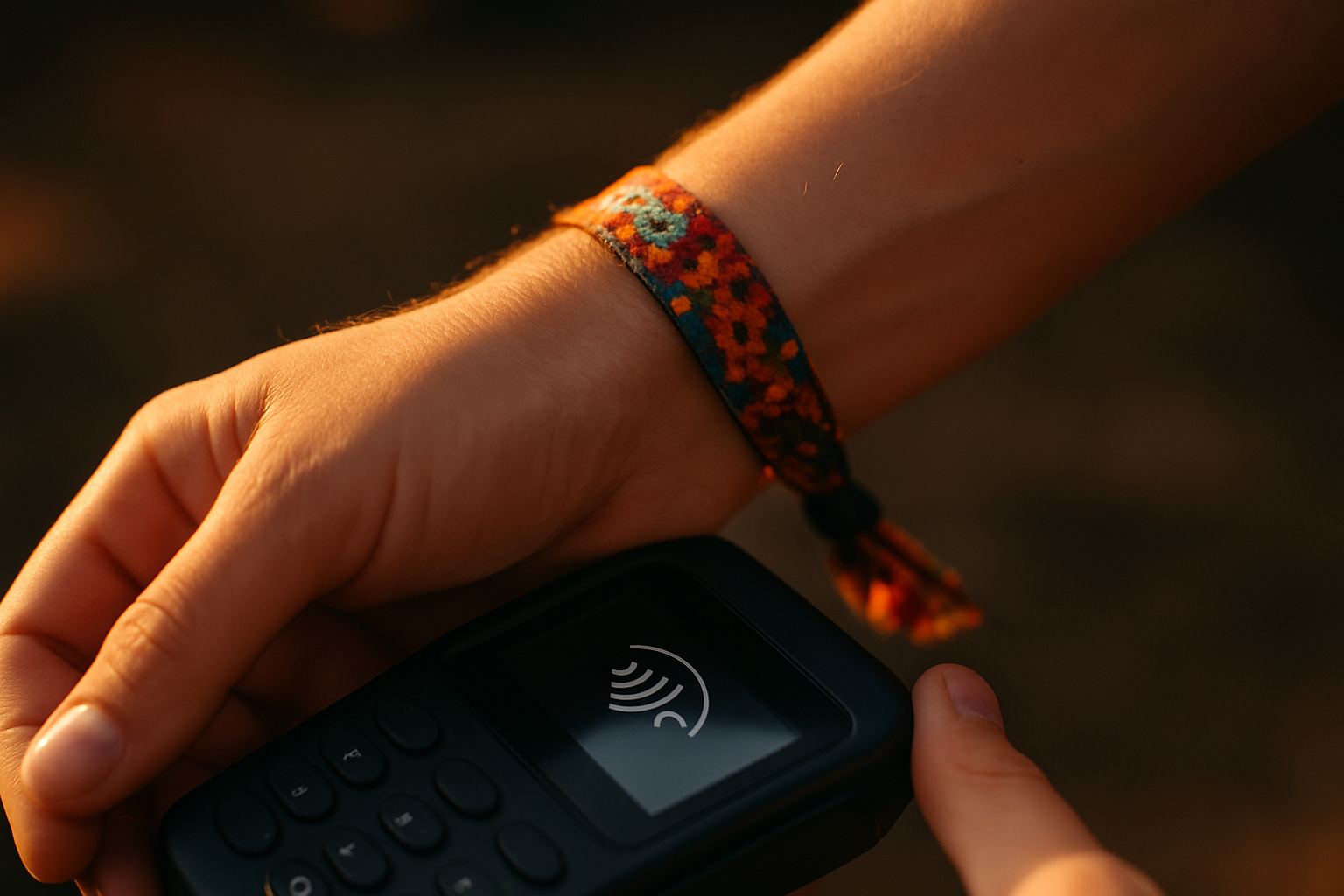
RFID and NFC are not quite the same thing
Both are contactless chips, but NFC works at very short range and is the technology in phone payments, while RFID covers a broader family including longer-range reads used for access gates. For a bar tap, the practical difference rarely matters; for reading attendees as they walk through an entrance, range does.
Recommended for you
Products related to this article
Hand-picked to go with what you just read.

The real cost is the system, not the band
The chipped band itself is only one line in the budget. Readers, network coverage across the site, top-up stations, staff training and a refund process for unspent credit all cost more than the wristbands. Any event weighing this up should compare the whole system against its current takings, not band price against band price.
When a printed band is the better decision
Below a few thousand attendees, or for a single-bar event, chipped bands rarely repay their setup. A full-colour event band plus an ordinary card reader gets you most of the queue benefit for a fraction of the cost, and nothing to configure.
Access control without going cashless
Many events want faster entry but not cashless payment. That is a different problem, solved by a hard-to-swap band rather than a chip — a laminated band survives weather and multi-day use, and a printed single-use band handles day entry.
Planning for the parts that go wrong
Chips fail, readers lose signal, and some attendees will lose a band with credit on it. Decide in advance how staff reissue a band, how credit transfers, and what happens to unspent balances — those three policies cause more complaints on the night than the technology itself.
Frequently Asked Questions
Quick answers from the Handband team
What does a cashless wristband actually do?
Attendees load credit onto a chip in the band and tap to pay, cutting each bar transaction to about a second and removing cash from the site.
What is the difference between RFID and NFC?
NFC works at very short range and powers phone payments; RFID covers a broader family including longer-range reads used at access gates. For a bar tap the difference rarely matters.
Is the wristband the main cost?
No. Readers, site network coverage, top-up stations, staff training and refund handling all cost more than the bands themselves.
When should I not go cashless?
Below a few thousand attendees, or for a single-bar event, a printed band plus an ordinary card reader delivers most of the benefit for far less.
Can I get faster entry without cashless?
Yes — that needs a hard-to-swap band rather than a chip. Laminated bands suit multi-day events; printed single-use bands suit day entry.
What happens if someone loses a loaded band?
Decide your reissue and credit-transfer policy before the event. This causes more complaints on the night than the technology does.
What about unspent credit?
Have a refund process agreed in advance — attendees will ask, and an unclear answer damages goodwill quickly.

Written by
Founder, Handband
Founder of Handband; specialist in custom wristbands and promotional products for events, schools, charities, and brands.
← Previous
Wristbands for Corporate Family Fun Days and Picnics
Next →
Custom Wristbands for Market Stall & Pop-Up Shop Vendors
Comment(s)