
By Handband Community Team · Handband
Updated 10 May 2026 · 11 min read
Updated 10 May 2026 · 11 min read
Updated May 2026. Positivity bracelets — sometimes called affirmation wristbands, mindfulness bands or daily reminder bracelets — have become one of the most popular self-care and mental-health tools across schools, therapy practices, workplaces and recovery communities. Printed with a short message, motto or affirmation, they act as a visible daily cue: every time you see the band on your wrist, you re-anchor to the message.
This guide covers the psychology behind why positivity bracelets work, 20 ready-to-print affirmations for different challenges, how to design your own, when to use them in therapy or wellness programs, and which wristband style suits which use case.
Why Positivity Bracelets Work (the psychology)
Visible environmental cues drive habit change
Behavioural research (Duhigg, Clear, Lally) shows that visible environmental cues drive 3-5× more consistent behaviour change than memory alone. A wristband sits in your visual field 50+ times a day — far more often than a sticky note, journal entry or phone wallpaper.
Cognitive behavioural therapy alignment
CBT techniques use "thought-record" tools to interrupt negative spirals and substitute helpful alternatives. A wristband is a permanent thought-record on your body. Many CBT therapists give clients wristbands as between-session reinforcement.
Tactile anchoring during distress
Touching the band — rubbing it, twisting it, even snapping it — provides a tactile anchor during panic attacks, anxiety spikes or difficult conversations. The physical sensation pulls focus from the racing thoughts back to the body and the affirmation message.
Identity reinforcement
Wearing a band that says "I AM ENOUGH" for 90 days reinforces an identity-level shift. Identity-based change ("I am someone who is calm") outperforms behaviour-based change ("I will try to be calm") in long-term outcome research.
20 Ready-to-Print Affirmations by Goal
For anxiety and stress
- BREATHE
- STAY CALM
- ONE STEP AT A TIME
- I AM SAFE
- THIS WILL PASS
For depression and low mood
- YOU ARE ENOUGH
- I CHOOSE JOY
- ONE GOOD THING
- TRUST THE PROCESS
- LIGHT WILL RETURN
For self-compassion and recovery
- BE KIND TO ME
- PROGRESS NOT PERFECTION
- ONE DAY AT A TIME
- I AM LOVED
- HEAL AT YOUR PACE
For motivation and goals
- KEEP GOING
- STRONGER EVERY DAY
- DO IT FOR YOU
- NEVER QUIT
- TRUST YOURSELF
Recommended for you
Products related to this article
Hand-picked to go with what you just read.
How to Design Your Own Positivity Bracelet
Step 1: Identify the specific challenge
What's the moment you need help with? Panic attacks at work? Lonely evenings? Doubt before exams? Specific challenges produce specific affirmations.
Step 2: Pick the present-tense phrase
Present-tense affirmations (I AM CALM) work better than future-tense (I WILL BE CALM). Avoid negations (DON'T PANIC creates panic). Frame what you want to feel, not what you want to avoid.
Step 3: Keep it short (under 25 characters)
A glance needs to register the message. Short phrases like BREATHE, ENOUGH, KEEP GOING work better than long sentences. Two- to four-word phrases are optimal.
Step 4: Choose meaningful colours
- Purple — mental health, mindfulness, calm
- Green — growth, balance, healing
- Blue — trust, stability, steady
- Yellow — optimism, energy, hope
- White — clarity, fresh start
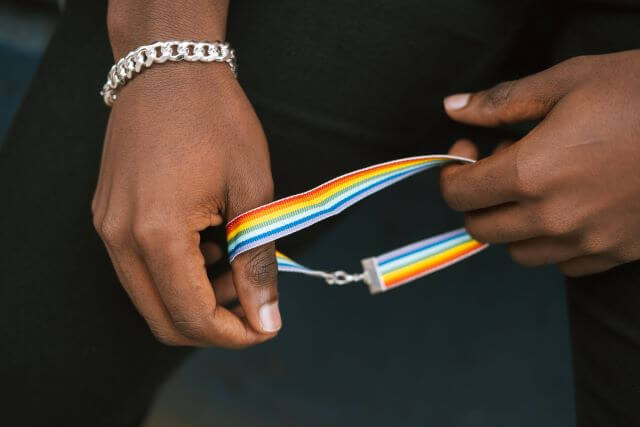
- Multi-colour — pride, inclusion, diversity of feeling
Step 5: Order multiples for stacking or rotation
Many users wear 2-4 bands stacked. Stack different affirmations for different parts of the day, or stack the same affirmation in different colours for variety. Order 4-6 units to support rotation and avoid daily-wear fatigue.
When to Use Positivity Bracelets
In CBT and counselling sessions
Therapists give clients bands with their personal cognitive challenge written on them. The client wears it as a between-session tool, then discusses the experience in the next session.
In school wellbeing programs
Resilience and growth-mindset programs distribute bands at the start of term. Students keep them through Year 6/Year 10 transitions, exam periods, and friendship challenges. See our wristbands for young children guide for school program ideas.
In workplace mental health programs
RUOK Day campaigns, mental-health-awareness weeks, and employee-assistance programs use branded positivity bands as a low-cost, high-impact intervention. Employees keep wearing them long after the awareness day ends.
In addiction recovery and 12-step programs
"ONE DAY AT A TIME", "CHOICES", "HEAL AT MY PACE", "EASY DOES IT" bands support sober living and milestone-marking. Many programs gift bands at 30, 60, 90 day milestones.
In grief support
Bands with a loved one's name + a remembrance phrase (LOVE NEVER LEAVES, ALWAYS WITH ME, FOREVER) help grievers maintain connection while processing loss. Common in palliative care, hospice and bereavement counselling.
In sports and performance
Athletes wear pre-match positivity bands (FOCUS, TRUST, OWN IT) as part of pre-performance routines. Different from team-identification bands — these are individual psychological tools.
Choosing the Right Wristband Style
For 24/7 wear
Skinny Debossed Solid (1/4 inch) or Custom Debossed (1/2 inch). Lightweight, waterproof, hypoallergenic medical-grade silicone.
For visibility and impact
Custom Colour or PHAT 1 inch wide bands. The wider profile makes the affirmation more readable to you and starts conversations with others.
For mood-tracking + affirmation combo
The Emotion Bracelet — you turn the band to indicate current mood while also displaying the affirmation. Particularly useful for therapy clients and neurodivergent kids learning emotional vocabulary.
For stacking and rotation
Multi-colour 5-stripe bands let you stack 3-5 at once. Order multiple bands in different colours to vary visual stimulus while maintaining the affirmation.
Pricing and Bulk Orders
Individual orders (1-10 bands)
Custom debossed silicone from $5 per band. Send your affirmation text and pick a colour from 50+ stock options. Production 7-14 business days.
Therapy practices and counsellors (50-100 bands)
Custom debossed at $2.50-$3.00 per band. Order multiple affirmation designs in a single batch to keep stock for various client needs.
School wellbeing programs (200-500 bands)
$1.50-$2.00 per band. House-colour debossed bands with growth-mindset affirmations. Mix sizes (Kids 165 mm + Youth 180 mm + Adult 200 mm) in the same order.
Workplace bulk (500-2,000 bands)
$1.20 per band at 1,000+. Branded with company name + mental-health awareness affirmation. Distribute on RUOK Day or during Mental Health Week.
Related Reading
- Wristbands for Young Children: Safety, Learning, ID & Reward Ideas
- Wristband Colour Meanings: Mental Health, Cancer & 30+ Cause Colours
- Are Wristbands Eco-Friendly? Sustainable Materials Guide
- Shop custom silicone wristbands
References & Further Reading
- Duhigg, C. (2012) — The Power of Habit: Why We Do What We Do in Life and Business. Random House.
- Clear, J. (2018) — Atomic Habits: An Easy & Proven Way to Build Good Habits. Penguin.
- Lally, P. et al. (2010) — How are habits formed: Modelling habit formation in the real world. European Journal of Social Psychology.
- Beck, J. S. (2020) — Cognitive Behavior Therapy: Basics and Beyond. 3rd edition. Guilford Press.
- Beyond Blue — Tools to Manage Anxiety and Depression in Daily Life.
- Headspace — Mindfulness and Self-Compassion Techniques for Youth.
Frequently Asked Questions
Quick answers from the Handband team
What is a positivity bracelet?
A positivity bracelet (also called an affirmation wristband) is a wearable band printed or engraved with a positive phrase, motto or daily reminder. The band acts as a visible cue: every time you see it on your wrist, you re-read the message. Used for mental health, recovery, goal-setting, stress management and as a self-care tool.
Do positivity bracelets actually work?
Yes — the technique is grounded in cognitive behavioural therapy (CBT). A physical reminder you see 50+ times a day reinforces the message far more than a sticky note or phone wallpaper. Research on habit cueing (Duhigg 2012, Clear 2018) shows visible environmental cues drive 3-5× more consistent behaviour change than memory alone.
What should I write on a positivity bracelet?
Pick a short phrase (under 25 characters) that addresses your specific goal: STAY CALM, BREATHE, I AM ENOUGH, ONE DAY AT A TIME, JUST BREATHE, BE KIND TO ME, KEEP GOING, YOU ARE LOVED. The best phrases are present-tense, personal, and specific to a current challenge. Avoid vague slogans.
Are positivity bracelets used in therapy?
Yes — many therapists incorporate them as a between-session tool. Common applications include anxiety management (BREATHE, GROUND yourself), depression recovery (ONE STEP AT A TIME), addiction recovery (CHOICES), eating disorder recovery (BE GENTLE) and grief support (LOVE NEVER LEAVES). The band serves as a tactile anchor during difficult moments.
Can I wear positivity bracelets to bed and in the shower?
Yes — silicone wristbands are waterproof, hypoallergenic and comfortable for 24/7 wear. The continuous-wear aspect is part of the point: the band stays with you through panic attacks, low moods, and difficult conversations. Choose Skinny (1/4 inch) for the most comfortable continuous wear.
How long should I wear a positivity bracelet?
Most users wear them daily for 60-90 days while building the habit or working through a specific challenge. Behavioural change research suggests 66 days is the average time for a new habit to become automatic (Lally 2010). Some users keep the same band for years as an ongoing anchor; others replace bands as goals evolve.
Where do schools and workplaces use positivity bracelets?
Schools use them in wellbeing programs (resilience, growth mindset, kindness). Workplaces deploy them for mental-health awareness weeks, RUOK Day campaigns and employee assistance programs. Sports teams use them as performance anchors before matches. Hospitals offer them to patients in long-term treatment programs.

Written by
Founder, Handband
Founder of Handband; specialist in custom wristbands and promotional products for events, schools, charities, and brands.
← Previous
Custom Wristbands Designed by Students for School Fundraisers
Next →
Custom Wristbands for Trade Show & Expo Exhibitor Booths
Comment(s)