
By Handband Community Team · Schools, Inclusion & Fundraising
Updated 6 June 2026 · 11 min read
Updated 6 June 2026 · 11 min read
Updated 6 June 2026. In March 2010, students at Simi Valley High and Royal High School in Ventura County rallied behind a small but powerful idea: stop using the R-word. Their two Key Clubs — over 270 members combined — sold T-shirts, wristbands and gathered petitions for the Spread the Word to End the Word campaign, channeling more than $950 back to Ventura County Special Olympics in a single week.
Sixteen years later that grass-roots model is exactly how schools around the world still run inclusion campaigns. The campaign itself has evolved — Special Olympics renamed it Spread the Word: Inclusion in 2019 — and now reaches more than 20,000 schools across 100+ countries each year. The wristband is still the iconic, low-cost vehicle.
This guide walks through how schools run a modern Spread the Word: Inclusion wristband campaign in 2026 — from pledge to printed band — with practical steps, design ideas, fundraising numbers, FAQs and the Simi Valley case study as the original blueprint.
The Original Case Study: Simi Valley Key Clubs (2010)
Two student Key Clubs in Ventura County — Simi Valley High (170 members) and Royal High School (100 members) — coordinated their efforts for Spread the Word to End the Word Day on 3 March 2010. The campaign asked students to stop using the word "retard(ed)" — a casual slur with real, measurable harm against people with intellectual disabilities.
What they did
- Sold T-shirts and wristbands. The Simi Valley club sold out of shirts within days and extended the wristband sales into a second week.
- Circulated a petition. Royal High gathered 200 signatures committing students to drop the word.
- Partnered with Special Olympics. Regional sports manager Jan Radnoti met with each club to share why the campaign matters.
- Ran a peer-led pledge. Joey Marquez (Simi Valley president) and Nathan Shlather (Royal president) led student-to-student conversations.
The numbers
- Combined funds raised: $950+ in a single week (Simi Valley $700, Royal High $250)
- Petition signatures collected: 200
- Students directly engaged: 270+ club members
- Beneficiary: Ventura County Special Olympics — sending athletes to the Southern California Summer Games
The lesson: a short, peer-led, multi-channel inclusion sprint will out-perform a longer, top-down campaign every time. Sixteen years later, schools still use this blueprint.
Why "End the Word" Became "Spread the Word: Inclusion"
In 2019, Special Olympics International rebranded the campaign from Spread the Word to End the Word to Spread the Word: Inclusion. The change reflected a maturing global movement — from stopping a single slur to building positive, inclusive school cultures where students with and without intellectual disabilities learn, compete and lead together.
Today the campaign is anchored by Special Olympics Unified Champion Schools — a global program where mainstream and special-ed students sit, sport, lead and learn together. Wristbands remain the campaign's default visible artefact.
If your school is running an inclusion sprint in 2026, Inclusion — not End the Word — is the language to use. The pledge is forward-looking: "I pledge to spread inclusion" rather than "I pledge to stop a word."
Recommended for you
Products related to this article
Hand-picked to go with what you just read.
Why Wristbands Still Power School Inclusion Campaigns
- A visible commitment. A pledged student wearing the band is a daily, walking reminder for peers.
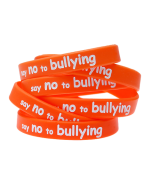
- Affordable at scale. Bulk custom colour silicone wristbands start at around 30 cents each, so a $3-$5 retail price leaves 85-90% as profit for the cause.
- Tactile. Compared to a sticker or a poster, a band on the wrist is something the wearer touches dozens of times a day.
- Whole-school marker. When every student wears one, the message is normalised. Inclusion becomes default culture, not a one-off assembly.
- Easy to extend. Colour, slogan and bundle options let you run sub-campaigns (year-group pledges, sports-team buy-ins, parent challenges) without losing brand consistency.

Step 1: Form a Student-Led Inclusion Action Team
Adult-led inclusion campaigns convince adults. Student-led campaigns convince students. The Simi Valley and Royal High Key Clubs ran the entire campaign from peer-to-peer — Key Club presidents Joey Marquez and Nathan Shlather were the credible voices, not the principals.
Who should be in the team
- 2-3 student leaders (Key Club, student council, peer-support team)
- 1-2 special-education students or peer mentors
- 1 teacher sponsor (often a learning-support or PE staff member)
- 1 parent or PTA contact to handle merch and money
Set a 4-6 week sprint. Anti-bullying weeks and Special Olympics events make natural anchor dates.
Step 2: Choose a Slogan and Colour
Inclusion bands work best with a positive, action-oriented slogan and one strong colour.
Slogans that have worked
- "Inclusion Revolution" — Special Olympics official 2026 theme
- "Spread Inclusion" — short, fits any band size
- "Unified" — Unified Champion Schools branding
- "Choose to Include" — action-led phrasing
- "[School Name] Includes" — school-personalised
Colours that resonate
- Red and yellow — Special Olympics official brand
- Orange — anti-bullying solidarity (Bullying. No Way! Australia)
- Purple — international anti-bullying / acceptance
- School colours — for sustained, year-round wear
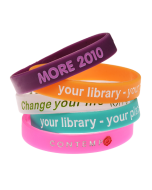
Use a custom debossed wristband for a premium feel, or a bulk custom colour wristband if the whole school will wear it.
Step 3: Build the Pledge
The pledge is the heart of any Spread the Word: Inclusion campaign. It transforms a band from a fashion accessory into a daily commitment.
Sample pledge wording
"I pledge to spread inclusion. I will use respectful language. I will stand up to slurs, exclusion and bullying. I will include classmates of all abilities. I will choose inclusion every day."
How to launch the pledge
- Assembly launch. Open with a student leader, follow with a Unified Champion Schools or Special Olympics video, then have students sign the pledge.
- Wristband as receipt. Each signed pledge earns a band. Wearing the band is the daily commitment.
- Public count. Track pledges signed in real time (a banner near the canteen works) — peer pressure accelerates uptake.
- Staff lead by example. Teachers and admin wearing the band lift student engagement significantly.
Step 4: Run the Sales Sprint
Simi Valley raised $700 in a week; Royal High raised $250. The shared playbook: a 7-14 day sprint, multiple sales channels, peer-to-peer asks.
Sales channels that work
- Canteen / cafeteria sales stand at break and lunch
- Game-day sales at home matches and inter-school tournaments
- Parent newsletter / school-app push notifications
- School social media (Instagram, TikTok) — every student posts a 15-second pledge video
- Friday "wear the band" days with a small reward (free pizza slice, casual-day pass)
Pre-order matters: take orders 2-3 weeks before the campaign date so bands arrive ready for the launch assembly. Bulk wristband orders typically ship in 7-14 business days.
Step 5: Pair With Activities, Not Just Bands
Wristbands alone are a transaction. Wristbands plus activities are a culture shift. Special Olympics' Spread the Word resources suggest schools run a whole "week of inclusion" alongside the band rollout.
Activity ideas (one per day)
- Monday — Pledge assembly. Launch the campaign, distribute bands to signers.
- Tuesday — Unified PE class. Special-ed and mainstream students play together.
- Wednesday — Class discussion. English/social-studies lesson on the impact of slurs.
- Thursday — Lunch buddy day. Students invite a peer they don't usually sit with.
- Friday — Inclusion celebration. Pep rally, athlete-of-the-week awards, photo wall.
Step 6: Direct the Funds Transparently
The Simi Valley Key Club sent a $700+ check directly to Ventura County Special Olympics. The transparency of that direct transfer is what built credibility for repeat campaigns the following year.
Beneficiary options
- Special Olympics (national or regional chapter) — direct, scalable, well-known
- Unified Champion Schools program funds — keeps money in school-based inclusion activities
- Local disability-services charity — personal community connection (Down Syndrome Australia, Autism Awareness, etc.)
- Internal — school's own inclusion program — buddy program, sensory room, adaptive PE equipment
How to handle money cleanly
- Single bank deposit channel — school finance or P&C account, no cash on hand
- Transfer to beneficiary within 30 days of sprint close
- Photograph the transfer or thank-you letter — share publicly to close the loop with donors
Step 7: Close the Loop and Plan the Next Year
Successful campaigns become traditions. Schools that ran Spread the Word in 2010 are now in their 16th annual run — students plan it before they leave for university.
Post-sprint checklist
- Post a "we raised $X for [beneficiary]" update across school channels
- Photograph the cheque presentation; thank donors by name where they've agreed
- Run a quick student survey: what worked, what didn't, what to keep
- Hand the playbook to a younger student leader so the campaign survives leadership turnover
- Lock the same week next year — pre-order bands 6-8 weeks ahead
What Australian and UK Schools Should Know
Spread the Word: Inclusion runs globally but each region anchors it differently:
- Australia — pair with National Day of Action against Bullying and Violence (third Friday of August). Special Olympics Australia and Down Syndrome Australia both run schools toolkits.
- United Kingdom — pair with Anti-Bullying Week in mid-November (Anti-Bullying Alliance). The British Down's Syndrome Association distributes school packs.
- United States — anchor on the first Wednesday of March (the official Spread the Word: Inclusion day) or align with school year-end Special Olympics regional events.
- New Zealand & Canada — usually align with the US date; Special Olympics chapters in each country provide free toolkits.
Anti-Slur Education — The Curriculum Anchor
A wristband campaign without curriculum anchoring will fade. The most successful inclusion programs pair the band with a structured anti-slur lesson at every year level.
Year 7-9 (lower secondary)
Lesson focus: language carries history. The R-word entered casual use during the 1990s and 2000s. Show how it harms, replace with respectful alternatives (intellectual disability, person with Down syndrome, etc.).
Year 10-12 (upper secondary)
Lesson focus: structural inclusion. Beyond words — how schools, workplaces and communities can build inclusive systems. Pair with a Unified Champion Schools challenge.
Primary (ages 5-11)
Lesson focus: friendship and difference. Picture books, role-play scenarios, classroom buddy programs. The band becomes a "kindness friend" the child can show to remind themselves.
Common Mistakes Schools Make
- One-day stand-alone. A single assembly without follow-up lasts a week and disappears. Run a full inclusion week and reinforce monthly.
- Adult-led messaging. Teachers reading from a script convince no one. Hand the microphone to student leaders.
- Vague slogan. "Be kind" is invisible. "I pledge to spread inclusion" is a commitment.
- Excluding the inclusion students themselves. Co-design with special-ed students — their voices anchor authenticity.
- Missing the close-out. If donors and pledgers don't see the impact ($X raised, Y athletes supported), they won't engage next year.
The Handband Promise
Handband is designed in Sydney and supplies thousands of schools across Australia, the UK and beyond with custom inclusion wristbands. We can quote, design, manufacture and ship a 500-5,000 band run within 7-14 days — fast enough to land before your Spread the Word: Inclusion week. Our team handles colour-matching, digital proofs, sample bands and rush options for time-critical school campaigns.
If your school is planning an inclusion or anti-bullying week, get in touch with our team — we'll help you scope the band, the design and the timing so the campaign launches with bands in hand.
References & Further Reading
- Special Olympics International — Spread the Word: Inclusion campaign toolkit (specialolympics.org).
- Unified Champion Schools program — School engagement and curriculum resources.
- Special Olympics Australia — Schools partnership program (2024 annual report).
- Anti-Bullying Alliance (UK) — Anti-Bullying Week 2024 schools toolkit.
- Down Syndrome Australia — Inclusive Education Position Paper (2023).
- Simi Valley Acorn — Local students 'Spread the Word' (Joann Groff, 12 March 2010).
Frequently Asked Questions
What is Spread the Word: Inclusion?
Spread the Word: Inclusion is a global Special Olympics campaign asking schools, workplaces and communities to take a pledge to be more inclusive of people with intellectual disabilities. It evolved in 2019 from the earlier "Spread the Word to End the Word" campaign, which focused on stopping use of the R-word.
When is the official Spread the Word: Inclusion day?
The official day is the first Wednesday of March each year. Many schools extend it to a full Inclusion Week with assemblies, Unified PE classes, lessons and a wristband pledge launch. Australian schools often align with the August National Day of Action against Bullying; UK schools with November Anti-Bullying Week.
How much can a school raise with an inclusion wristband campaign?
Realistic ranges: 200-500 students typically clear $500-$1,500 in a one-week sprint. Larger schools (1,000+ students) regularly clear $3,000-$8,000. The original 2010 Simi Valley Key Club raised over $950 in one week with 270 active members.
What slogan should we put on our inclusion wristbands?
Short, positive and action-oriented. Examples that work: "Inclusion Revolution", "Spread Inclusion", "Unified", "Choose to Include", or your school name with "Includes". Avoid negative framing — focus on what students will do, not what they'll stop doing.
Where should the funds go?
Special Olympics (national or regional chapter) is the most common direct beneficiary. Other strong options: Unified Champion Schools program, local disability-services charities (Down Syndrome Australia, Autism Awareness, etc.), or your school's own inclusion programs like buddy systems, sensory rooms or adaptive PE equipment.
How long does it take to receive a bulk wristband order?
Standard turnaround is 7-14 business days from digital proof approval. Place your order 3-4 weeks before your inclusion week so bands arrive in time for the launch assembly and pre-orders can be collected at distribution.
How do we involve students with intellectual disabilities in the campaign?
Co-design from day one. Bring special-ed students or their support staff into the planning meetings. Have them shape the slogan, choose the colour, lead part of the assembly and run a sales table. The campaign's authenticity comes from those voices — not from talking about inclusion without inclusion.

Written by
Founder, Handband
Founder of Handband; specialist in custom wristbands and promotional products for events, schools, charities, and brands.
← Previous
School Walk for Water — Charity Fundraiser Guide
Next →
Storm Relief Wristbands: How Schools and Clubs Mobilise
Comment(s)