

When a small American college lost a student named Nordman in 2013, the response wasn’t a candlelight vigil or a posted memorial — it was a campus-wide wristband drive coordinated across student government, greek life chapters, and dorm-floor reps. Within three weeks, several thousand silicone bands had moved across the campus, raising funds for Nordman’s family and giving every student something tangible to wear in solidarity.
Campus tribute wristbands have become one of the most reliable formats American and Australian universities use when grief hits a tight community. The format works because campuses are dense, peer-driven, and have built-in volunteer infrastructure (SRC, GRC, Greek councils, faculty associations). This guide walks through how a modern university memorial fundraiser is run, the design and distribution choices that separate effective campus solidarity wristband drives from the ones that fade after a week, and the operational details that come up when a college fraternity sorority fundraiser tries to scale beyond a single dorm community fundraiser.
Why a Memorial Bracelet University Drive Works
University campuses concentrate three things that fundraisers usually have to manufacture:
- Density. 5,000-30,000 students within walking distance of one another for 8 months a year.
- Peer trust. Another student selling you a band has more credibility than any external charity solicitor.
- Built-in volunteer base. Greek life, sports clubs, faith groups, residence-life staff — all already organised and accustomed to running events.
The wristband is the prop. The campus community is the campaign. A band raised across 4 weeks at 5 dorm fronts, 3 dining hall counters, and a quad table during welcome week comfortably moves 2,000-4,000 units at a mid-sized university.
The Engraving Format That Sells on a Campus
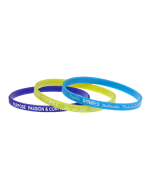
Within the 25-character debossed limit, three formats consistently outperform generic alternatives for campus tribute wristband drives:
- [NAME] · [YEAR] (e.g., “NORDMAN · 2026”)
- TEAM [NAME] or FOR [NAME] (e.g., “TEAM NORDMAN”)
- [INITIALS] · [DATES] for memorial drives (e.g., “TN · 2003-2026”)
Avoid: full names with surnames (eats characters), multi-line slogans (don’t deboss cleanly), school logos (clutter the visual). The name carries the weight; the band stays clean.
Recommended for you
Products related to this article
Hand-picked to go with what you just read.


Coordination Across Student Government, Greek Life, Dorms
The single biggest determinant of campus drive success is whether the SRC/SGA actually coordinates the order rather than letting each greek chapter or dorm run their own. A unified order:
- Hits bulk pricing (1,000+ bands at .20-1.50 cost vs -3 in 100-band batches)
- Avoids design fragmentation (one design = recognisable across campus)
- Simplifies money flow (one bank account, one cheque to the family)
- Press-friendly story arc (one campaign closes, one cheque presents, one photo)
See our peer-led childhood fundraiser case study for a parallel template at the primary-school scale, and the sports team tribute campaign template for the same coordination logic in adult clubs.
Distribution: Where Campus Drives Actually Move Bands
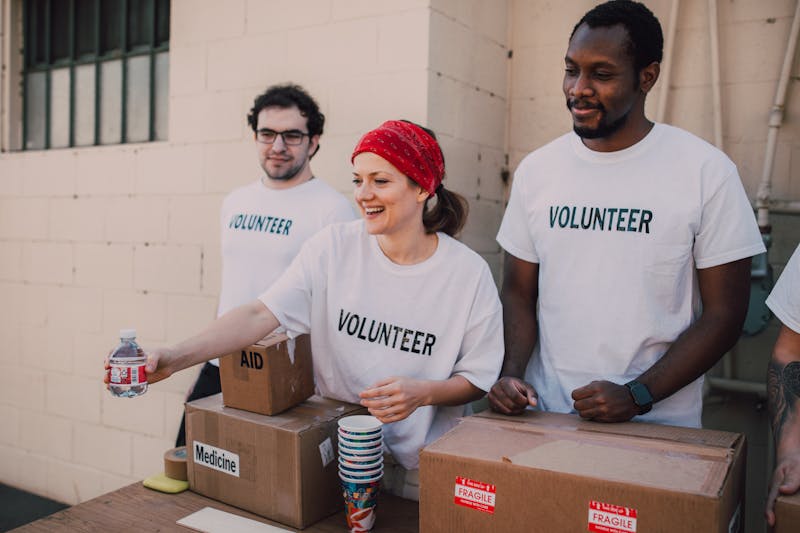
A 4-6 week campus tribute drive consistently moves 1,500-4,000 bands when set up across these channels:
- Quad table during peak class-change hours (Mon/Wed/Fri 10-2pm).
- Dorm front-desk counters with a small jar and laminated cause card.
- Greek life chapter tables during rush week, philanthropy week, or chapter meetings.
- Dining hall partner — one cashier with a counter display.
- Online via Venmo/PayID for alumni, parents, distant friends.
Money Handling for College Fraternity Sorority Fundraiser Drives
Open a dedicated bank account labeled with the campaign name, separate from any chapter or SRC general fund. Daily empties from quad/dorm jars deposit into that account. Many universities require their student-affairs office to co-sign withdrawals from any solicitation account; check with your student-life office before starting collection.
If proceeds go to a registered DGR cancer charity (Cancer Council Australia, the Leukaemia Foundation), the donation portion is tax-deductible. State this transparently on the laminated counter card.
Press Coverage: The Campus-Paper Multiplier
Campus tribute fundraisers consistently get coverage in three places:
- Campus newspaper — near-universal coverage, free.
- Local town paper — community-news desk runs a 3-paragraph story with photo.
- Alumni magazine — if the family agrees, the alumni community amplifies the next mailout.
Your job: send a 200-word summary + one clean photo + one contact email to each. Coverage rate is near 90% on student-led tribute campaigns.
Closing the Campaign with Dignity
Set a clear close date (typically 4-6 weeks from launch). The closure ritual matters as much as the launch:
- Final tally from all distribution points, transferred in one bank movement.
- Cheque presentation — small ceremony with the family or charity recipient. Photograph it.
- Campus-wide thank-you — SRC president posts the campaign close on the official channels.
- Memorial bracelet keep-on policy — encourage students who bought the band to keep wearing it as ongoing remembrance.
See our memorial wristband ideas piece for sensitivity guidance.
Common Mistakes to Avoid
- Fragmented orders — each chapter ordering separately reduces buying power and design coherence.
- Open-ended timeline — a campaign without a close date loses momentum after week 3.
- Family not consulted — some families want maximum awareness, others quiet privacy. Ask first.
- No press email ready — the press window opens on day one and closes within 14 days. Have the email pre-drafted.
Browse the Fundraising category for the full product range with bulk pricing for campus drives.
Closing Thought
The Nordman drive worked because the community was already in mourning — the wristband gave grief somewhere to go. Campus tribute campaigns rarely fail on product or design. They succeed or fail on whether the SRC and Greek councils could actually coordinate one design, one timeline, one bank account. Get the coordination right and a silicone band carries a campus-wide story for months.
Frequently Asked Questions
How much can a campus tribute wristband drive realistically raise?
A coordinated 4-6 week drive at a 10,000-student university typically moves 2,000-4,000 bands and raises ,000-0,000 net (after band cost). Larger universities or multi-campus drives can reach 5,000-0,000.
Should the SRC or individual greek chapters lead a campus drive?
SRC/SGA lead — always. A unified order hits bulk pricing, avoids design fragmentation, simplifies money flow, and creates a coherent press story. Individual chapters can run their own table within the unified design.
Do we need permission from the family before launching?
Always. Get explicit family permission for name and photo use, and ask them to choose the engraving format. Some families want maximum awareness; others prefer privacy. Their decision is non-negotiable.
How do we pay for the bands upfront?
Most universities allow the SRC or student-affairs office to advance the order cost from a discretionary budget, with reimbursement from sales. Greek chapters often co-finance for visibility. Worst case, run a small upfront pre-sale to fund the order, then bulk-distribute after delivery.
Can alumni participate in the campus campaign?
Yes — and it dramatically expands reach. Set up a Venmo/PayID/PayPal alongside the physical sales table, mention it in the alumni-magazine article, and accept distant orders. Many campaigns find alumni alone double the total raised.

Written by
Founder, Handband
Founder of Handband; specialist in custom wristbands and promotional products for events, schools, charities, and brands.
← Previous
Handbands Help Kids: 7 Ways Silicone Wristbands Work for Australian Children (2026)
Next →
Student-Led Memorial Fundraiser Wristbands 2026 | Handband
Comment(s)