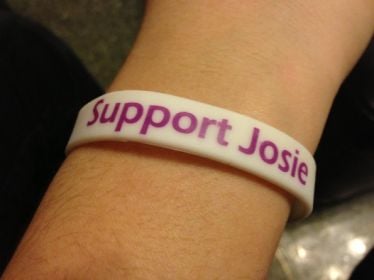
Limited-edition fundraising wristbands raise more because scarcity converts sympathy into action. When a coastal community released a numbered run of "Stronger than the Storm" bands after Hurricane Sandy, the first batch sold out in days — not because people suddenly cared more, but because "only 500 made" gave them a reason to buy now.
Why scarcity works in fundraising
Most cause merchandise fails because there is no urgency — supporters assume they can buy later, and later never comes. A numbered or dated run flips that: the wristband becomes a collectable proof of "I was there for this community when it mattered." Behavioural research consistently shows limited availability increases perceived value and speeds up decisions.
Three design moves that say "special edition"
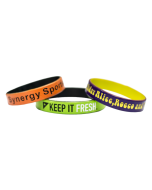
Ordinary single-colour bands read as giveaways. Editions need visual richness: five-colour segment wristbands let a design carry community colours in one band; laser-engraved dual-layer bands reveal a second colour inside the lettering for a premium finish; and chunky one-inch swirl bands give a bold canvas no standard band matches. The less a band looks like every other band, the easier the higher price point.
Recommended for you
Products related to this article
Hand-picked to go with what you just read.
Numbering, dating and batching
- Date the edition — "Summer 2026 Relief Run" printed on the inside face.
- Cap the run publicly — announce the quantity before sales open, and honour it.
- Batch releases — three drops of 200 out-raise one drop of 600, because each sell-out becomes news.
- Reserve #1–#10 — auction the lowest numbers or gift them to volunteers publicly.
Pricing a limited run
Scarcity supports a premium: where a standard fundraising band sells for $3–$5, a numbered edition comfortably carries $10–$15, and auctioned low numbers can go much higher. Keep the maths public — "each band costs us $2.10; everything above that goes to the fund" — transparency converts sceptics.
The community story is the product
A limited edition without a story is just an expensive band. Name the fund, show the faces it helps, and report totals after every batch. When the cause is disaster recovery, the band outlives the news cycle — supporters keep wearing the proof that their town got back up.
Ordering notes
Multi-colour and dual-layer designs need artwork sign-off, so allow 10–14 business days production plus proofing time. For a full comparison of formats and bulk pricing, start at the fundraising wristband range.
References
- Cialdini, R. — scarcity principle in persuasion research
- Fundraising Institute Australia — merchandise fundraising guidance
- FEMA / community recovery case literature on post-disaster fundraising
Frequently Asked Questions
Frequently Asked Questions
Quick answers from the Handband team
What makes a wristband 'limited edition'?
A publicly announced cap on quantity, a date or edition name on the band, and ideally individual numbering. The cap must be real — re-running a 'limited' design destroys trust and future editions.
How many bands should a first edition run?
200–500 for a town or school community. Small enough to sell out (the sell-out IS the marketing), large enough to matter financially.
What price can a limited edition charge?
Two to three times a standard band — typically $10–$15 where ordinary bands sell for $4. Auctioning the ten lowest numbers can add a disproportionate amount.
Which band styles feel premium enough?
Multi-colour segment designs, dual-layer laser-engraved bands where the message reveals a second colour, and chunky one-inch formats. Plain single-colour debossed bands read as standard stock.
Should we number every band?
If the run is under 500, yes — numbering is what collectors respond to. Above that, date the edition and number only a reserved premium tranche.
How do batch drops work?
Split the run into 2–3 releases. Announce batch one, sell out, publicise the sell-out, open batch two. Each cycle recruits buyers who missed the last one.
How long does a custom multi-colour run take?
Allow 10–14 business days production after artwork approval, plus a few days for proofing — order about four weeks before your launch date.

Written by
Founder, Handband
Founder of Handband; specialist in custom wristbands and promotional products for events, schools, charities, and brands.
← Previous
Workplace Bullying Awareness: Building a Respectful Team
Next →
School Charity Drive Ideas That Actually Work
Comment(s)