

Workplace bullying awareness works when it is visible, voluntary and backed by process. Posters get ignored; a wristband on a colleague's arm starts conversations — and Safe Work Australia estimates workplace bullying costs Australian employers billions each year in absenteeism and turnover, so the business case is not soft.
What counts as workplace bullying
Repeated, unreasonable behaviour directed at a worker that creates a risk to health and safety — belittling comments, exclusion from meetings, impossible deadlines applied selectively, or aggressive management styles. One-off conflict and reasonable performance management are not bullying; the pattern and the power dynamic are what matter.
Why visible symbols change behaviour
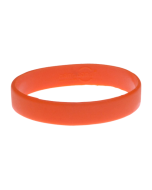
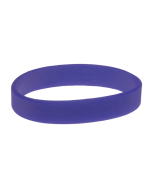
Anti-bullying campaigns fail quietly when nobody can tell who is on board. Visible markers — a wristband worn during an awareness week — do three things: they signal safe people a target can approach, they make bystanders feel outnumbered less often, and they keep the topic alive after the toolbox talk ends. Orange awareness wristbands carry the international anti-bullying colour, while purple silicone bands align with Spirit Day’s stand against LGBTQ+ bullying.
Recommended for you
Products related to this article
Hand-picked to go with what you just read.
Running an awareness week that isn't cringe
- Voluntary always — compulsory wristbands breed resentment and defeat the signal.
- Leadership first — if the site manager isn't wearing one on Monday, cancel the week.
- Pair with process — every band handed out comes with the one-page "how to report" flowchart.
- Close the loop — end the week announcing one concrete change (a trained contact officer, a revised policy clause).
Beyond the week: everyday signals
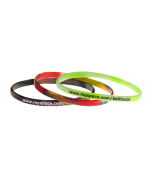
Some teams keep a subtle version going year-round — slim swirl-pattern bands in team colours worn by trained contact officers, so anyone who needs a quiet word knows exactly whom to approach without asking around. Quiet visibility beats a loud campaign that ends on Friday.
What HR should have ready before launch
A current bullying policy people can find, at least one trained contact officer per site, a reporting path that doesn't run through the person most likely to be reported, and manager training on the difference between performance management and bullying. The wristband is the invitation; the process is the promise it points to.
Measuring whether it worked
Track report volume (an early rise usually means trust, not more bullying), pulse-survey scores on "I feel safe speaking up", and exit-interview mentions. Re-run the visibility week each year and compare.
References
- Safe Work Australia — guide for preventing and responding to workplace bullying
- Fair Work Commission — anti-bullying jurisdiction and definitions
- GLAAD Spirit Day — purple as the anti-bullying solidarity colour
Frequently Asked Questions
Frequently Asked Questions
Quick answers from the Handband team
What colour wristband represents anti-bullying?
Orange is the most widely recognised anti-bullying colour internationally, and purple is worn on Spirit Day against LGBTQ+ bullying. Both work; pick one and explain it in the launch email.
Is a wristband campaign enough to address workplace bullying?
No — it is the visibility layer only. It must sit on top of a findable policy, trained contact officers and a safe reporting path. A campaign without process is decoration.
Should wearing the band be compulsory?
Never. Voluntary uptake is the entire signal — it shows who has genuinely opted in, and compulsion breeds quiet resentment that poisons the message.
How do we launch it without it feeling like HR theatre?
Leadership wears the bands first, the launch pairs every band with the one-page reporting flowchart, and the week ends with one announced concrete change. Skip any of the three and it reads as theatre.
What is the difference between bullying and tough management?
Reasonable performance management, done reasonably, is lawful even when uncomfortable. Bullying is repeated unreasonable behaviour creating a health and safety risk — the pattern and selectivity distinguish them.
Do reports increasing mean the campaign failed?
Usually the opposite — under-reporting is the norm, so an early rise typically means people finally trust the process. Watch the trend over 12 months, not the first month.
What band style suits year-round contact officers?
A slim, subtle band in a team colour — visible enough to identify the trained officer, quiet enough for daily wear with any uniform or office dress code.

Written by
Founder, Handband
Founder of Handband; specialist in custom wristbands and promotional products for events, schools, charities, and brands.
← Previous
Memorial Fundraiser Ideas: Honouring a Life with Purpose
Next →
Limited-Edition Fundraising Wristbands: Why Scarcity Sells
Comment(s)