By Handband Community Team · Updated 16 May 2026 · 9 min read
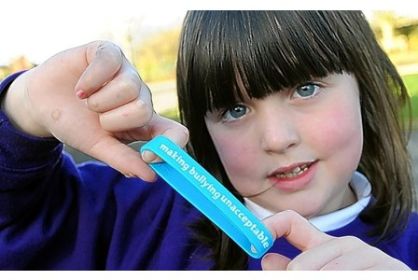
Student bracelet fundraisers are one of the highest-return school fundraising strategies available — combining tangible business learning with real revenue for children’s hospitals, awareness campaigns and community causes. A single high school chapter selling $5 bracelets can raise $10,000+ for a paediatric ward in one semester, while teaching students product design, marketing, sales operations and impact reporting along the way. This guide walks through how to run a student bracelet fundraiser end to end — from the inspiring FBLA case study that started a national movement to the practical bracelet fundraiser ideas, design tactics and partner-charity strategies that consistently deliver results.
How One Student Bracelet Fundraiser Inspired a National Movement
The original FBLA chapter project that inspired this guide started simply: a small group of high school students wanted to support their local children’s hospital. They designed a $5 silicone bracelet with the hospital name, sold them through their school’s lunch break and parent network, and raised over $8,000 in the first semester. The story went viral on local TV, then state-level FBLA competitions, and soon dozens of other chapters across the country ran similar campaigns — collectively raising over $1 million for paediatric hospitals nationwide.
The lesson behind that initial success is simple: a school bracelet fundraiser turns ordinary supporters into committed donors because the bracelet itself becomes a daily, visible commitment to the cause. Every classmate, parent and community member who buys a band wears the cause on their wrist for months — far longer than a one-off donation could ever generate awareness.
Why Bracelet Fundraisers Work for Schools and Hospitals
Bracelet fundraisers consistently outperform bake sales, raffles, and one-off donation drives because they hit five practical advantages at once:
- High margin per sale. Custom silicone bracelets cost roughly $1 each at scale and sell for $3–5 — putting 60–75% of every dollar directly into the cause.
- Tangible, wearable outcome. Donors walk away with something physical to wear. Conversion rates are 2–3x higher than donate-only appeals because supporters see immediate value.
- Daily visible cue. Every bracelet on a classmate’s wrist promotes the cause for weeks. Awareness wristbands continue selling long after the launch event.
- Builds business skills. Students gain real-world experience in product design, marketing, financial literacy and customer service — outcomes valued by colleges and employers.
- Scales easily. Start with 200 bands; reorder in 7–10 days if demand grows. Cash flow turns positive within the first weekend of sales.
Recommended for you
Products related to this article
Hand-picked to go with what you just read.
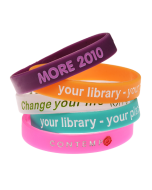
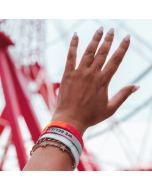
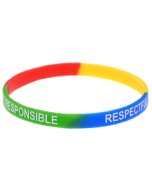
10 Fundraising Bracelet Ideas for Students
Strong campaigns combine the right product, the right message and the right distribution. These ten student-tested fundraising bracelet ideas have all been used by Australian high school and middle school chapters to raise meaningful funds for hospitals, charities and school programs.
- Hospital partnership campaign. Custom band carrying the hospital name; 70–100% of proceeds go directly to the foundation. Royal Children’s Hospital Foundation, Sick Kids Foundation and similar charities welcome school partnerships.
- Awareness wristbands for specific causes. Cancer (pink/yellow), autism (blue/gold), heart conditions (red), mental health (lime green). Tie the colour to an awareness month for built-in media interest.
- Tier pricing. $5 standard band, $20 band + keychain bundle, $50 personalised band, $250 corporate sponsor pack. Tier pricing converts mid-tier supporters who would have given $5 into $20+ donors.
- School-class competitions. Homerooms compete for sales totals; the winning class gets a free dress day or pizza party. Sales rise 2–3x compared to non-competitive campaigns.
- Limited-edition designs. New colour each semester or annual refresh. Collectors buy every version, lifting per-supporter lifetime value.
- Memorial fundraisers. A community member, classmate, teacher or parent who’s been lost or is fighting illness. Personal stories drive far higher donations than abstract causes.
- Sports tournament bands. Inter-school or club tournaments use commemorative bracelets as a fundraising item sold to spectators. Branded with the event date and team.
- Themed party / event bands. School formal, fete or carnival days where ticket includes a commemorative bracelet. Bundled ticket prices feel high-value.
- Social-media challenge campaigns. Buy a band, post a photo with the cause hashtag, nominate three friends. Each post drives 2–3 more sales through viral reach.
- Local-business co-distribution. Cafes, gyms and small businesses sell bands at point-of-sale with a 10% kickback. Community business networks become a fundraising-multiplier.
How to Run a Student Bracelet Fundraiser Step by Step
A successful student bracelet fundraising campaign breaks down into four phases over 10–12 weeks — comfortably fitting inside a school semester:
Phase 1: Design (Weeks 1–2)
Survey your school community on colour and message preferences. Hold a design competition; let students vote on the winning concept. The student-owned design becomes the centrepiece of the marketing because students promote what they helped create.
Phase 2: Source & Finance (Weeks 3–4)
Compare suppliers, request quotes, build a budget. Set tier pricing using projected margins. Most school clubs order an initial run of 200–500 bracelets with the option to reorder if demand exceeds supply. Bulk pricing typically kicks in around 250 units.
Phase 3: Market & Sell (Weeks 5–10)
Run social media, design posters, brief school newsletters, set up sales points at the school gate, canteen, parent evenings and local community events. Sell at multiple touchpoints so word spreads quickly across the school community.
Phase 4: Report & Celebrate (Weeks 11–12)
Count totals, photograph the cheque presentation, write the impact report, present to school assembly and parent body. Documentation turns the campaign into reusable teaching material for next year’s cohort and competition submissions for DECA, FBLA, JA and similar clubs.
Partnering with Children’s Hospitals and Charities
Children’s hospital fundraisers are the most reliable bracelet campaign category because they combine emotional weight, visible impact and broad community appeal. Australia’s major paediatric hospital foundations welcome school partnerships and provide marketing support, official endorsement and tax-deductible receipts:
- Royal Children’s Hospital Foundation (Melbourne) — runs the annual Good Friday Appeal; welcomes school-led campaigns.
- Sydney Children’s Hospitals Foundation — supports Randwick and Westmead hospitals; school grants program available.
- Children’s Hospital Foundation Queensland — funds the Brisbane Children’s Hospital; community fundraising team can endorse school campaigns.
- Perth Children’s Hospital Foundation — supports WA paediatric care; welcomes student-led wristband campaigns.
- Cancer Council Kids’ Cancer Project — school awareness wristbands for childhood cancer research.
- Make-A-Wish Australia — school bracelet campaigns fund wishes for seriously ill children.
Approach the foundation’s community-fundraising team early. Most provide a partnership pack including their official logo, branding guidelines, suggested messaging and authority to use the hospital name on the bracelet. Their support adds credibility and unlocks broader community-business participation.
Supporting Children’s Hospitals Through Community Action
Beyond the immediate dollars raised, student bracelet fundraisers build something more lasting: a generation of young people who grow up understanding that community action matters. The FBLA students who launched the original campaign learned business skills, but they also learned that ordinary people can fund extraordinary outcomes. A decade later, many of those students are running their own community-leadership projects — some at the same hospitals they once raised money to support.
A custom bracelet fundraiser turns one good idea into a teaching moment, a community connection and a measurable impact. Every $5 band is a vote that says: "I care, and I’m willing to wear it."
Frequently Asked Questions
How do bracelet fundraisers work?
A bracelet fundraiser works by purchasing custom silicone wristbands in bulk (typically $1-1.80 each at scale) and selling them to supporters at $3-5 each — putting 60-75% of every dollar directly into the cause. The bracelet carries a message, colour or logo that signals the cause publicly. Buyers wear the band for weeks, multiplying awareness beyond the initial sale.
What are good school fundraising ideas?
Top-performing school fundraising ideas include: bracelet/wristband campaigns for children's hospitals or awareness causes, themed class-vs-class competitions, sports tournament bands, social-media challenge fundraisers, and bundled-event tickets (school formal, fete, carnival). The strongest campaigns combine emotional cause + tangible product + viral mechanic.
How can students raise money for hospitals?
Students can raise money for children's hospitals through bracelet fundraisers (partnered with hospital foundations like the Royal Children's Hospital Foundation or Sydney Children's Hospitals Foundation), class-vs-class competitions, sporting events with commemorative wristbands, awareness-month tie-ins (pink in October, blue in March), and online viral campaigns with photo nominations. The best campaigns combine partnership with the official hospital foundation + visible local distribution.
Why are awareness bracelets effective?
Awareness bracelets are effective because they combine three properties that most fundraising tools lack: high visibility (worn on the wrist for weeks), emotional attachment (signal a personal commitment to the cause), and conversation starter (people ask what the band represents). They turn each supporter into a walking promoter for the cause, multiplying reach far beyond the initial sale.
What's the minimum order for a student bracelet fundraiser?
Just seven units for custom silicone wristbands, making it accessible from the smallest student council project to large multi-school campaigns. Most school clubs start with 200-500 bands so there's enough inventory to sell at multiple touchpoints (school gate, parent evenings, sports games). Reorders ship in 7-10 days.
How long does a student bracelet fundraiser take?
Typically 10-12 weeks from design to impact reporting — fits comfortably within a school semester. The four phases are: design (2 weeks), sourcing and finance (2 weeks), marketing and sales (6 weeks), impact reporting (2 weeks). Adjust the phases based on advisor availability and competition deadlines for DECA, FBLA-PBL or JA chapters.
How much can a student bracelet fundraiser raise?
Real student campaigns regularly raise $3,000-$15,000 for the chosen cause, with standout campaigns crossing $50,000 when they tap parent networks, alumni, social media and local businesses. The original FBLA hospital fundraiser that inspired this guide raised over $8,000 in its first semester and went on to inspire hundreds of similar campaigns nationwide.

Written by
Founder, Handband
Founder of Handband; specialist in custom wristbands and promotional products for events, schools, charities, and brands.
← Previous
Creative Fundraising Ideas: 10 Wristband Strategies That Hit Stretch Goals
Next →
Memorial Fundraiser Ideas: Honouring a Life with Purpose
Comment(s)