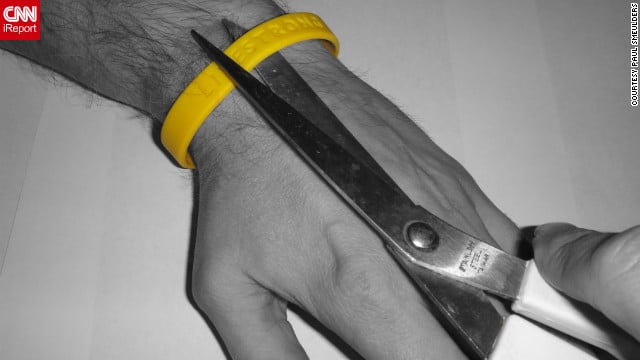
The yellow Livestrong wristband — created by the Lance Armstrong Foundation in 2004 — sold over 87 million units worldwide. It was the cultural moment when simple physical merch became a major cause-marketing tool. Then in 2012, the Lance Armstrong doping scandal turned the symbol toxic overnight. Sales collapsed. The foundation rebranded.
Over a decade on, the underlying model still works — and the cancer-survivorship cause Livestrong championed is still real. Below is what the Livestrong story taught cause-marketing, and how charities can use the same model successfully today.
What Made the Original Livestrong Band Work
- One solid colour. Yellow. Recognisable from across a room.
- One engraved word. “LIVESTRONG”. Became a verb.
- Wide-format band. Visible at glance distance.
- Affordable. $1 each, sold for $1. Mass distribution at minimal-margin.
- Real underlying cause. Cancer survivorship support — touching almost every family.
What the Scandal Taught
Cause campaigns tied tightly to a single celebrity inherit that celebrity’s reputation risk. The Livestrong cause survived because it was bigger than Armstrong — cancer survivorship is a real ongoing need. But the brand never fully recovered the cultural cachet of its 2004–2010 peak.
Recommended for you
Products related to this article
Hand-picked to go with what you just read.
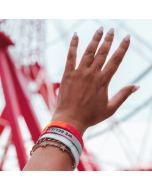
The Model That Still Works in 2026
- Pick a real cause with a clear single-sentence mission.
- Design a single-colour band with one short engraved slogan.
- Sell at $5–$10 with margin going to the receiving charity.
- Don’t tie to a single celebrity. Distribute across multiple voices.
- Pair with structured storytelling on social media and traditional press.
- Run multi-year with annual design refreshes.
Why Cause Bands Still Work Better Than Digital Ads
Industry studies estimate a quality silicone wristband generates around 3,400 brand impressions across its 2–5 year lifetime. Cost-per-impression in fractions of a cent. There is no digital channel a small charity can buy at that rate. The Livestrong model is still cheap, still effective, and now armed with social media for amplification.
Beyond the Single-Celebrity Lesson
The cause campaigns that have outperformed Livestrong in the past decade — ALS Ice Bucket, Movember, Black Dog — share a common feature: they distribute the brand across many voices instead of one celebrity. That’s the structural shift the Lance Armstrong story forced on cause marketing.
Brief our team with your charity, slogan and timeline — we’ll come back with a quote, design proof and delivery date.
Frequently Asked Questions
Why was the yellow Livestrong wristband such a powerful cultural symbol?
It made cancer awareness wearable and instantly recognisable for the first time. Over 87 million sold globally during its peak. The wristband proved that simple physical merch could carry a cause better than any ad campaign — a model adopted by every major awareness movement since.
Did the Lance Armstrong scandal kill the Livestrong wristband?
It dented sales sharply for a year or two. But the underlying cause — cancer survivorship support — outlived the founder controversy. Many supporters still wear yellow bands and donate. The lesson: cause campaigns built on real underlying need survive their celebrity associations.
Can a small charity replicate the Livestrong model today?
Yes — arguably easier than in 2004. Bulk wristbands cost less. Social media amplifies hashtags faster. Crowdfunding and direct charity payment are simpler. The hardest part is the same as ever: a clear, single-sentence cause that supporters want to be visibly associated with.
What made the original yellow band design work?
Three things: (1) one bold solid colour with no distracting design, (2) one short engraved word (Livestrong) that became a verb, (3) wide enough to be visible at glance distance. The simplicity is what made it copyable — and what made it last.
How do I run a successful cause wristband campaign in 2026?
Pick a registered charity with a clear mission. Design a single-colour band with one short engraved slogan. Sell at $5–$10 with margin going to the charity. Pair the band launch with social-media storytelling and a clear progress update cadence. Keep it running multi-year, not just one event.

Written by
Founder, Handband
Founder of Handband; specialist in custom wristbands and promotional products for events, schools, charities, and brands.
← Previous
Event Wristbands From Handband: Tyvek, LED, Token & Custom Silicone (2026 Guide)
Next →
De Niro’s Restaurant Fundraising: How Hospitality Drives Charity Wristband Campaigns (2026)
Comment(s)