How Are Wristbands Printed? A Complete Guide to Debossed, Embossed, Screen Printed, and Laser Engraved Methods

Why Printing Method Matters for Your Wristband Order
When you order custom wristbands, the printing method you choose has a significant impact on the look, durability, and cost of your finished product. Different techniques suit different design styles, budgets, and use cases — and understanding the options before you order will help you get exactly the result you are after.
This guide covers every major wristband customisation method: debossing, embossing, colour fill, screen printing, laser engraving, and digital printing. By the end, you will know exactly which method to choose for your specific project.
Debossing — The Classic Pressed-In Method
Debossing is the most widely used wristband customisation technique. The process involves creating a custom mould with raised text and design elements. When liquid silicone is poured into the mould and cured, the design is permanently pressed into the surface as recessed text.
How Debossing Works
A steel or aluminium mould is machined with your text or design in relief (raised). Liquid silicone is injected into the mould under pressure and heat-cured. When the mould opens, the cured wristband has your design permanently impressed into its surface. The recessed channels are part of the silicone structure itself — they cannot fade, peel, or wash off.
This permanence is debossing's greatest strength. A debossed wristband from ten years ago will have exactly the same text clarity as the day it was produced. This is why debossed wristbands are the gold standard for awareness campaigns, long-term wear items, and any application where durability is critical.
Embossing — Raised Text for a Premium Feel
Embossing is the inverse of debossing: instead of pressing text into the silicone, embossing creates text that rises above the wristband surface. The mould is machined with recessed (rather than raised) text, so when silicone fills it, the text comes out elevated.
Embossed wristbands have a distinct tactile quality — you can feel the raised letters with your fingertips, which gives the product a premium, handcrafted feel. They are popular for VIP and premium brand merchandise where the sensory experience matters as much as the visual message.
The practical limitation of embossing is that the raised elements are slightly more exposed to wear. For everyday or active-use wristbands, debossed is typically the more practical choice.
Colour Fill — Maximum Visual Impact
Colour fill is not a standalone method but an enhancement applied to debossed or embossed wristbands. After the wristband is moulded, ink of a contrasting colour is injected into (or painted onto) the recessed or raised lettering, dramatically improving readability.
For example: a black silicone band with white debossed text is already readable, but adding white colour fill into the debossed channels makes the text jump out from several metres away — critical for event wristbands, access control, and awareness campaigns where quick identification matters.
Colour fill is available in virtually any colour, allowing you to create high-contrast combinations that match your brand or event palette precisely.


Screen Printing — Full Surface Coverage
Screen printing applies ink directly to the surface of the wristband using a screen mesh template. Unlike debossing, which creates a permanent structural change, screen printing lays ink on top of the silicone surface. This makes it possible to achieve full-colour designs, photographic imagery, and complex multi-colour patterns that are impossible to achieve with moulded methods.
When to Choose Screen Printing
Screen printing is the right choice when:
- Your design has multiple colours or gradients
- You need to print a photograph or complex illustration
- You want full-band coverage rather than just text on one side
- The design changes frequently (no mould tooling cost)
The trade-off is durability: screen-printed ink sits on the surface and can fade with prolonged UV exposure, heavy abrasion, or frequent hand washing. For wristbands intended for single-event use or short-term wear, this is perfectly acceptable. For long-term wear items, debossed or laser-engraved methods are more durable.
Laser Engraving — Precision for Complex Designs
Laser engraving uses a high-precision laser beam to remove material from the wristband surface, creating a permanent recessed design. It is the digital evolution of debossing — capable of reproducing extremely fine details, thin lines, and small text that would be difficult to achieve with traditional moulding.
Laser-engraved wristbands are typically used for premium applications: medical ID bands, personalised memorial bands, and high-end merchandise where precision matters. The process is slower and more expensive per unit than standard debossing, but the level of detail achievable is unmatched.
Digital Printing — Full Colour on Demand
Digital printing directly applies full-colour designs to wristband surfaces using inkjet or similar technology — similar to how a photo printer works on paper, but adapted for silicone or Tyvek surfaces. It allows for photographic quality, full-colour gradients, and completely unique designs per band (variable data printing).
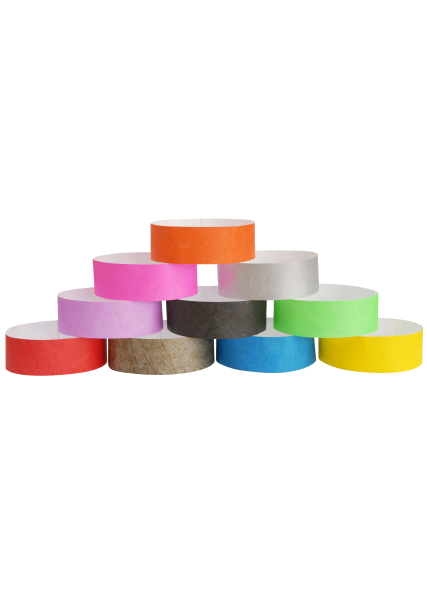
For Tyvek event wristbands, digital printing is the standard method and allows for individual numbering, QR codes, and barcodes on each band. For silicone, digital printing is a premium option that requires special inks and bonding processes.
Choosing the Right Method for Your Project
Here is a quick decision guide:
- Maximum durability + simple text/logo: Debossed (with optional colour fill)
- Premium feel + tactile experience: Embossed
- Full colour, complex design, short-term wear: Screen printing or digital printing
- Fine detail, precision, medical or premium use: Laser engraving
- Event access control with numbering: Digital-printed Tyvek
Explore our full custom wristband range to see examples of each method, or contact our team for advice on which technique will best suit your specific project and budget.
Frequently Asked Questions
What is the difference between debossed and screen-printed wristbands?
Debossed wristbands have text permanently moulded into the silicone — the design is part of the material and cannot fade. Screen-printed wristbands have ink applied to the surface, allowing for full-colour designs but with less long-term durability. For permanent, everyday wear, debossed is the better choice.
Can I get a full-colour logo on a wristband?
Yes — screen printing and digital printing both allow for full-colour, multi-colour logos and designs on wristbands. These methods are ideal when your design cannot be achieved with a single-colour debossed or embossed approach.
Which wristband printing method is most durable?
Debossed and laser-engraved methods are the most durable because the design is permanently part of the material structure — not applied to the surface. Screen-printed and digitally printed designs sit on the surface and will eventually fade with heavy wear and UV exposure.
How much does the printing method affect the price?
Standard debossing is typically the most affordable option. Colour fill adds a small per-unit premium. Screen printing and digital printing are comparable in cost for standard designs but may have additional setup fees. Laser engraving is generally the most expensive per unit due to the precision process.
April 12, 2026

Share on Facebook

Share on X

Share on Pinterest
Comment(s)
Recent Posts