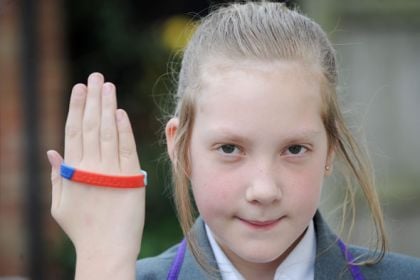

School service project wristbands give student-led campaigns a tangible, sellable product that turns a class fundraiser into a real-world community contribution. Whether your students are honouring veterans, supporting a sick classmate, raising money for a children’s hospital or rallying behind a community cause, a custom silicone wristband puts the cause on the wrist of every supporter and turns the campaign into a school-wide effort. This guide walks through how to launch a student-led service project, design a wristband students will be proud to sell, and run a campaign that hits its fundraising goal while teaching real-world skills along the way. Handband supplies service-learning wristbands to schools across Australia and worldwide. The patterns here come from real student campaigns — what works for high schools, middle schools and primary schools alike.
Why Wristband Campaigns Work for School Service Projects
Service-learning curriculum increasingly emphasises real-world impact. A wristband campaign produces measurable results — funds raised, awareness spread, community ties built — that students can document for portfolios and reflection assignments.
- Tangible measurable outcomes. Funds raised, bands sold, supporters reached — concrete numbers students can track and share.
- Affordable starter project. Start with 100–300 bands for a few hundred dollars; scale up as demand grows.
- Builds project-management and marketing skills. Students learn budgeting, marketing, supplier coordination, customer service and impact reporting through one project.
- Engages the whole school community. Parents, staff, alumni, sports clubs and community businesses all participate by buying or selling bands.
- Builds lasting community ties. Partner charities and beneficiaries often become long-term school connections, with the next cohort taking on the same partnership.
Choosing the Right Cause for a Student-Led Campaign
Veterans and first responders
Help Our Heroes wristbands tie naturally into ANZAC Day, Remembrance Day, Veterans Day or school cadet programs. Students engage with serving members and learn about service while raising real funds.
Sick or injured classmates
Some of the most successful student campaigns support a classmate fighting cancer or recovering from a major accident. Personal stories drive sales — the campaign feels real because it is.
Children’s hospitals and medical research
Royal Children’s Hospital, Sick Kids, the Children’s Cancer Foundation and similar charities are perennial favourites. Visible, named impact (hospital ward, research grant) helps students connect their fundraising to outcomes.
Local community causes
Animal shelters, homelessness services, disability advocacy, environmental conservation — local causes work well because students can visit, see the impact, and tell the story authentically.
International causes with local connection
Sister-school partnerships, disaster relief and global charity campaigns work when the school has a meaningful connection (sister school in a developing country, alumnus working at a charity).
Recommended for you
Products related to this article
Hand-picked to go with what you just read.
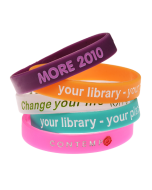
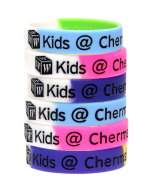
Designing a Wristband Students Will Sell
Let students design it
Service-learning is more powerful when students own the design. Run a class design competition with the winning concept printed on the bands. Students become natural ambassadors when the design is theirs.
Pick a colour that fits the cause
Yellow for heroes, hot pink for breast cancer awareness, red for heart causes, school colours for school-pride campaigns. The colour does half the work of communicating the cause.
Short, memorable message
Three or four words maximum. "Hope for [name]", "Honour Our Heroes", "[School Name] Cares". Long sentences become invisible after the first week of wear.
Keep the design simple
Bold text, single icon, clear colour blocks. Cluttered designs are harder to read and look less professional than clean, simple bands.
Running the Campaign: Sales, Marketing and Goal Tracking
Set a clear fundraising target
Pick a specific outcome: $5,000 for the local children’s ward, $2,000 to support the family of an injured classmate, $1,000 for the RSL veteran-welfare fund. Concrete targets help supporters understand exactly what they’re funding.
Sell at multiple touchpoints
School gate, canteen, parent evenings, social media, sports fixtures and community noticeboards. The more places the band appears, the faster word spreads.
Track and publish progress
Update the school community weekly on funds raised. A visible thermometer chart in the foyer keeps the momentum going long after the initial enthusiasm fades.
Document the impact
Photograph the cheque presentation, the classmate’s response, the visit to the partner charity. Documentation turns the campaign into reusable teaching material for next year’s class.
Frequently Asked Questions
How much can a student-led wristband campaign raise?
Real student campaigns regularly raise $2,000–$10,000 for the chosen cause, with the standout campaigns crossing $25,000 when local media or social momentum builds. The combination of low band cost, high margin and emotional community engagement makes wristband campaigns one of the highest-return school fundraising tools available.
How do we run a service project wristband campaign in a primary school?
Pair it with a service-learning topic or English/Maths cross-curricular project. Students help design the band, write the impact letter, and track sales. Distribute through assembly announcements, school newsletters, and parent collection points. Most primary school campaigns raise $1,000–$5,000 for the local children's hospital or community charity.
What's the minimum order for a school wristband fundraiser?
Just seven units for custom silicone wristbands. Most school service projects start with 200–500 bands so there's enough inventory to sell at multiple touchpoints, but small test runs are easy if you want to validate the design first.
Should students design the wristband themselves?
Yes — service-learning outcomes are stronger when students own the design. Run a class design competition with the winning concept printed on the bands. Students become natural ambassadors when the design is theirs, and the campaign builds project-ownership skills alongside the fundraising.
How long does a school service project wristband campaign take?
Most campaigns run 4–8 weeks from design to final tally: 1–2 weeks for design and approval, 1–2 weeks for production and dispatch, 4–6 weeks of selling and promotion. Plan around term breaks and key school dates (sports days, parent evenings, ANZAC Day, Mother's Day) for maximum visibility.

Written by
Founder, Handband
Founder of Handband; specialist in custom wristbands and promotional products for events, schools, charities, and brands.
← Previous
Help Our Heroes Wristbands: Honouring Veterans, Service Members and First Responders
Next →
Celebrity-Endorsed Cause Wristbands: How Star Power Amplifies a Campaign
Comment(s)