How Multibandz Help Your Child Master Maths: Times Tables, Division, and Wearable Learning
What Are Multibandz?
Multibandz are educational wristbands designed to help children learn and retain maths facts through wearable, hands-on practice. Unlike flashcards or worksheets that require a table, a quiet room, and adult supervision, Multibandz go wherever your child goes — to school, the playground, the car, or the dinner table. The concept is simple: put the maths on the wrist so the child can reference, practice, and memorise it anytime.
Developed specifically for primary school-aged learners, Multibandz cover times tables and division facts — the foundational maths knowledge that underpins almost every other area of primary school mathematics. When children have these facts at their fingertips (literally), their confidence in maths grows rapidly.
How Wearable Learning Works for Maths
The science behind wearable learning tools lies in spaced repetition and incidental practice. Traditional maths study requires deliberate effort — sitting down with a worksheet or flashcard set. Multibandz enable incidental practice: a child glances at their wristband while waiting for the bus, during a break between classes, or whenever a question pops into their head.
From Anxiety to Confidence
Many children experience maths anxiety, particularly around times tables — the moment when they feel put on the spot and cannot recall the answer quickly enough. Multibandz reduce this anxiety by giving children a reliable reference they can check discreetly. Over time, repeated checking builds recall, and the wristband becomes less necessary as the facts become automatic.
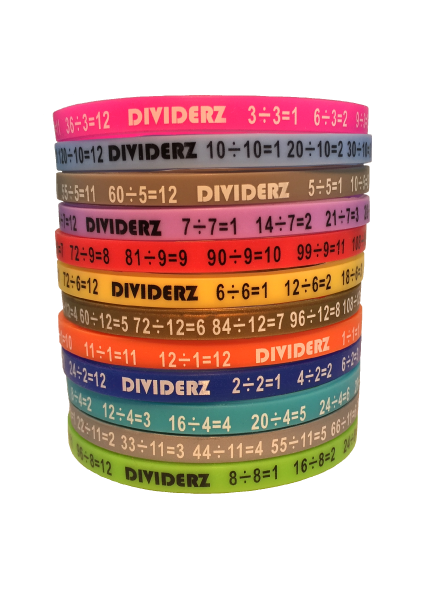


Times Tables Wristbands: Building Multiplication Fluency
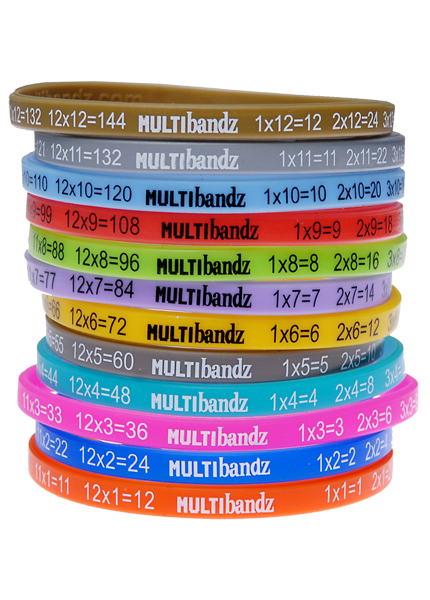
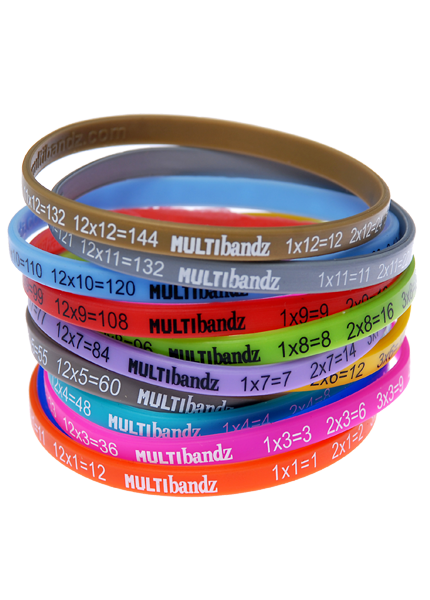
The Multibandz Times Tables set covers the complete times table range your child needs for primary school maths. Each band displays a specific times table — from 1×1 through to 12×12 — giving your child a portable reference they can use to check their work, reinforce a specific table they are finding difficult, or quiz themselves during downtime.
How to Use Times Table Wristbands Effectively
Start by having your child wear the times table they are currently studying in class. Encourage them to read through the table at least once a day — in the morning before school, at the dinner table, or before bed. As they become more confident with that table, add a second band for a new one. The goal is to phase out the wristband as a crutch and phase it in as a confidence-builder.
Dividerz: Making Division Less Daunting
Division is consistently one of the maths concepts that primary school students find most challenging — partly because it is often taught after multiplication, and the connection between the two operations is not always immediately clear. Dividerz wristbands present division facts in a clear, accessible format that helps children see the relationship between multiplication and division, reinforcing both sets of knowledge simultaneously.
Division and Multiplication Together
The most effective use of the Multibandz system is to pair a times table band with its corresponding Dividerz band. When a child can see that 6 × 7 = 42 and 42 ÷ 7 = 6 side by side on their wrists, the inverse relationship becomes intuitive rather than mysterious. This paired learning approach accelerates fluency in both operations.
Using Multibandz in the Classroom
Multibandz are popular with teachers as well as parents. In classroom settings, they allow students to access maths facts independently during problem-solving tasks without disrupting the lesson to ask the teacher. This independence builds confidence and reduces the learned helplessness that can develop when children rely on adults to recall basic facts for them.
Teachers can also use Multibandz as a differentiation tool: students at different levels work on different times tables simultaneously, each with their own wristband reference. The physical nature of the wristband also appeals to kinaesthetic learners who benefit from hands-on, tangible learning tools.
Beyond Maths: Emotional Learning Tools
Alongside Multibandz maths products, Handband also offers tools that support children's emotional and social development. Emotion bracelets help children communicate their social comfort level — a valuable tool for neurodiverse students, shy children, or any child navigating the social complexity of a school environment. Anti-bullying wristbands reinforce school values around respect and inclusion in a visible, wearable format.
Explore the full Multibandz range and our educational wristband collection — including Dividerz division wristbands, emotion bracelets, and anti-bullying wristbands. For bulk school orders, contact our team for pricing and advice.
Frequently Asked Questions
What age group are Multibandz designed for?
Multibandz are designed for primary school-aged children, typically 5–12 years old. They are particularly effective for children in Years 2–6 who are working on times tables and division facts as part of the curriculum.
How many Multibandz wristbands does my child need?
Start with one or two times table bands focused on what your child is currently learning in class. As they master each table, add more bands. The X Multibandz pack provides the full extended set for children who are ready to cover the complete times table range.
Can Multibandz be used in school classrooms?
Yes — Multibandz are widely used in classrooms as independent learning tools and differentiation aids. They allow students to access maths facts during problem-solving tasks without disrupting the lesson.
How long does it take for Multibandz to improve a child's maths recall?
Most children show noticeable improvement in a specific times table within 2–4 weeks of regular incidental practice with their Multibandz. Consistency is key — the more often a child references the band throughout the day, the faster the facts become automatic.
April 12, 2026

Share on Facebook

Share on X

Share on Pinterest
Comment(s)
Recent Posts