Food Allergy Bracelet for Kids: Why Every Child with Allergies Needs a Medical Alert Wristband
April 02, 2026

Globally, around 250 million people live with food allergies, and the numbers keep climbing — especially among children. Research shows that approximately 8% of children worldwide have at least one food allergy, with rates even higher in countries like Australia, where 1 in 10 babies is affected (Murdoch Children’s Research Institute, 2024). For parents, the daily reality of managing a child’s food allergy means constant vigilance — at school, at birthday parties, at restaurants, and in emergencies. A food allergy bracelet for kids can be the difference between a fast, informed emergency response and a dangerous delay.
Why Food Allergies in Children Are a Growing Concern
Food allergies among children have risen dramatically over the past two decades. Hospital admissions for food-related anaphylaxis have increased by more than 350% in some regions, with children aged 0 to 4 experiencing the highest rates (Australian Institute of Health and Welfare, 2023). The most common triggers in children are peanuts, cow’s milk, eggs, tree nuts, wheat, soy, fish, shellfish, and sesame — with peanut and egg allergies being the most prevalent.
Unlike many childhood conditions that are outgrown, some food allergies persist into adulthood. Peanut and tree nut allergies, in particular, are lifelong for the majority of those affected. This means a child diagnosed at age two may still be managing the same allergy at twenty.
The Risk of Anaphylaxis
More than 40% of children with food allergies have experienced a severe allergic reaction, including anaphylaxis (Food Allergy Research & Education, 2024). Anaphylaxis can cause breathing difficulties, a sudden drop in blood pressure, and loss of consciousness — often within minutes of exposure. For children who cannot clearly communicate their condition, a visible allergy alert bracelet provides critical information to anyone nearby.
Why Children Are Especially Vulnerable
Young children face unique risks because they may not yet understand which foods are dangerous, cannot always describe their symptoms, and rely on adults around them — teachers, coaches, babysitters, and friends’ parents — to keep them safe. A medical alert wristband bridges that communication gap by displaying essential allergy information at a glance.
What Is a Food Allergy Bracelet and How Does It Work?
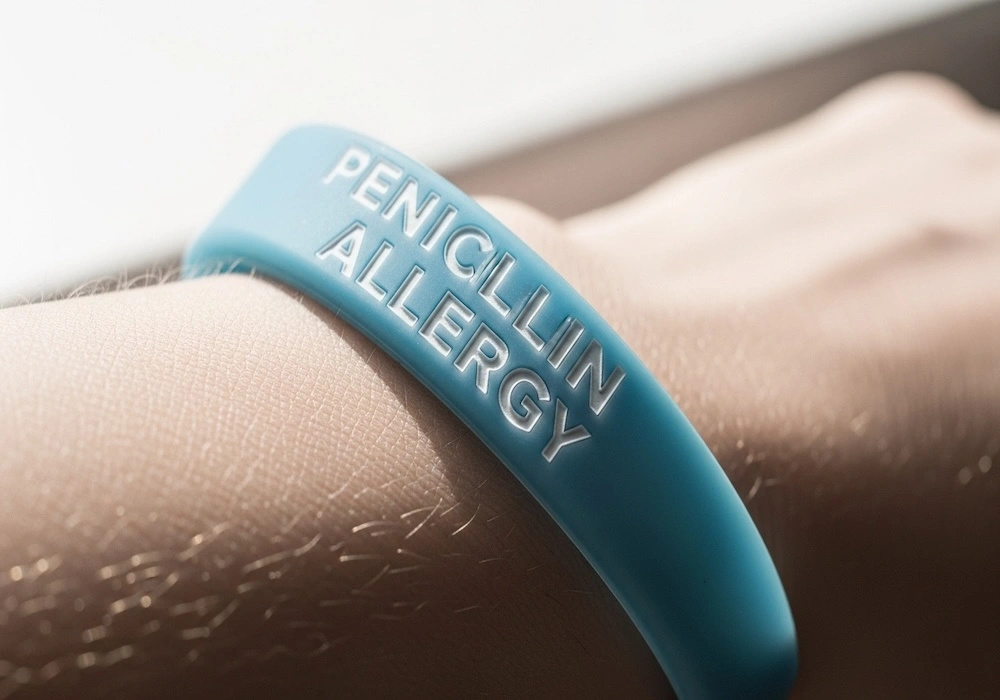
A food allergy bracelet is a wearable medical identification band — usually silicone, stainless steel, or a combination — engraved or printed with critical health information. For children, these bracelets typically display:
- The child’s specific allergens (e.g., “PEANUT ALLERGY”, “DAIRY ALLERGY”, “EGG & NUT ALLERGY”)
- Whether they carry an EpiPen or auto-injector
- An emergency contact number
- Any additional medical conditions
The bracelet sits on the child’s wrist where it is immediately visible to paramedics, teachers, and first aiders. Emergency responders are trained to check for medical identification within the first 30 seconds of attending to a patient — making a wristband one of the fastest ways to communicate life-saving information.
Shop Custom Wristbands for Allergy Awareness
Create custom silicone wristbands to identify allergies at school, camp, events, and everyday life.



When and Where Your Child Needs a Food Allergy Bracelet
At School and Daycare
Schools are one of the most common settings for accidental allergen exposure. Despite allergy management plans, substitutes, lunchbox swaps, and shared snack tables create real risks. A food allergy bracelet ensures that any teacher, aide, or parent volunteer can instantly identify your child’s allergy — even if they have never met your child before.
At Birthday Parties and Social Events
Birthday cakes, party bags, and shared food platters are allergy minefields. When your child is at someone else’s home, you cannot control every ingredient. A wristband that says “PEANUT ALLERGY — USE EPIPEN” gives the hosting parent immediate, unmistakable guidance if something goes wrong.
During Travel and Holidays
Travelling with a food-allergic child adds another layer of complexity — unfamiliar restaurants, language barriers, and limited access to familiar safe foods. A medical alert bracelet works across language barriers and is recognised by emergency services worldwide.
During Sports and Outdoor Activities
Camps, sports carnivals, and excursions often involve shared snacks and unfamiliar catering. Coaches and volunteers may not have access to your child’s medical records, but they can read a wristband in seconds.
What Information Should a Child’s Allergy Bracelet Include?
The most effective allergy bracelets for children are clear, concise, and immediately readable. Here is what to include:
Essential Information
- Primary allergen(s): “PEANUT ALLERGY”, “EGG & NUT ALLERGY”, “DAIRY ALLERGY” — use the specific trigger, not just “food allergy”
- Action required: “CARRIES EPIPEN” or “USE EPI PEN IN EMERGENCY” — tells responders exactly what to do
- Emergency contact: A parent or guardian’s mobile number
Optional but Helpful
- The child’s name (for younger children who may not be able to communicate)
- Additional conditions (e.g., “ASTHMATIC” — asthma significantly increases anaphylaxis risk)
- Doctor’s name or hospital if space allows
Keep the text short and clear. Emergency responders need to read it fast — abbreviations like “ALLERGY” and “EPIPEN” are universally understood.
How to Choose the Right Food Allergy Bracelet for Your Child
Material and Comfort
For children, silicone bracelets are the most popular choice. They are soft, lightweight, waterproof, and comfortable enough for all-day wear — including during sport, swimming, and sleep. Stainless steel options offer a more durable, permanent solution for older children and teens.
Size Matters
Children’s wristbands come in multiple sizes — from extra small (130mm) for toddlers to large (202mm) for older children. A bracelet that is too loose may slip off; one that is too tight will be uncomfortable. Measure your child’s wrist and choose a snug but comfortable fit.
Visibility and Design
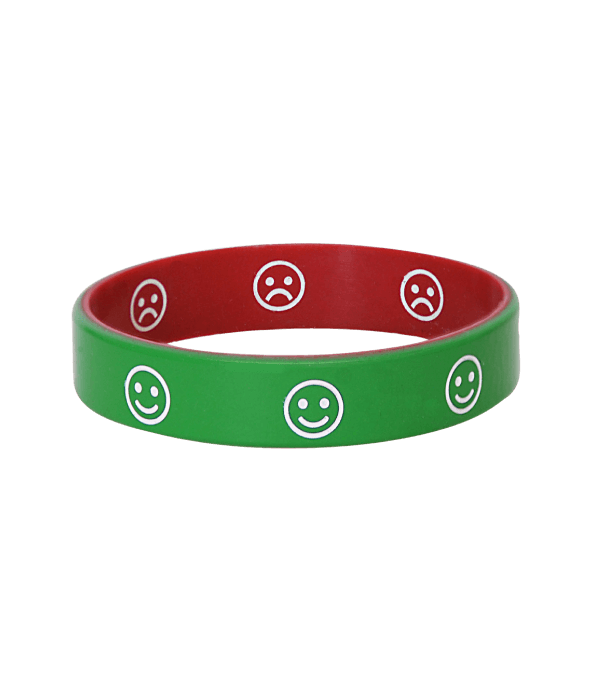
Choose a bracelet with bold, high-contrast text that is easy to read at a glance. Bright colours — red for general allergy, orange for anaphylaxis and specific food allergies — follow internationally recognised medical alert colour coding. Many children are more willing to wear a bracelet that looks appealing, so consider designs with fun colours or patterns alongside the medical information.
Durability
Children are not gentle with accessories. Look for bracelets made from industrial-strength, food-grade silicone that can withstand daily wear, water exposure, playground activity, and the occasional tug. Quality silicone bracelets will not crack, fade, or lose their engraving over months of use.
The Connection Between Food Allergies and Asthma
Research consistently shows a strong link between food allergies and asthma in children. Studies have found that children with asthma are nearly four times more likely to have food allergies than those without asthma (Journal of Allergy and Clinical Immunology, 2024). More critically, the risk of a severe asthma attack is almost seven times higher for people who have both asthma and food allergies.
This connection makes medical identification even more important. A bracelet that displays both “PEANUT ALLERGY” and “ASTHMATIC — CARRIES EPIPEN” gives emergency responders the complete picture they need to provide the right treatment immediately.
Frequently Asked Questions
Do children with food allergies need to wear a medical alert bracelet?
Yes. Children with diagnosed food allergies — especially those at risk of anaphylaxis — should wear a medical alert bracelet at all times. Young children may not be able to communicate their condition during an emergency, and a bracelet ensures that caregivers, teachers, and paramedics can act quickly with the right information.
What should be engraved on a child’s allergy bracelet?
Include the specific allergen (e.g., “PEANUT ALLERGY”), whether the child carries an EpiPen, and an emergency contact number. Keep it concise — emergency responders need to read it within seconds. Adding “ASTHMATIC” is important if your child also has asthma, as this increases anaphylaxis risk.
At what age can a child start wearing an allergy bracelet?
Children can wear silicone allergy bracelets from around 12 months of age, when food allergies are typically first diagnosed. Extra small sizes (130mm circumference) are designed specifically for toddlers. The bracelet should fit snugly enough that it cannot slip over the hand but not so tight that it is uncomfortable.
Are allergy bracelets required for school or daycare?
While not legally mandated in most regions, many schools and daycare centres strongly recommend or require children with severe allergies to wear medical identification. An allergy bracelet complements the school’s allergy management plan and provides an extra layer of safety during excursions, sports, and substitute teacher days.
Should my child wear an allergy bracelet if they carry an EpiPen?
Absolutely. An EpiPen is only useful if someone nearby knows to use it. A bracelet marked “CARRIES EPIPEN” or “USE EPI PEN IN EMERGENCY” directs bystanders and first responders to the auto-injector immediately, which can be life-saving in the critical minutes before an ambulance arrives.

Share on Facebook

Share on X

Share on Pinterest
Comment(s)
Recent Posts