
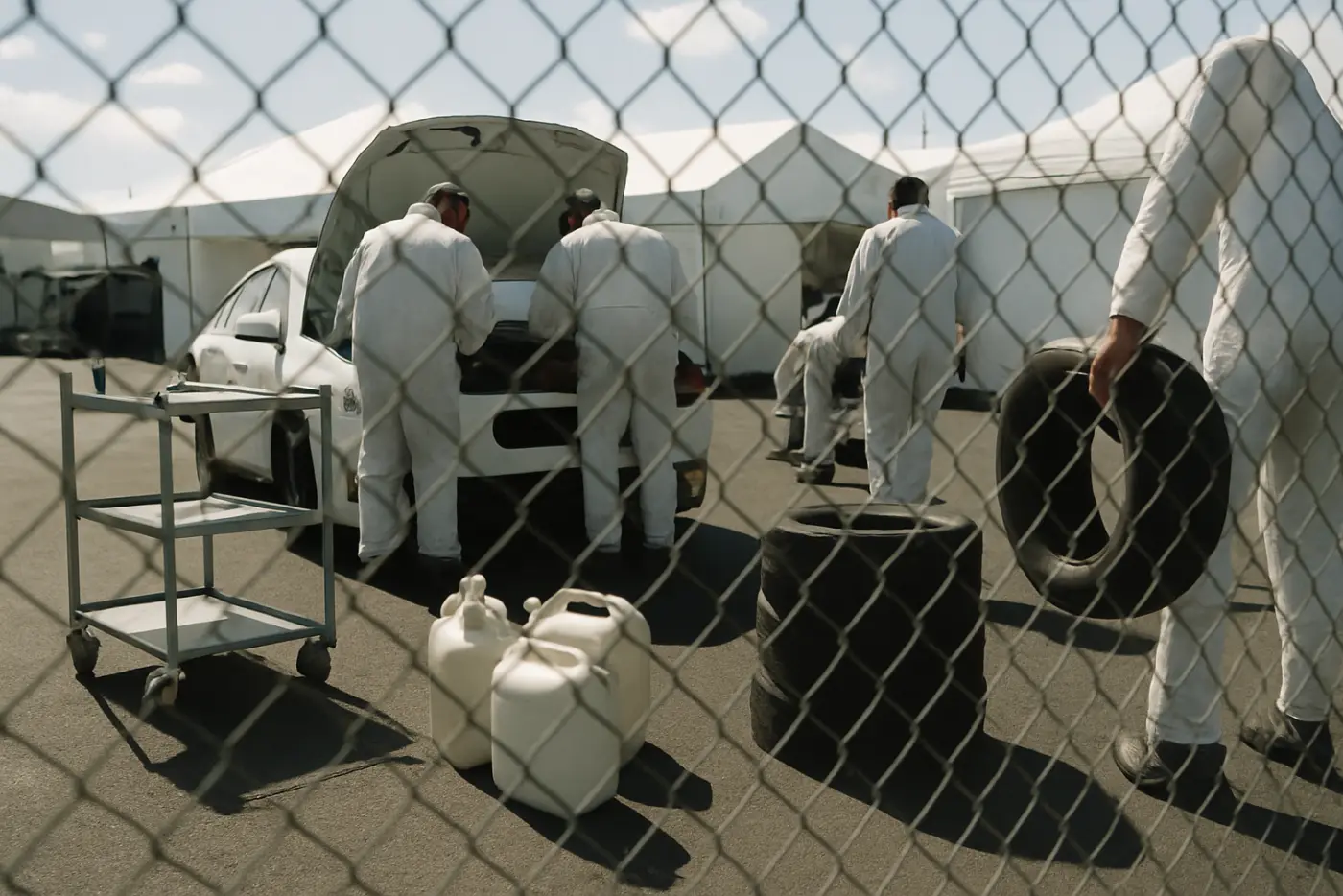
A race circuit has zones with genuinely different risk profiles. Pit lane and grid access are restricted for safety reasons, not commercial ones, and the marshal on that gate has to decide in the moment. Wristbands are the standard answer because a colour can be read at distance, through a fence, by someone wearing a helmet.
Access zones here are a safety matter
Grid, pit lane, paddock and spectator areas carry different risks, and the restriction exists because of moving vehicles rather than ticket revenue. That raises the bar: the system has to be unambiguous, briefed to every marshal, and applied to competitors and officials as strictly as to guests.
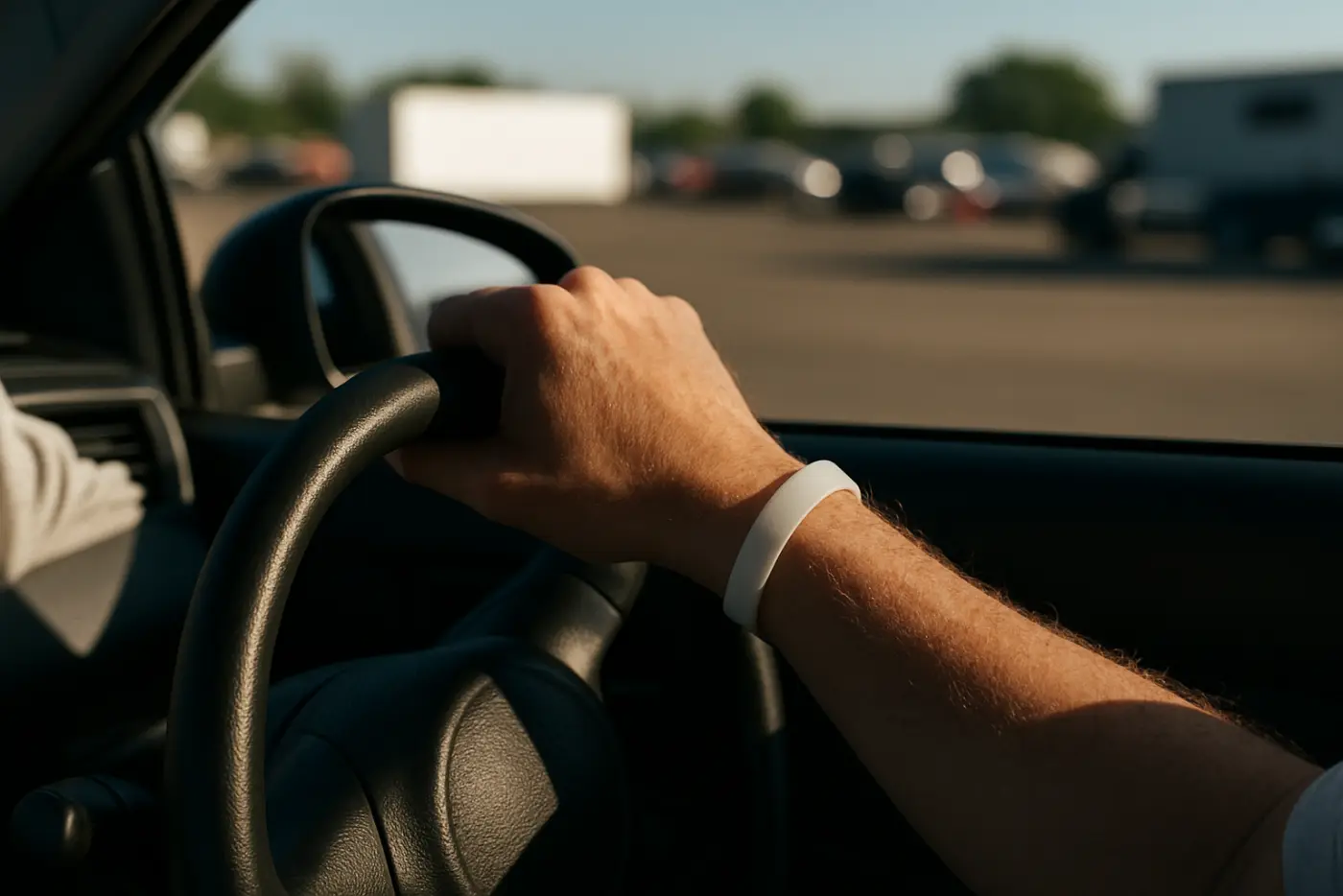
Colour first, artwork second
A marshal on a gate is looking through mesh, in bright sun or at dusk, at someone in overalls and a helmet. Fine print is invisible in that setting. Use strong base colours per zone and treat printing as secondary. A four-colour printed band gives you distinct zone colours plus the event name in one order.
Recommended for you
Products related to this article
Hand-picked to go with what you just read.

Multi-day meetings and practice days
A race weekend runs practice, qualifying and racing across several days with different people on site each day. Issue a band that lasts the meeting rather than re-banding daily, and use a separate marker for the days a person is actually entitled to be there.
Crew, officials and contractors are not one group
Team crew, scrutineers, marshals, medical, recovery and catering all need different access, and most are not on the competitor entry list. Give each its own colour rather than issuing a generic staff band. A plain unmarked band in a set of colours covers this cheaply for a club meeting.
Guest passes for sponsors and team families
Teams bring sponsors and family who expect paddock access but should not be near pit lane during a session. A distinct guest band solves the awkward part: the marshal is enforcing a colour, not making a judgement about someone's guest.
Merchandise that survives the weekend
Motorsport crowds buy merchandise, and a branded item that attaches to a bag or keys keeps a team or circuit visible long after the meeting. A silicone tag works for team merchandise and for crew identification, which lets one order cover both jobs.
Frequently Asked Questions
Quick answers from the Handband team
Why is access control stricter at a circuit?
Because pit lane and grid restrictions exist for safety around moving vehicles, not ticket revenue. The system has to be unambiguous and applied to everyone.
What makes a band readable to a marshal?
Strong base colours. A marshal is looking through mesh in bright sun at someone in overalls, where fine print is invisible.
Should we re-band daily over a race weekend?
No. Issue a band that lasts the meeting and use a separate marker for the days each person is entitled to attend.
Do crew and officials need separate bands?
Yes. Team crew, scrutineers, marshals, medical, recovery and catering all need different access and most are not on the entry list.
How do we handle sponsor and family guests?
A distinct guest band, so the marshal enforces a colour rather than making a judgement about someone's guest.
Can the same product cover merchandise?
A branded silicone tag works for both team merchandise and crew identification, so one order covers two jobs.
What is the biggest risk with a colour system?
Marshals not being briefed. A colour key at every gate matters more than the artwork on the band.

Written by
Founder, Handband
Founder of Handband; specialist in custom wristbands and promotional products for events, schools, charities, and brands.
← Previous
Top Apps That Help Us Locally: How Wristbands and Mobile Loyalty Programs Build Repeat Customers (2026)
Next →
11-Year-Old Champions Humane Society
Comment(s)