Halloween is the year’s scariest night for parents of children with severe nut allergies. Knock on twenty front doors and at least three of the treats handed back will contain a peanut, a tree nut, or shared-equipment cross-contact. Add the costume mask, the dim lighting, the sugar-fuelled excitement and the “just-this-one” pressure from sibling peers, and the risk of an unrecognised anaphylactic event spikes for one specific calendar night. For UK and Australian families managing peanut, tree-nut, sesame or dairy anaphylaxis, October 31 needs a plan. This 2026 update walks through how to keep allergic kids safe at Halloween — including teal pumpkins, candy swaps, costume engineering, EpiPen positioning and how a custom-engraved silicone medical alert wristband under the costume sleeve gives the trick-or-treating group lead the 15-second context they need if something goes wrong.
Why Halloween is statistically the most dangerous food-allergy night of the year
According to Allergy & Anaphylaxis Australia and Anaphylaxis UK, allergy-related Halloween emergency presentations rise sharply on October 31 in both countries. Three factors compound:
- Unfamiliar product variants — mini and fun-size sweets often have different ingredients and manufacturing lines from the full-size equivalent. Cross-contact warnings on the mini packaging may be different from the parent SKU.
- Bulk handling — a bowl of mixed sweets at a stranger’s door is the textbook cross-contamination scenario. Peanut M&Ms, Reese’s and Snickers shed peanut residue onto plain chocolate, gummies and lollies in the same bowl.
- Communication gaps — the trick-or-treating adult or older sibling may not know your child’s specific triggers. The neighbour handing out the sweet doesn’t know either.
The Teal Pumpkin Project
Started by Food Allergy Research & Education (FARE) in 2014, the Teal Pumpkin Project is now an international Halloween allergy-safety standard. Households place a teal pumpkin (the international colour for food allergy awareness) on their porch. The signal: this house offers non-food treats. Kids with allergies know they can knock here safely.
For families:
- Paint a pumpkin teal and put it out by 4pm.
- Stock small non-food prizes — stickers, glow sticks, mini craft sets, bouncy balls, vampire fangs, pencils, erasers, Multibandz educational wristbands.
- Register your address on the FARE map so allergic-child families know to visit.
- Hand non-food items to allergic-flagged children, sweets to others — the routine is invisible to the kids.

Recommended for you
Products related to this article
Hand-picked to go with what you just read.

What to do BEFORE Halloween night
Two weeks before October 31, run through the family Halloween safety checklist:
- Refresh EpiPens — check expiry dates. Order new ones if within 60 days of expiry. UK prescription EpiPens take 5 to 10 days; Australian PBS-listed EpiPens are usually overnight.
- Order or refresh medical alert wristbands — if your child’s contact details, EpiPen dose or trigger list has changed since the last engraving, order new bands.
- Brief school on Halloween events — in-school Halloween parties or class costume days are increasingly common. The school nurse should have the action plan + spare EpiPens on file.
- Talk to the neighbours — drop a polite note on a printed allergy-safe Halloween card to the houses your child will visit. Most neighbours are happy to keep a single safe sweet aside.
- Plan the route — map the streets in advance. Adult-supervised, teal-pumpkin-house biased, well-lit, max 90 minutes.
- Run a costume rehearsal — can your child reach their wristband through the costume? Can a bystander see the medical ID? If the costume hides the wrist, move the ID to the outside.
What to engrave on a Halloween-safe wristband
Same template as everyday school wear, but with extra emphasis on the contact line:
- Line 1: ANAPHYLAXIS — PEANUT (or other primary allergen)
- Line 2: EpiPen Jr / EpiPen Adult in [parent’s costume pocket / kid’s pumpkin bucket]
- Line 3: Mum mobile (or trick-or-treat group lead’s mobile)
- Line 4: 999 (UK) / 000 (AU)
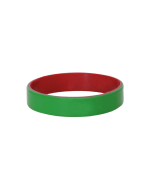
Use a bright colour (red, yellow, neon green) that stands out even under low porch light.
Costume engineering for kids with allergies
The costume is the design constraint. Strategies:
- Wrist exposed — choose costumes with a visible wrist. Avoid full-arm gloves or capes that cover the wristband.
- Pockets for EpiPens — the parent’s costume needs an inside pocket for two EpiPens + the action plan card.
- Bright accents — the supervising adult should also wear something high-vis so the kids can find them in a crowd.
- Phone access — the adult’s phone should be reachable without unzipping a complicated costume.
- Masks off in low light — encourage the allergic child to lift their mask whenever they take a sweet so they can read the label before eating.
Halloween-safe candy selection for allergic households
If you’re a parent who wants to ALSO hand out sweets (alongside non-food treats), these are widely-recognised peanut-and-tree-nut-free brands in the UK and Australia in 2026:
- Skittles (UK + AU peanut and tree-nut-free)
- Starburst (UK + AU)
- Smarties (peanut-and-tree-nut free in UK + AU under Nestlé)
- Dum Dums lollipops
- Mentos
- Allergy-friendly bars (No Whey!, Free2b, Enjoy Life)
- Plain Cadbury Dairy Milk fun-size (UK + AU labels indicate ingredients but check current packaging)
Avoid: Reese’s, Snickers, Twix (peanut), Hershey’s Almond, anything with Peanut M&Ms shared production. Always read the current packaging — ingredient lines change.
The candy swap routine
After trick-or-treating, run a candy swap at home before any sweet is eaten:
- Empty the bucket on the kitchen bench.
- Separate into three piles: definitely safe (parent-known brands), needs label check, definitely unsafe.
- Read every label in the “needs check” pile. Anything with “may contain” or trace warnings of the trigger goes in the unsafe pile.
- Swap unsafe items for parent-supplied safe equivalents. Kids hand over the unsafe sweets and get the same number of safe ones — no FOMO loss.
- Donate or discard the unsafe pile.
What to do if a reaction starts
The five-step Halloween emergency response:
- Stop eating immediately. The child stops, even if symptoms feel mild.
- Recognise symptoms — hives, swelling, throat tightening, coughing, wheezing, vomiting, weakness, pale skin, sudden drowsiness, anaphylaxis.
- EpiPen IM in outer thigh — through trousers if needed. Use EpiPen Jr 0.15mg for under-30kg, EpiPen 0.3mg for over-30kg.
- Lie flat, legs elevated. Do not stand the patient up.
- Call 999 (UK) / 000 (AU). Repeat the EpiPen at 5 minutes if no improvement. Read the wristband to the ambulance dispatcher.
The role of the trick-or-treat group lead
Halloween trick-or-treating is often led by a single adult or older teen managing 4 to 8 kids. That adult is the front-line responder. Before the group goes out:
- The adult knows every child’s allergens by name + which kids carry an EpiPen.
- The EpiPens travel with the adult, not the child (especially for under-10s).
- The adult has the action plan + parent mobile + 999/000 ready on phone speed-dial.
- Each allergic child wears a medical wristband, visible at the wrist.
- The adult does a mid-route check-in with parents at the 45-minute mark.
Communicating with neighbours before Halloween
A polite printed card given to neighbours a week before Halloween:
“Hi! My daughter Lucy has a severe peanut allergy. She’ll be trick-or-treating in costume on the 31st — she’s the [costume] with a red Handband bracelet on her wrist. If you have a non-peanut sweet or a small non-food prize to hand her, she’ll be over the moon. Thank you for being part of her safe Halloween! Mum mobile: [number].”
Most neighbours appreciate the heads-up and keep a small dedicated bowl aside.
Schools and Halloween parties
UK and Australian schools increasingly hold in-class Halloween parties with shared snacks. The parents’ pre-party brief:
- Sign the school’s allergen-disclosure form.
- Send your child to school WITH the EpiPen even on party day.
- Confirm the school has a copy of the current Anaphylaxis Action Plan.
- Send a small safe-treat baggie with your child so they have something to eat during the shared snack.
- Brief your child to politely decline shared snacks at school events even if they look safe.
For older kids and teens
Teens with allergies are at higher risk because they self-supervise and may feel embarrassed to ask. Strategies:
- Personal EpiPen carry — in jacket pocket or small belt bag.
- Subtle Handband band — skinny debossed or fabric woven (less “medical” looking).
- Friend awareness — brief one or two close friends on EpiPen use.
- Group-text speed dial to mum + dad + 999/000.
- Late-night swap routine — same candy swap with parents after the trick-or-treat.
Frequently asked questions
Frequently Asked Questions
Quick answers from the Handband team
Is Halloween really riskier than other days for allergic kids?
Yes. Allergy-related ER presentations spike on October 31 in both UK and Australia due to unfamiliar mini-product variants, bulk handling of mixed sweets, and communication gaps between kids, parents and neighbours.
What is the Teal Pumpkin Project?
A FARE-initiated international Halloween safety standard. Teal pumpkins on porches signal “non-food treats available here” for allergic-child families. Address-mapping at foodallergy.org helps families plan safe routes.
Should my child wear a medical wristband on Halloween night?
Yes — mandatory. The trick-or-treat group lead may not know your child’s triggers; the band fills the gap. Visible at the wrist, bright colour, engraved with allergen + EpiPen location + parent mobile.
What non-food treats can I hand out?
Stickers, glow sticks, mini craft sets, bouncy balls, vampire fangs, pencils, erasers, Multibandz educational wristbands, small toys, temporary tattoos.
Which mainstream sweets are peanut-and-tree-nut-free in 2026?
Skittles, Starburst, Smarties (UK+AU under Nestlé), Dum Dums, Mentos, plain Cadbury Dairy Milk fun-size (current label). Always read the current packaging — ingredient lines change year-over-year.
How do I run the candy swap routine?
Empty the bucket, sort into safe/check/unsafe, swap unsafe items for parent-stocked safe equivalents at 1-for-1. Done at the kitchen bench before any eating.
What if a reaction starts during trick-or-treating?
EpiPen IM in outer thigh, lay flat with legs elevated, call 999/000, repeat the EpiPen at 5 minutes if no improvement. Read the wristband to the dispatcher.
References
- Anaphylaxis UK anaphylaxis.org.uk
- Allergy & Anaphylaxis Australia allergyfacts.org.au
- FARE Teal Pumpkin Project foodallergy.org
- ASCIA Anaphylaxis Action Plan allergy.org.au
- NHS — Allergies nhs.uk

Written by
Founder, Handband
Founder of Handband; specialist in custom wristbands and promotional products for events, schools, charities, and brands.
← Previous
College Wristbands: Custom Bands for Campus Events and Football Games
Next →
Peace of Mind for Parents - Childs Allergy Medical ID 2026
Comment(s)