Multibandz - Mathematics Times Table Wristbands
CA$ 9.44
SKU
x12Table-Pack
Buy more, save more
QuantityPrice eachSave
1–29
CA$ 7.43
—
30–99
CA$ 5.58
−25%
100–249
CA$ 4.96
−33%
250–499
CA$ 4.34
−42%
500+
CA$ 3.72
−50%
Secure checkout
VISA
Mastercard
Apple Pay
Google Pay
+5 more
Also accepted
AMEX
Afterpay
Zip
Klarna
PayPal
Make Learning Maths Easy!
Children Love to Wear Wristbands! Especially GLOW-IN-THE-DARK wristbands.
Education has never been so much fun with Handband's new Multibandz wristbands they can also learn at the same time.
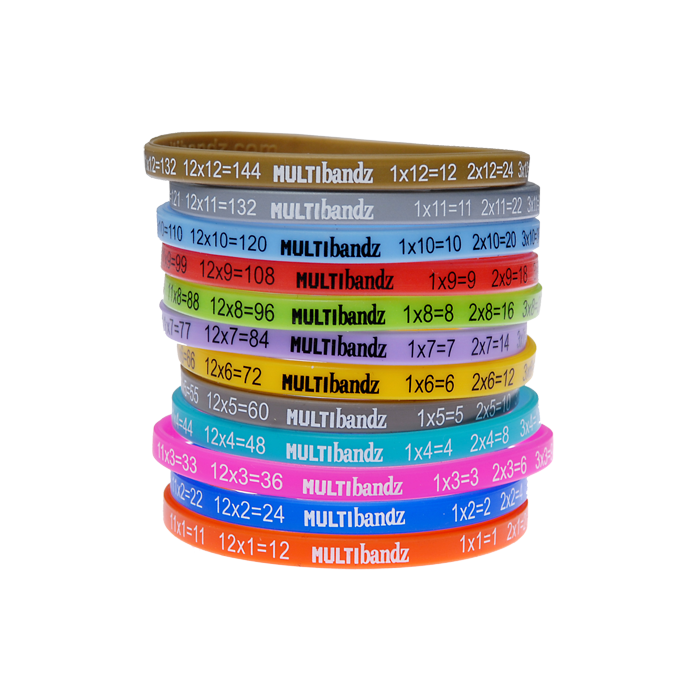
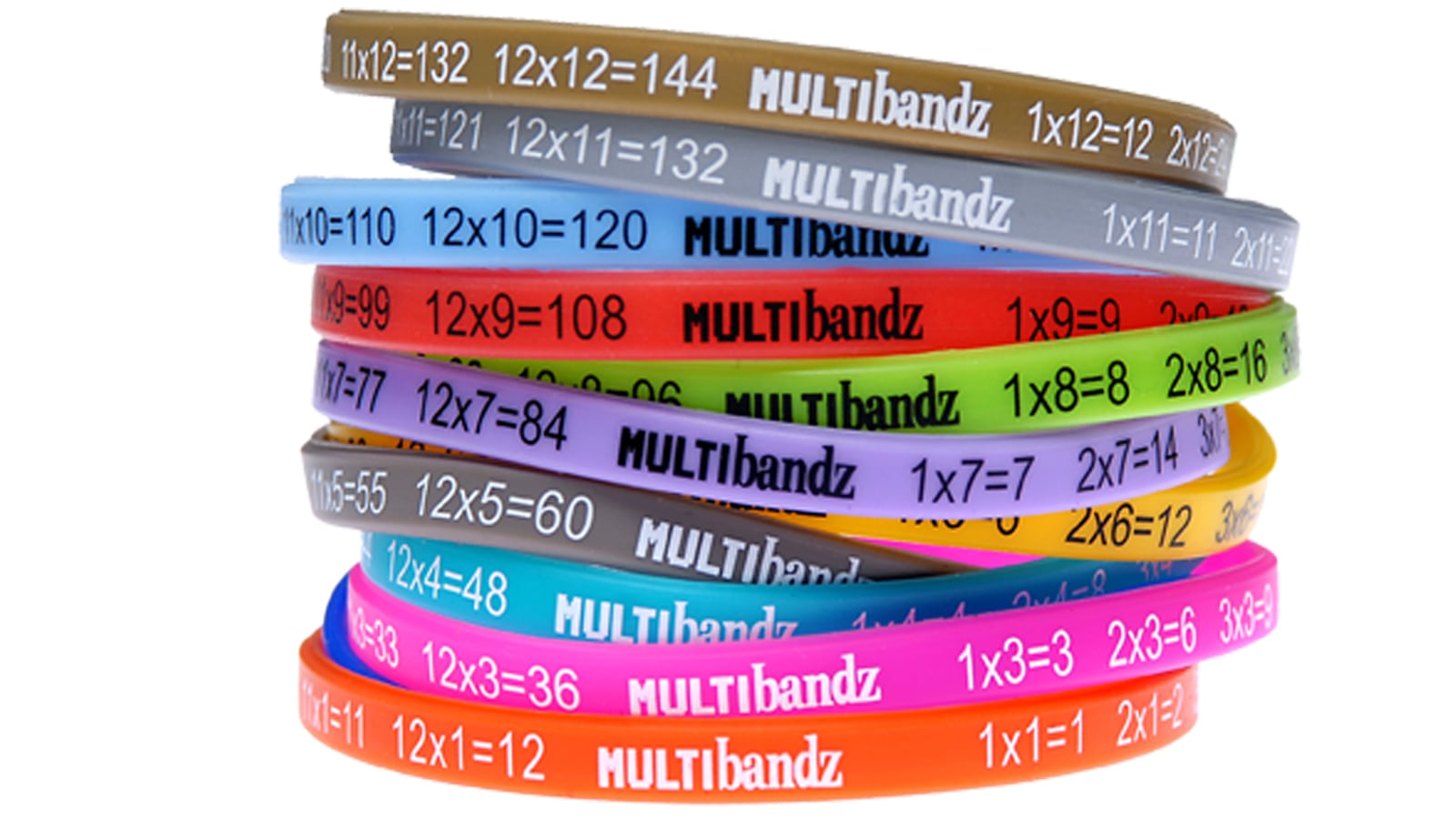
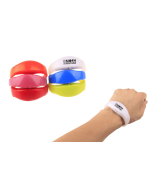
Educate your children with these brightly coloured skinny wristbands printed with the multiplications times table.
It's as easy as 1, 2, 3 .....
4.9 · 20 reviews
Since 2004
At a glance
Multibandz are glow-in-the-dark times table wristbands — a full set of skinny bands printed with the multiplication tables. Kids wear one table at a time and learn it on the go. Single set $11.99; bulk school packs of 25, 50 and 100 available. Designed in Sydney since 2004.
Glow-in-the-dark times table wristbands kids want to wear
Multibandz are brightly coloured, skinny wristbands printed with the multiplication times tables. They glow in the dark, so children want to wear them — and they pick up their tables while they do. Schools across Australia use them as both a learning aid and a reward.
How times table wristbands help kids learn
- Give your child one band at a time, starting with an easier table.
- They wear it and read the table through the day, so it stays in view.
- Once that table sticks, move on to the next band.
- Work through the set up to the 12 times table at their own pace.
One set, or bulk packs for schools
| Option | Best for |
|---|---|
| Single set — $11.99 | One child (full set of tables) |
| 25 pack | A classroom |
| 50 pack | A year level |
| 100 pack | A whole school |
Designed in Sydney since 2004Australian owned & operatedGlow-in-the-darkUsed by Australian schools
Do times table wristbands actually help kids learn?
The idea is simple, repeated exposure: the table stays on the wrist and in view through the day, which helps reinforce recall. Many Australian schools use Multibandz as a low-cost study aid and a reward children are happy to wear, at home or in the classroom.
Why a times table wristband works when a poster does not
A times table chart on the classroom wall only helps a child who is looking at the wall. A times table wristband goes where the child goes — to the desk, the mat, the playground and home again — which turns recall practice into something that happens in spare seconds rather than only in a scheduled maths block.
That matters because multiplication recall is built by frequent short exposure, not long sessions. A child who glances at the x7 table forty times across a week has done more useful repetition than one who studies it once for twenty minutes.
Self-directed, not teacher-directed
The child checks their own band. There is no hand up, no waiting, and no admission in front of the class that they have forgotten. For students who are behind and know it, that privacy is the difference between practising and avoiding.
One table at a time
Each band in the set carries a single times table, so a child works on x3 without the x8 column sitting beside it looking impossible. Finishing a table and swapping to the next gives a visible marker of progress that a worksheet does not.
Glow-in-the-dark for the reluctant
The bands glow after light exposure, which sounds like a gimmick and functions as a hook. A child who wants to wear the thing will look at it, and a child who looks at it is practising. For a reluctant learner that is most of the battle.
Where times table wristbands fit the Australian curriculum
Multiplication and division facts sit squarely in the primary years, with recall of multiplication facts developed through Years 3 and 4 and extended to larger numbers beyond that. The relevant content descriptions are published on the V9 Australian Curriculum mathematics pages.
In practice the set is most useful across Years 2 to 6: introducing tables in the early years, consolidating them in the middle years, and refreshing a table an older student still stalls on. Teachers commonly issue one band per child per fortnight and move the class along together, which keeps the set circulating rather than sitting in a drawer.
The bands are a practice aid, not a teaching resource. They do not replace instruction — they give students somewhere to rehearse what has already been taught.
Buying for one child, a classroom or a whole school
One child at home
A single set covers every table a primary student needs, so a parent buys once rather than tracking down individual tables as the child progresses.
A single classroom
Most teachers want one set per student rather than one shared set, because the point is that the band stays on the wrist. Count your class list, add a few spares for losses, and order per head.
Whole-school or year-level rollout
For larger orders the practical question is distribution rather than quantity — whether bands are issued centrally at the start of term or held by each teacher and released table by table. Tell us your student numbers and year levels and we will suggest the split. Bulk pricing applies across the Multibandz range, and the wider schools range covers house bands, excursion ID and OSHC identification if you are ordering for more than maths.
Getting the most out of a set
A few habits separate a set that gets worn all term from one that ends up in a tray by week three.
Start below the child’s level
Issue a table the child already mostly knows first. The point of the opening band is not learning, it is the experience of wearing one and answering correctly when asked. Starting on the table they find hardest teaches them the band means being tested on something they cannot do.
Ask in passing, not in a test
The band works best when an adult glances at the wrist and asks one question in a corridor or a car — four or five seconds, no marking, no score. That casual retrieval is the mechanism. Turning it into a formal drill removes the advantage the format has over a worksheet.
Move on before it is perfect
Swap to the next table at roughly eighty per cent recall rather than waiting for flawless. Earlier tables keep getting rehearsed incidentally because the numbers overlap, and the sense of progress keeps the child engaged. Holding a child on one table until it is perfect is the fastest way to make them stop wearing it.
Charge them before you hand them out
The glow is phosphorescent, so the bands store light rather than generating it. A set taken straight from a sealed box in a dim classroom will barely glow, which reads as a faulty product. Leave them spread out in daylight for an hour before issuing and they perform as expected.
Keep a small reserve
Bands get lost, and a child without one while the rest of the class has theirs tends to disengage entirely. A handful of spares per table removes that problem for the cost of a few bands.
Multibandz FAQs
What are Multibandz?
Skinny, brightly coloured wristbands printed with the multiplication times tables. A full set covers the tables up to 12, so children can learn one at a time.
Do the wristbands glow in the dark?
Yes. Multibandz glow in the dark, which is part of why children want to keep them on.
What times tables are included?
A single set is a full pack of bands covering the multiplication tables up to the 12 times table.
Can schools order Multibandz in bulk?
Yes. Bulk packs are available in 25, 50 and 100 for classrooms, year levels and whole schools — see the pack options above.
How much is a set of Multibandz?
A single set is $11.99. Bulk school packs of 25, 50 and 100 are priced per pack.
SKU x12Table-PackManufacturer Handband
| SKU | x12Table-Pack |
|---|---|
| Manufacturer | Handband |
Shipping
In-stock orders are dispatched the same business day when placed before 12pm AEST, Monday to Friday (excluding public holidays). Orders placed after 12pm AEST, or on weekends and public holidays, are dispatched the next business day.
Express, Regular and Courier delivery estimates are shown at checkout and apply from the dispatch date.
More information about shipment and delivery times can be found on our shipping page.
Returns & guarantee
100% Quality Guarantee. Your satisfaction is our top priority. If you are not completely satisfied with the quality of your product, simply return the items to us in their original condition and packaging within 14 days of receipt and we will issue a full refund (excluding original delivery charge), or exchange the item for a different size / colour, if preferred.
There are no returns on customised items. You must ensure & verify that all spellings are correct.
Please view term & condition for further information.
Loading reviews…
Complete your order
Related products









Based on this product