
Esports events have the same access problem as any venue — you need to tell players from spectators, and paid entrants from walk-ins, quickly and at a glance. A wristband does that in a way a paper ticket cannot, because it stays on the wrist for the whole event and cannot be quietly passed to a friend.
Why access control matters more at a gaming event
A tournament floor usually mixes competitors, coaches, casters, staff and paying spectators — often in the same room, sometimes for twelve hours straight. Bands let a volunteer check entitlement in under a second without stopping to scan anything, which is what keeps a queue moving between rounds.

Separating players, staff and spectators
The simplest system is one colour per role, decided before doors open. Competitors get one colour, staff and casters another, general spectators a third. Nobody needs to memorise a legend — a marshal only has to know which colour is allowed past a given point.
Recommended for you
Products related to this article
Hand-picked to go with what you just read.
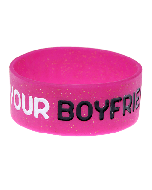
Bands that survive a twelve-hour tournament
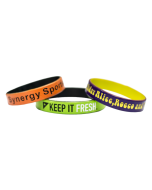
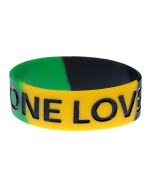
Anything worn while gaming gets caught on desk edges, mouse cords and headset cables. A dual-layer laser wristband holds up better than a thin paper band across a long day, and a wider silicone option like the stripe band is comfortable enough that players forget it is there.
Multi-day events and re-entry
For a weekend event you either re-band each morning or use a band durable enough to last the whole run. Re-banding daily costs more but kills ticket-sharing between days. If you issue one band for the weekend, choose something that survives sleep and a shower — a swirl silicone band handles that far better than paper.
Merchandise value after the event
Unlike a paper wristband, a silicone band from a tournament tends to stay on the wrist afterwards. Teams often order a run in club colours so the band doubles as merchandise, which turns an access-control cost into something attendees actually keep.
Ordering for an event date
Work backwards from doors-open, not from the order date. Custom printing needs artwork approval and production time, so plain stock colours are the safer choice for a short lead time. Order spares — bands get cut off, snapped, and handed out twice at busy check-in desks.
Frequently Asked Questions
Quick answers from the Handband team
Why use wristbands instead of paper tickets at an esports event?
A wristband stays on for the whole event and cannot be quietly passed to someone else, so it works for re-entry and multi-zone access in a way a ticket stub does not.
How do I separate players from spectators?
Use one colour per role, decided before doors open — marshals only need to know which colour is allowed past a given point.
Will a wristband get in the way while gaming?
A wider, softer silicone band sits comfortably and is quickly forgotten. Thin paper bands are the ones that catch on desk edges and cables.
Should I re-band attendees each day of a multi-day event?
Re-banding daily costs more but prevents sharing between days. If you issue one band for the weekend, choose one that survives sleep and showers.
Do tournament wristbands have any value after the event?
Silicone bands in team colours often stay on as merchandise, which turns an access cost into a keepsake.
How far ahead should I order?
Work backwards from doors-open. Custom printing needs artwork approval plus production, so plain stock colours suit short lead times.
How many spare wristbands should I allow?
Order a healthy overage — bands get snapped, cut off, and occasionally issued twice at a busy check-in desk.

Written by
Founder, Handband
Founder of Handband; specialist in custom wristbands and promotional products for events, schools, charities, and brands.
← Previous
Kyle Rees friends start fund-raising scheme
Next →
Think pink: mother inspires athlete to raise awareness
Comment(s)