
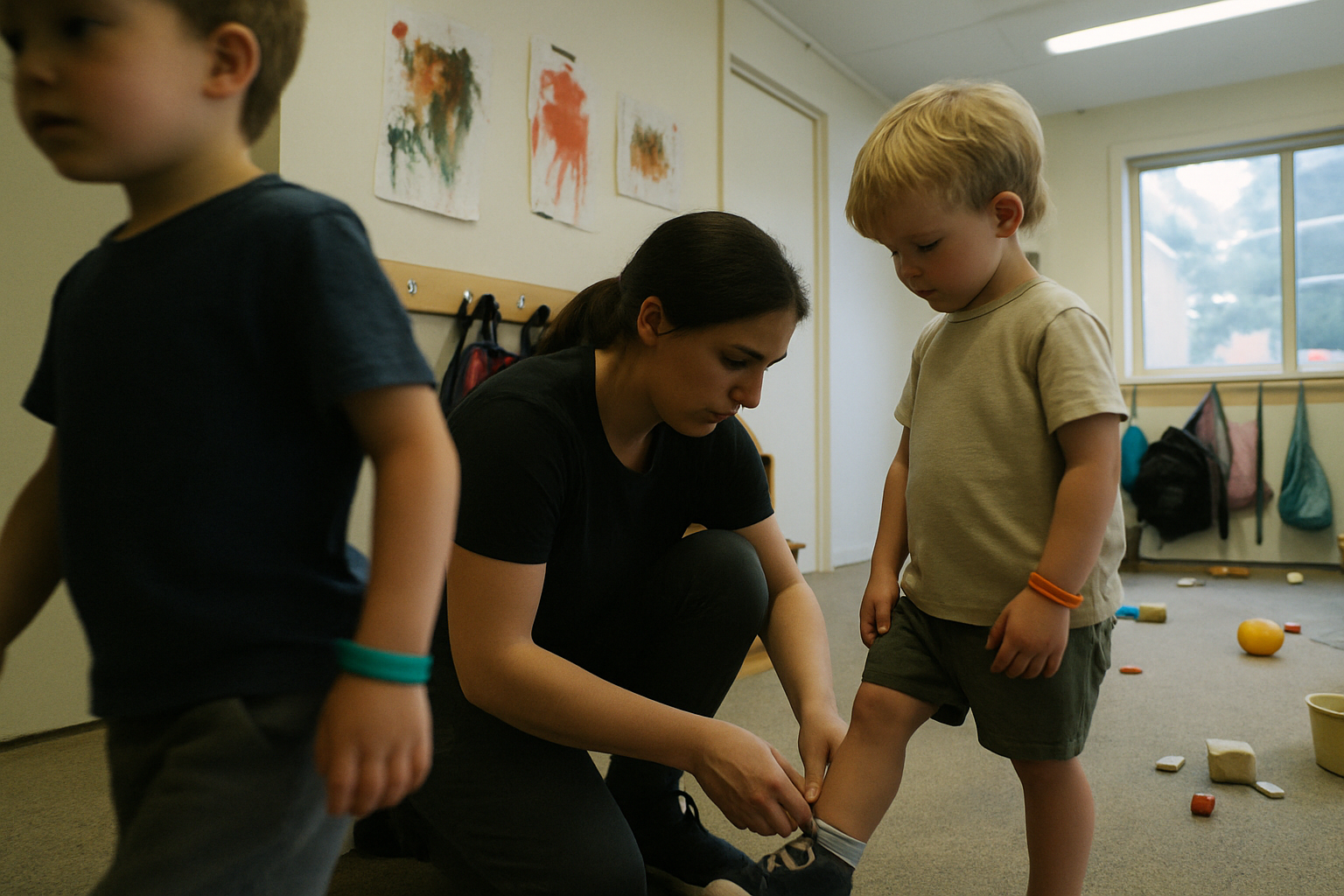
Childcare centres use wristbands for the moments when the usual paperwork is out of reach — on an excursion, at a busy pick-up, or when a relief educator needs to know something about a child immediately. The band carries the one fact that cannot wait; the enrolment record still carries everything else.
Where a wristband genuinely helps in childcare
Inside the room, educators know the children and the wall charts are close by. The friction appears the moment you leave that room — a walk to the park, a swimming lesson, a centre-wide event with relief staff on. A band travels with the child and answers the urgent question without anyone opening a folder.
Excursion bands and group colours
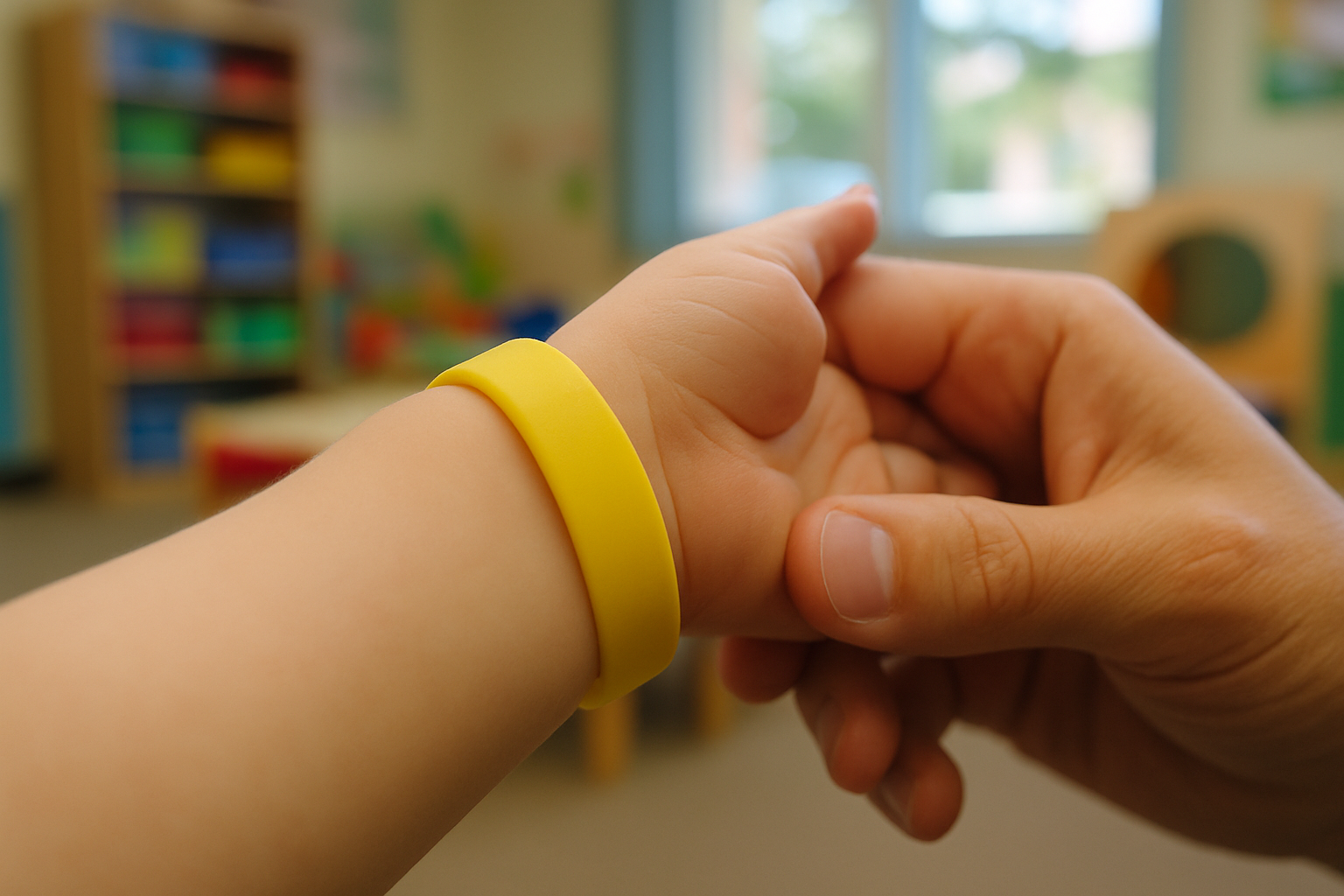
On an excursion the most useful thing a band does is group children by supervising educator. One colour per group lets any adult see instantly which cluster a child belongs to, and a head count becomes a colour count. A 25-pack of assorted bands covers a single room, and larger packs suit a whole-centre day out.
Recommended for you
Products related to this article
Hand-picked to go with what you just read.
Allergy and medical flags — carefully
A band can flag that a child has an allergy, but it should never be the only record, and it should not print a diagnosis for strangers to read. Best practice is a colour or simple marker that staff are trained to recognise, backed by the child's medical management plan. The band prompts the check; it does not replace it.
Authorised pick-up at the end of the day
Pick-up is the busiest, noisiest part of the day and the point where mistakes matter most. Some centres band children whose pick-up arrangements differ that day, so any educator at the gate knows to check the sign-out sheet rather than waving them through. For a centre running this regularly, a 50-pack lasts a term.
Comfort, safety and sizing for small wrists
Anything worn by a toddler needs to be soft, snag-free and either sized properly or easy to remove. Silicone suits this better than paper because it has no adhesive tab to pick at, survives water play, and does not fray. Buy a size intended for children rather than trimming an adult band.
Keeping cost sensible across a whole centre
Bands are cheap individually but a centre gets through them, especially if they are reissued each excursion. Buying a bulk pack once a term is far cheaper than topping up in small lots, and it means the colours stay consistent all year rather than changing with each order.
Frequently Asked Questions
Quick answers from the Handband team
Should a wristband show a child's allergy?
It can flag that one exists, but avoid printing a diagnosis. Use a colour or marker staff are trained to recognise, backed by the medical management plan.
How do wristbands help on excursions?
Group children by supervising educator using one colour per group, so a head count becomes a colour count and any adult can see who belongs where.
Are silicone bands safe for toddlers?
Choose a child-sized, soft, snag-free band. Silicone has no adhesive tab to pick at and survives water play, unlike paper.
Can wristbands help at pick-up time?
Yes — banding children whose pick-up arrangements differ that day tells any educator at the gate to check the sign-out sheet first.
Do wristbands replace enrolment records?
No. The band carries the one urgent fact; the enrolment and medical records remain the full source of truth.
How many should a centre buy?
Buying a bulk pack once a term is cheaper than small top-ups and keeps colours consistent across the year.
What about children who pull them off?
Choose a properly sized band rather than a loose one, and treat removal as expected — keep spares rather than relying on one band lasting all term.

Written by
Founder, Handband
Founder of Handband; specialist in custom wristbands and promotional products for events, schools, charities, and brands.
← Previous
School Safety Starts with Identification: A Complete Wristband Guide
Next →
Social Media for Brand Expansion
Comment(s)