
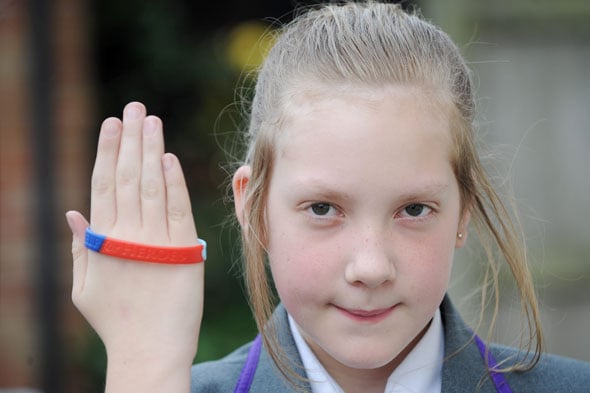
A UK schoolgirl was famously ordered to remove her Help The Heroes wristband on “health and safety” grounds — sparking a public debate about how schools should handle student-led awareness campaigns. The case is more than a curiosity. It’s a useful template for what works (and what doesn’t) when running cause wristband programs in schools.
Below is what the case taught educators, how schools can run awareness wristband programs successfully, and how to stay on the right side of dress codes and free-speech protections.
What the Case Was About
The Help The Heroes wristband — a small silicone band raising funds for wounded UK military service personnel and their families — was banned by the school under a uniform-policy interpretation. Public backlash followed. The school reversed its position. The story made global news and spawned similar reviews in schools across the UK, Australia and the US.
What the Case Taught Schools
- Blanket bracelet bans rarely survive parent and media scrutiny.
- Cause-tied wristbands carry significant legal protection in most jurisdictions.
- Engaging students proactively is far more effective than after-the-fact bans.
- Structured cause programs (with assemblies, lessons, fundraising drives) make the school the partner, not the obstacle.
Recommended for you
Products related to this article
Hand-picked to go with what you just read.
Running an Awareness Wristband Program at School
- Pick a registered charity with clear public documentation.
- Engage student leaders early in design and rollout.
- Brief the head teacher and parents 4–6 weeks before launch.
- Tie the band to a structured program — assembly, lessons, fundraising drive.
- Publish a clear final total for the charity at the end of the campaign.
Designing the Band
- Pick a colour matched to the cause.
- Keep the slogan short and policy-focused.
- Print or engrave the receiving charity’s name.
- Use debossed engraving for permanence.
What This Means for Parents
Parents whose children are told to remove a charity wristband at school have several options: ask the school for the policy in writing, engage the local MP or school board, contact the receiving charity for support, and document the case with media if necessary. In nearly every documented case, schools that ban registered charity bands reverse their position within a week.
Brief our team with your school’s campaign and timeline — we’ll handle the rest with care.
Frequently Asked Questions
Can a school legally ban awareness wristbands?
Most jurisdictions allow schools to enforce dress codes — including banning bracelets — but courts in the UK, US and Australia have repeatedly held that bands tied to recognised cause campaigns (cancer charities, military charities, anti-bullying) are protected expression. School-by-school dress codes still vary.
What’s the best way to run an awareness wristband program at school?
Engage school leadership early. Co-design the campaign with student leaders so the school is the supporter, not the censor. Pair the band launch with classroom lessons, an assembly, and a clear charity partner. The structure matters far more than the band.
How can a school avoid a Help The Heroes-style ban?
Pick a recognised registered charity (Help The Heroes, RSL, Soldier On, Legacy). Document the partnership in writing. Brief the head teacher and parents 4–6 weeks ahead. Frame the band as part of an organised education program, not an unilateral student act.
What information should an awareness band carry?
Keep it short and clear: charity name, short slogan or hashtag, and the year. Avoid jargon, slang or anything that could be mistaken for unrelated messaging.
How quickly can a school get awareness bands made?
Stock blank coloured bands ship within days. Custom-printed bands take 2–3 weeks plus shipping. Plan 4–6 weeks ahead for fully custom artwork.

Written by
Founder, Handband
Founder of Handband; specialist in custom wristbands and promotional products for events, schools, charities, and brands.
← Previous
Get Your Pink On: Breast Cancer Awareness Month Wristbands (2026 Guide)
Next →
Vital Care Scheme Launches Wristband System: How Hospital ID Bands Work (2026)
Comment(s)