8 Tips for Keeping Kids Safe While Travelling: The Wristband Advantage
8 Essential Tips for Keeping Kids Safe While Travelling
Travelling with children is one of life's great adventures — and one of its greatest logistical challenges. Whether you're navigating a busy international airport, exploring a crowded theme park, or boarding a coach for a school trip, the risk of a child becoming separated from their guardian is very real. Statistics from child safety organisations indicate that in a single busy holiday weekend, thousands of children are temporarily separated from their parents in public venues.
This guide covers 8 practical, proven strategies for keeping children safe while travelling, with a particular focus on identification wristbands as one of the most effective and low-cost tools available.
Tip 1: Identification Wristbands — The Most Reliable Tool
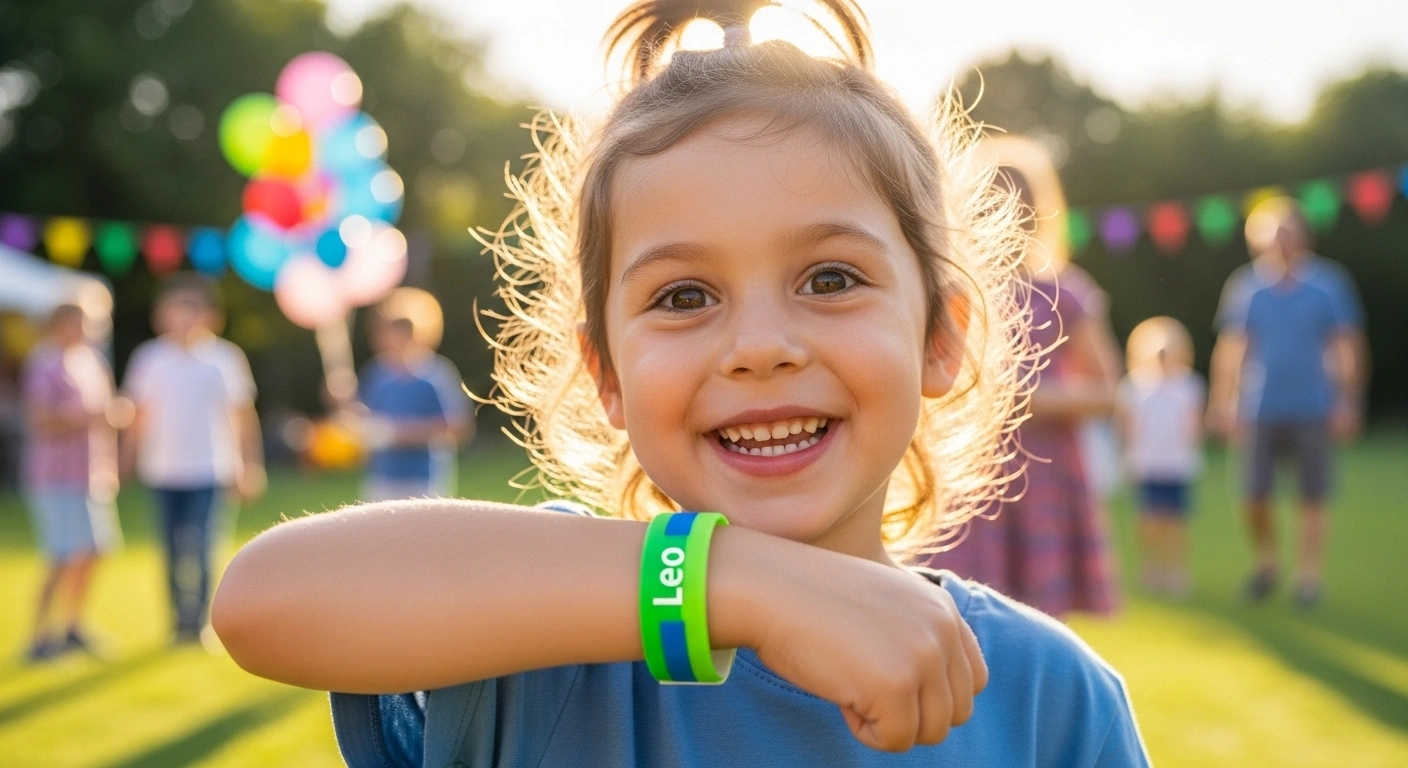
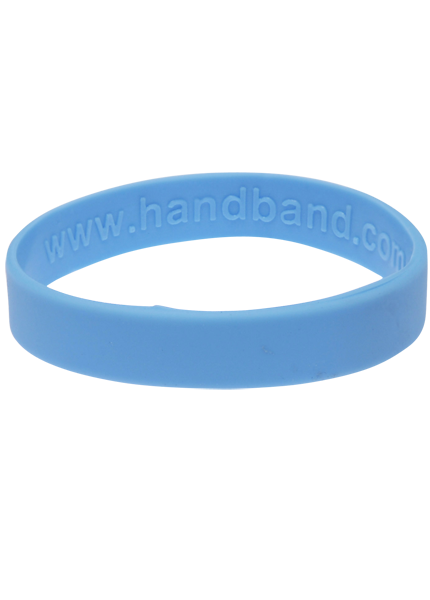
A travel safety wristband with a guardian's mobile number is the single most effective child safety tool for travel. Unlike verbal instructions that young children may forget when panicked, a wristband provides physical evidence of contact information that any adult can read and act on. Write or order your preferred contact number on a Tyvek wristband before departing.
For international travel, include the country code with the mobile number. Consider adding a second contact number (e.g., the hotel) in case the primary number is unreachable.
Tip 2: Pre-Trip Safety Briefing for Children
Before any trip, conduct a simple safety briefing with your child:
- Show them their wristband and explain what it's for
- Practise what to do if they get separated: "Stop, stay, shout"
- Identify the "safe person" to approach if separated (information desk, uniformed staff, family with children)
- Agree on a meeting point for the venue or airport terminal
Tip 3: Colour-Coded Family Groups
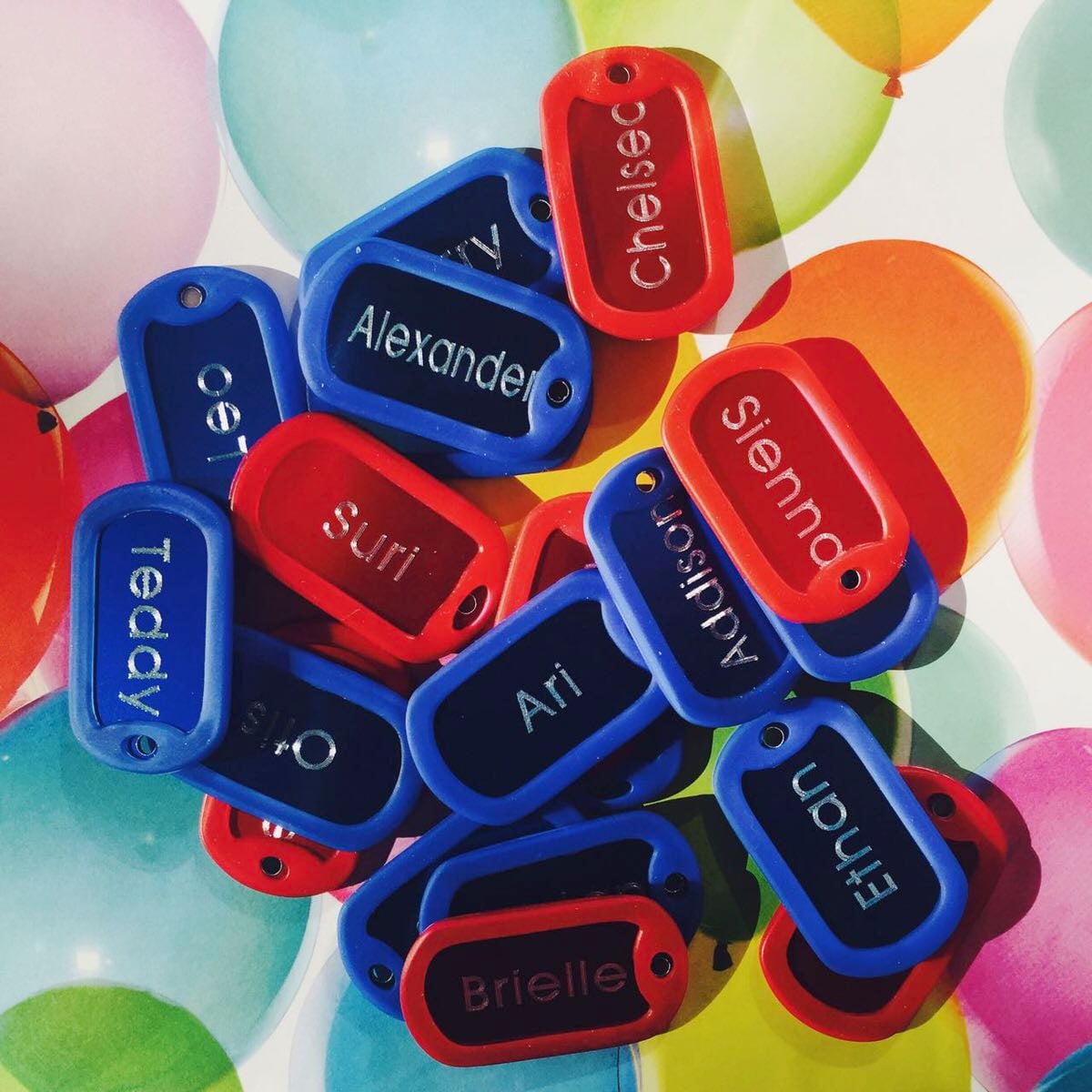
For family groups travelling together, matching wristband colours make identification effortless. When travelling with cousins, school groups, or extended family, different coloured bands for different family units eliminates confusion for children and adults alike. This is particularly effective at theme parks, resorts, and busy tourist attractions.
Tip 4: Medical Information Wristbands for Children with Health Conditions
Children with allergies, asthma, diabetes, or other medical conditions should wear a medical ID wristband whenever travelling. In an emergency, first responders need this information immediately — before the child or accompanying adult can provide verbal confirmation. A clear, permanent medical ID wristband can be life-saving.
Shop Travel Safety Wristbands for Kids
Keep your family safe and identifiable on every trip.




Tips 5–8: Digital, Physical, and Practical Safety Measures
Tip 5: Photo Documentation at the Start of Each Day
Take a photo of your child at the start of each day showing their full outfit. If they become separated, this image can be shared with venue security and police immediately, providing accurate and current identification details including clothing and any distinguishing features.
Tip 6: Designate a Meeting Point at Every Venue
Before entering any venue — theme park, market, festival, museum — identify a single, memorable meeting point. Make it distinctive: "We will meet at the big fountain" or "We will meet at the entrance gate sign." Repeat this with children at the entry point.
Tip 7: Age-Appropriate Independence Boundaries
Establish clear rules about how far from the group children may roam in different environments. A theme park carousel is different from an airport terminal. Setting explicit "stay within sight" or "stay within 10 metres" rules gives children clear, manageable expectations rather than vague guidelines.
Tip 8: Elastic or Adjustable Wristbands for Extended Travel
For trips lasting more than a day, elastic fabric wristbands are more comfortable for continuous wear than Tyvek. They are adjustable, gentle on skin, and can be worn during sleep without discomfort. For school camps and multi-day excursions, elastic bands maintain identification capability throughout the trip.

Browse our full school and children's safety wristband range for all travel and excursion needs.
Frequently Asked Questions
What information should be on a child travel safety wristband?
Include at minimum: one guardian's mobile phone number with country code (for international travel). Optionally add a second contact number (hotel, other guardian), the child's first name, and any critical medical information. Keep it readable — don't try to fit too much information on one band.
At what age do children no longer need travel safety wristbands?
Most child safety experts recommend wristbands for children under 10 in unfamiliar or crowded environments. From 10–12, a wristband is still sensible in large venues and international travel. Teenagers who have their own mobile phones and clear safety understanding can typically be trusted without physical identification bands.
Are Tyvek wristbands comfortable for children to wear all day?
Yes. Tyvek is lightweight, flexible, and hypoallergenic. For all-day excursion wear, it is comfortable for most children. For multi-day trips, elastic or fabric wristbands are more comfortable for continuous wear including overnight. Always check the fit is snug but not tight — you should be able to slide two fingers under the band.
April 12, 2026
1

Share on Facebook

Share on X

Share on Pinterest
1 Comment(s)
James Morrow
Jul 23, 2021 10:38
Very much appreciated. Thank you for this excellent article. Keep posting!
Recent Posts