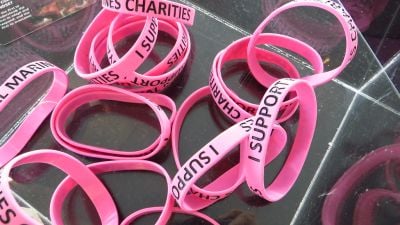
How to Shrink Silicone or Rubber Bracelets: 3 Quick Methods That Work

By Handband Community Team
· Updated 17 May 2026
· 8 min read
Yes, you can shrink a silicone or rubber bracelet — but only by 5–10 percent, and not every method is safe for every band. If your wristband slides off your wrist, this guide walks you through 3 proven shrinking methods, what each one costs, the risks to your design, and a sizing chart so you never order the wrong size again.
Silicone and rubber bracelets are made of vulcanised polymer — they have shape memory and resist permanent deformation. That said, heat and time can coax them into a slightly tighter fit. Below, we rank the methods by ease, effectiveness and risk to your design.
Can You Actually Shrink a Silicone or Rubber Bracelet?
Short answer: yes, but only slightly — typically 5–10 percent in circumference. Don't expect to convert an Adult band into a Kids band. If your band is more than one size too big, you're better off ordering a properly sized replacement.
Why silicone shrinks (but only a little)
Silicone is cured with cross-linked polymer chains. Sustained heat above 80 °C softens those chains slightly, allowing the band to contract as it cools — but the cross-linking prevents major shape change. The result is a permanent but modest size reduction.
What "rubber bracelets" really are
The terms "rubber bracelet", "silicone bracelet" and "rubber wristband" are used interchangeably online, but virtually all modern promotional bands are silicone — not natural rubber. The shrinking methods below work the same way for both.
When NOT to try shrinking
- Colour-coat printed bands — ink layer cracks above 70 °C.
- Glow-in-the-dark bands — phosphorus pigments lose glow capacity with sustained heat.
- Limited-edition or memorial bands — the risk of damage isn't worth it. Order a fresh one in the right size.
Method 1: Boiling Water (Easiest, Best Results)
What you need
- Saucepan or kettle
- Cold water bath
- Tongs or a slotted spoon
- Towel
Step-by-step
- Bring a saucepan of water to a rolling boil (100 °C).
- Drop the bracelet in and time it for 30–60 seconds.
- Lift the band out with tongs — don't burn yourself.
- Immediately plunge it into a bowl of cold water for 15 seconds.
- Pat dry. Try it on. Repeat once more if you need it tighter.
Why it works best
The fast heat-then-cool cycle locks the silicone in a slightly contracted state. Most bands shrink 5–8 percent on the first cycle. A second cycle adds another 2–3 percent.
Risks
Debossed and ink-fill bands handle boiling water fine. Colour-coat printed bands may show micro-cracking after 2+ cycles.
Method 2: Dishwasher (Set and Forget)
What you need
- A dishwasher with a hot cycle (60 °C+)
- A mesh laundry bag or small colander
Step-by-step
- Place the bracelet in a mesh laundry bag so it doesn't fall through the rack.
- Position on the top shelf, away from the heating element.
- Run a normal hot cycle (typically 60 °C).
- Skip the heated-dry option — let it air-dry.
Why this works for bulk shrinking
A standard hot dishwasher cycle reaches 55–65 °C and runs for 90–120 minutes. The sustained warm water creates a gentler, longer shrink than the boiling-water flash method. Expect 3–6 percent size reduction. Perfect for shrinking 20+ bands at once (sports teams, event organisers).
Risks
Standard dishwasher detergent is safe on silicone. Avoid extra-strong sanitizer cycles which can dull the silicone surface.
Method 3: Hairdryer (For Smallest Adjustments)
What you need
- A hairdryer with a hot setting
- A towel and a flat surface
Step-by-step
- Lay the bracelet flat on a towel.
- Hold the hairdryer 5 cm above the band on hot, for 30 seconds.
- Flip and repeat on the other side.
- Let it cool for 1 minute, then try it on.
- Repeat for 2–3 cycles if needed.
Why this is the gentlest option
Hairdryer heat is lower (around 60–80 °C at 5 cm distance) and you have full control over duration. Best for delicate bands — colour-coat printed, glow-in-the-dark, or expensive limited-edition runs.
Expected shrink
3–5 percent over 3 cycles. Slower than boiling water but lower risk to ink or surface treatments.
Order the Right Size Next Time
Avoid the shrink hassle — Handband offers Adult, Youth, Kids and Toddler sizing on every silicone band.


Methods That DON'T Work (Skip These)
Microwave
Microwave heating is uneven — the centre of the band reaches dangerously high temperatures while the edges stay cool. Silicone can melt, smoke or off-gas. Don't do it.
Soaking in vinegar or salt water
Silicone is non-porous; chemical soaks have no shrinking effect. Some online guides claim vinegar shrinks rubber — it doesn't with modern silicone bracelets.
Freezing
Cooling silicone makes it temporarily stiffer but it returns to original size when warm. Useless for shrinking.
Cutting and re-joining
Cutting a section of silicone and gluing the ends does not work — silicone won't bond reliably with super glue or hot glue. The band breaks at the join within days.
Silicone Bracelet Sizing Guide (Order Right First Time)
Most online shrink searches are driven by ordering the wrong size. Use this chart to pick the right size before you buy.
How to measure your wrist correctly
- Wrap a flexible measuring tape around your wrist just below the wrist bone.
- Keep the tape snug but not tight.
- Note the circumference in centimetres or inches.
- Choose the matching size from the chart.
What to do if you're between sizes
Round up to the larger size. A slightly loose silicone band is comfortable and easy to remove. A tight band restricts circulation and tears more easily over time.
Stretching a Bracelet That's Too Small
The reverse problem — band too small — has a different fix. Silicone bracelets can be stretched up to 30 percent of their original size and will return to roughly original shape. To stretch:
- Soak the band in warm tap water for 5 minutes.
- Slowly pull the inside diameter while it's warm.
- Slide it over your hand with the help of a little hand lotion.
- Repeat once if needed. Don't yank — gradual stretching prevents tearing.
Care Tips to Keep Your Bracelet the Right Size
Avoid extreme heat for storage
Don't store silicone bands on a hot car dashboard, near a heater, or in direct sunlight for extended periods. Heat can cause gradual deformation.
Rotate between bands
Wearing one band 24/7 stretches it faster than rotating between several. Aim to swap bands every 2–3 days.
Clean regularly
Sweat, sunscreen and skin oils accumulate inside the band and reduce its grip. Wash with mild soap and water every few days. See our silicone bracelet cleaning guide for full methods.
Buy quality, not bulk-cheap
Cheaper silicone bands have less consistent thickness and fit. A good-quality custom debossed band from Handband holds its shape for 3–5 years of daily wear.
When to Replace Instead of Shrink
Stop trying to shrink and order a fresh band when:
- Your band is more than one size too big (Kids ⇨ Adult).
- The band is more than 3 years old (silicone elasticity declines).
- You've already shrunk it twice and want it tighter still — further shrinking adds risk to the design.
- The design uses colour-coat or glow-in-the-dark printing.
Frequently Asked Questions
Can you shrink a silicone bracelet?
Yes — silicone bracelets can be shrunk 5–10 percent using boiling water (most effective), a hot dishwasher cycle, or a hairdryer. Don't expect to convert an Adult band into a Kids band; if it's more than one size too big, order a properly sized replacement.
How do you shrink a rubber bracelet?
The same way as a silicone bracelet — virtually all modern "rubber" promotional bands are silicone. Drop the band in boiling water for 30–60 seconds, plunge into cold water for 15 seconds, then dry. Expect 5–8 percent shrinkage on the first cycle.
Will boiling water damage a custom wristband?
Boiling water is safe for debossed and ink-filled wristbands. Colour-coat printed bands and glow-in-the-dark bands can show micro-cracking after 2+ boil cycles, so use the hairdryer method instead for those styles.
Can you shrink a bracelet in the dishwasher?
Yes — place the bracelet in a mesh laundry bag on the top shelf, run a normal hot cycle (60 °C+), and skip the heated dry. Expect 3–6 percent size reduction. This is the easiest method when shrinking 20+ bands at once.
How do you stretch a silicone bracelet that's too small?
Soak the band in warm water for 5 minutes, then slowly pull the inside diameter while it's warm. Slide it over your hand with hand lotion. Silicone bracelets can be stretched up to 30 percent and will return to roughly the original shape — pull gradually to prevent tearing.
What size silicone bracelet should I order?
Measure your wrist with a flexible tape just below the wrist bone. Adult Standard fits 19–21 cm (most adults), Adult Small fits 17–19 cm, Youth fits 18–20 cm (ages 11–15), Kids fits 15–17 cm (ages 5–10), Toddler fits 12–14 cm (ages 1–4). If you're between sizes, round up.
How many times can you shrink a silicone bracelet?
Realistically, 2 cycles maximum. The first cycle gives 5–8 percent shrinkage, the second adds another 2–3 percent. After that, the band can develop micro-cracks or surface dulling — better to accept the fit or order a fresh band in the correct size.
28 June 2019

Written by
Founder, Handband
Michael founded Handband to give event organisers, charities, sports clubs, and brand teams a simpler way to source custom wristbands and promotional products. The team has supplied wristbands to festivals, schools, fundraisers, and corporate activations world-wide.

Share on Facebook

Share on X

Share on Pinterest
Comment(s)
Related posts