
Quick test: what’s 7×8? What’s 6×9?
If you’re a certain age, you probably learned your times tables by rote — chanted them, drilled them, took weekly tests on them. The good news is the rote method worked for many of us. The bad news is it switched a lot of kids off maths for life.
Modern schools are more thoughtful about how they teach number facts — combining games, songs, manipulatives and incidental practice. But there’s still a stubborn challenge: kids need to commit times tables to long-term memory, and that takes repeated exposure. Multibandz solve exactly that problem.
The Problem With Old-School Drill
The traditional approach has two failure modes:
- Kids who already get it find the drill boring; the gap to other learning grows.
- Kids who don’t get it associate maths with anxiety; they freeze on harder problems for years afterwards.
Both groups need the same thing: repeated, low-pressure exposure to the facts in a way that doesn’t feel like more drill.
How Multibandz Deliver That Exposure
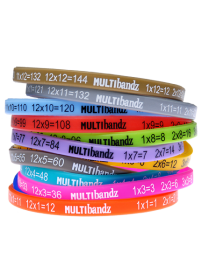
Multibandz print times tables onto silicone wristbands. Kids wear them through the day — on the bus, at recess, while watching TV, during transitions between activities. Every glance is a tiny revision moment, effortless and pressure-free.
Multiply that by 30–40 glances a day across a school week, and the child has had more contact with the multiplication facts than a worksheet ever delivered — without dreading any of it.
Recommended for you
Products related to this article
Hand-picked to go with what you just read.
The Hardest Tables: 6, 7, 8
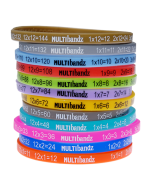
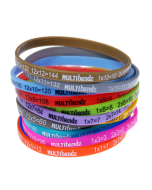
Most kids master 2×, 5×, 10× and 11× quickly. The classic stumbling blocks are 6×, 7×, 8× and 9×. Multibandz let teachers and parents focus on the harder tables: hand the child the 7× band for the week, the 8× band the week after, and so on. The bands rotate; the exposure compounds.
Beyond Multiplication: Dividerz and Facts To
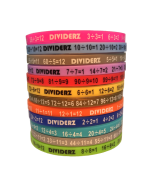
Once multiplication is solid, division is the next mountain. Dividerz cover all 12 division facts in the same wristband format. Facts To Wristband lets schools customise the content beyond maths altogether — spelling words, vocab lists, science definitions.
A Reward System That Costs Almost Nothing
Pair Multibandz with a reward system: master the 6× table, earn the band. Master the 7×, earn the next. By Year 4 some students wear 5–7 bands stacked together, a visible record of their maths journey. The visible reward matters — especially for kids who don’t respond to gold stars or stickers.
A Note for Parents
Multibandz aren’t a substitute for good teaching. They’re a tool that supports it. Pair the band with brief daily practice (5 minutes is plenty), real-world maths in cooking and sport, and lots of low-stakes verbal questions during the school run. Kids who play with maths daily — rather than dread weekly tests — build confidence that lasts.
Lead Times and Pricing
Multibandz, X Multibandz and Dividerz typically ship within days. Whole-class packs of 30–120 wristbands come in well under a dollar per band. Most primary schools order pack quantities matched to year-level sizes.
A Better Way to Tackle Times Tables
Times tables don’t have to be the misery they were for previous generations. With a Multibandz program at home or in class, kids get the exposure they need without the dread — and the next time someone asks them “what’s 7×8?”, they answer without freezing.
Frequently Asked Questions
How well do Multibandz actually work for memorising times tables?
Very well — because they fix the hardest part of times-tables learning: the boredom. A child wearing a multiband sees the multiplication facts dozens of times a day without effort. Repeated low-pressure exposure is one of the most reliable methods for committing facts to long-term memory.
What age should kids start using Multibandz?
Multibandz are typically used from Year 1 (about age 6) onwards. Younger students focus on the lower times tables (2×, 5×, 10×); upper-primary kids work through the harder ones (6×, 7×, 8×) and start on Dividerz.
Can my kid wear a Multiband to school?
Most schools allow them — especially when the school itself runs the program or supports it. Multibandz aren’t fashion jewellery; they’re a learning aid. Many schools issue a class set so the rules are uniform.
How do schools roll out Multibandz across a whole year level?
The most common pattern: order one set per student, hand them out at the start of term, and run a weekly “table of the week” rotation. By end of term, students have had repeated exposure to all 12 tables. Class teachers report fewer kids stuck on the harder tables (7×, 8×) by year’s end.
Are Multibandz suitable for home-schooling parents?
Yes — arguably better. Home-schooling parents can pace the program to the child, pair it with concrete activities (cooking, board games, sports), and use the bands as both a learning aid and a daily progress signal.

Written by
Founder, Handband
Founder of Handband; specialist in custom wristbands and promotional products for events, schools, charities, and brands.
← Previous
“I’m Bored, Mum”: How Handband Wristbands Bust Holiday Boredom (2026 Parents’ Guide)
Next →
Marketing on the Cheap: 5 Ways Small Businesses Can Use Custom Wristbands to Grow
Comment(s)