
Designed in Sydney since 2004 · 4.9★ verified customer rating · Branded wristbands from 4 per design
Quick answer
Promotional products build brand recognition by putting your logo in front of people repeatedly, in everyday settings, at a low cost per impression. The items that work are the ones people actually use or wear — drinkware, tote bags, clothing and event wristbands — not the ones that end up in a drawer. Choose useful items, brand them clearly, and give them out where your audience already is.
Most small businesses do not have the budget to buy attention the way a national brand does. Promotional products are how you earn it instead. A well-chosen branded item is seen again and again, by the person who has it and by everyone around them — for a fraction of what the same number of paid impressions would cost.
This guide covers what brand recognition is, why promotional products move it, which items are worth the spend, how to use them well, and how to brief a custom run so the result looks like your brand and not a generic giveaway.
What is brand recognition, and how do promotional products build it.
Brand recognition is how readily people identify your business from a cue — a logo, a colour, a name — without being told who you are. Promotional products build it through repeat exposure: a branded item a person keeps and uses puts your mark in front of them, and the people near them, day after day. That repetition is what turns a one-off impression into recall.
Recognition sits a step before a sale. People buy from names they already know and trust, so the job of a promotional product is not to close a deal on the spot — it is to make your brand familiar, so that when the need comes up, you are the one that springs to mind. The more useful and visible the item, the more often that cue lands.
“Industry research, including the Advertising Specialty Institute’s Global Ad Impressions Study, consistently finds promotional products deliver one of the lowest costs per impression of any advertising medium — and that most people keep a useful branded item for months.”
Source: ASI Global Ad Impressions Study; Australasian Promotional Products Association (APPA).
Why promotional products work better than they look.
A promotional product is the rare ad that people choose to keep. That gives it three advantages over rented attention:
- Repeat exposure for one cost. You pay once. A branded drink bottle or wristband then earns impressions every time it is used or worn — the cost per impression keeps falling the longer the item lasts.
- It is tactile. People hold, wear and reach for promotional merchandise. A physical object is harder to scroll past than a screen ad, and the act of using it builds a quiet familiarity with the brand on it.
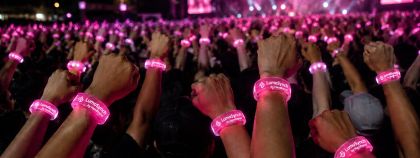
- It travels. A tote bag, a cap or an event wristband is seen by everyone around the person carrying it, so your reach extends well past the people you handed it to.
That is why promotional products help small businesses punch above their budget. You are not competing for a feed placement against companies with ten times your spend — you are building recognition in the real world, where a useful branded item earns its keep for months.
Recommended for you
Products related to this article
Hand-picked to go with what you just read.
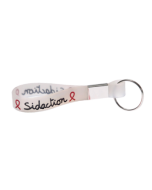
The promotional products that actually get used.
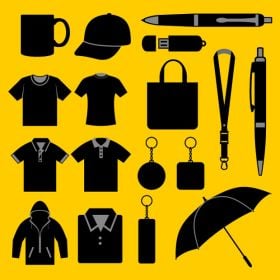
The rule is simple: brand things people want anyway. An item that gets used or worn earns impressions; an item that gets binned earns nothing. Here is how the common categories stack up for brand recognition.
| Promotional product | Why it builds recognition | Best for |
|---|---|---|
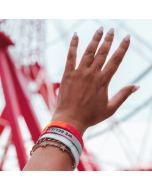
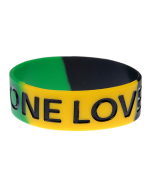
| Event wristbands | Worn for the whole event and often kept afterwards; brand colours and logo on the wrist, seen by the whole crowd. Very low minimum. | Festivals, launches, fun runs, fundraisers, brand activations |
| Drinkware (bottles, cups) | Used daily at the desk, gym and in the car — high repeat exposure over a long life. | Staff kits, conferences, customer gifts |
| Promotional clothing | A worn item turns the wearer into a walking billboard; caps and tees travel furthest. | Teams, staff uniforms, giveaways |
| Tote bags | High visibility in public; reused for shopping and work, so they keep earning impressions. | Retail, markets, conferences |
| Tech (power banks, cables) | Kept and used often; a higher unit cost but a long, useful life on a desk or in a bag. | Premium client gifts, partner kits |
| Desk items (pens, notebooks) | Cheap and broad reach, but easily lost — best as volume fillers, not the hero item. | Trade shows, mass handouts |
Wearables top the list because they are seen by a crowd, not just an owner — which is why event wristbands and branded clothing punch above their cost for recognition.
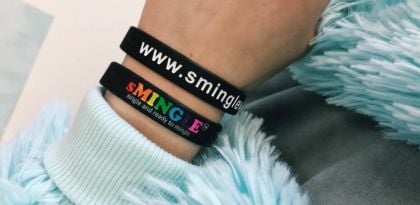
Wristbands are the lowest-risk place to start: branded silicone runs from just 4 per design, so you can test colours and a message on a small batch before committing to a large order.
Browse custom promotional wristbands →
How to use promotional products effectively.
To use promotional products effectively, match the item to your audience, brand it clearly, and hand it out where people already gather — then make sure the item is useful enough to be kept. The goal is repeat exposure, not a one-off handout.
- Pick one hero item, done well. A single quality product people keep beats a pile of throwaway gadgets. Spend the budget on usefulness and finish.
- Brand it so it reads at a glance. Clear logo, your brand colours matched to Pantone, and enough contrast that it is recognisable across a room — not a tiny mark no one notices.
- Distribute where the audience is. At the event, on the counter, in the welcome pack, with the order. The right moment matters as much as the item.
- Tie it to something. A launch, a campaign, a cause or a milestone gives the item meaning and a reason to keep it — and lets you measure the response.
- Order enough, early. Custom runs have a lead time, so plan ahead. A low minimum lets you trial a design, then reorder the winner in volume.
Why worn items win: promotional clothing and wearables.
Worn promotional products do something a desk item cannot: they move through the world. A cap, a tee or an event wristband is seen by everyone the wearer passes, which multiplies your reach without multiplying your spend. Promotional clothing and wearables also signal belonging — staff, members and supporters wear them by choice, which reads as genuine endorsement rather than an ad.
Event wristbands are the most efficient wearable for a single occasion. They go on the whole crowd, carry your brand colours and logo for the length of the event, and many people leave them on for days afterwards. Branded silicone is durable and reusable; printed fabric and Tyvek bands suit single-use entry where you also need them to be tamper-evident.
A note on terms: branded silicone and fabric wristbands are printed or debossed, not engraved. For a name or a unique code on each band, ask about printed numbering — we can advise what suits your run.
See brand activation wristbands →
How to measure brand-recognition ROI on promotional merchandise.
Brand recognition is slower to read than a click, but you can still measure it. Tie the run to a trackable action and watch what moves:
- A unique code or QR. Print a campaign code or QR link on the item and count scans, sign-ups or redemptions.
- Cost per impression. Estimate impressions over the item’s life and divide by the total cost. Long-life wearables usually beat short-run media here.
- Recall and reach. Ask new leads how they heard of you, and watch for branded search and direct traffic after an event.
- Reorders. If a team or a cause asks for more of an item, that is a clear signal it is working.
Set the measure before you order, not after. Even a rough cost-per-impression beats no number, and it tells you which item to repeat next time.
How to brief and order a custom run.
A good brief gets you a branded product that looks like your brand and not a stock giveaway. Have these ready:
- Your logo as vector artwork and your brand colours as Pantone references, so the print matches across every item.
- Quantity and any size or colour split — silicone wristbands start at a minimum of 4 per design, so small trial runs are easy.
- Your in-hand date. Lead time depends on quantity — typically 10 to 14 business days, with larger runs taking longer and quicker turnarounds available on application. Plan back from the event.
- The decoration method — printed, debossed or colour-filled — if you have a preference. We can recommend what suits the item and budget.
Not sure where to start, send us the brief and we will come back with options and a price. For how a logo is applied to a band, see our guide to how wristbands are printed.
Build recognition that gets worn.
Custom branded wristbands from 4 per design, designed in Sydney since 2004.
Get a quote →Related reading
- Brand activation wristbands — how brands use wristbands at launches and pop-ups
- Corporate event ideas — formats that put your brand in front of an audience
- Wristbands for events — choosing the right band for entry, ID and access
- RFID and NFC event wristbands — cashless and access-control options
- How wristbands are printed — print methods and what suits your logo
Promotional products and brand recognition: FAQ.
Why are promotional products important for a small business?
Promotional products are important because they build brand recognition at a low cost per impression. A useful branded item is kept and used for months, putting your logo in front of the owner and the people around them — reach a small ad budget cannot buy.
Which promotional products work best for brand recognition?
Items people use or wear work best, because they earn repeat exposure. Drinkware, tote bags, promotional clothing and event wristbands top the list — they are seen by a crowd, not just the owner. Cheap throwaway items rate poorly.
How many branded wristbands do I have to order?
Custom silicone wristbands start at a minimum of 4 per design, so you can run a small trial before a large order. Other materials, such as printed fabric and Tyvek, run at higher minimums. Lead time depends on quantity — typically 10 to 14 business days, with quicker turnarounds available on application.
Are branded silicone wristbands engraved?
No. Branded silicone and fabric wristbands are printed, debossed or colour-filled, not engraved. If you need a name or unique code on each band, ask about printed numbering and we will advise what suits your run.
Can promotional products be recycled?
Some can, with care. Silicone can be recycled at specialist recycling plants where the right streams exist, not through kerbside collection; Tyvek is recyclable through specialist paper streams. The most sustainable choice is a durable item people keep and reuse rather than replace.
22 years
Designed in Sydney since 2004
4.9★ rating
Verified customer reviews
From 4 per design
Very low minimum to start
Pantone-matched
Your exact brand colours
Sources: Advertising Specialty Institute (ASI) Global Ad Impressions Study; Australasian Promotional Products Association (APPA). Promotional-effectiveness figures are industry estimates and vary by item, audience and use.
Nathen
Jan 05, 2022 10:18
Thank you for posting this awesome blog post, very informative. Cheers.
Rosie
Oct 05, 2021 12:12
I loved your post. Keep sharing such promotional bottles related blogs!