10 Study Tips to Help You Hit Your Goals: How Wristbands and Smart Habits Boost Student Success

Why Study Habits Define Academic Success
Academic success is rarely about raw intelligence — it is almost always about habits, systems, and consistency. Students who build strong study routines from early in their schooling tend to outperform peers of equal or greater ability, simply because they show up reliably and work efficiently. The challenge is that good study habits are hard to form and easy to abandon.
Wristbands might not be the first tool that comes to mind when you think about studying — but wearable reminders, motivational messages, and tactile learning aids have quietly entered classrooms and study spaces around the world. This guide combines ten proven study strategies with a look at how physical tools, including wristbands, support the process.
1. Set Specific, Measurable Goals
“Study more” is not a goal. “Complete chapters 3 and 4 of biology by Thursday and score above 80% on the practice quiz” is a goal. Specificity gives your brain a clear target and removes the paralysis of open-ended intentions.
Write your weekly goals on a wristband or note them on a band you wear during study sessions. The physical reminder creates a cue-routine-reward loop that reinforces the habit each time you look down.
2. Use the Pomodoro Technique
Study in 25-minute blocks with a 5-minute break between each. After four blocks, take a longer 20-30 minute break. This technique is backed by decades of research on attention spans and cognitive load. It prevents mental fatigue, keeps motivation high, and makes large subjects feel manageable.
3. Active Recall Over Re-Reading
Re-reading notes feels productive but produces little retention. Active recall — closing your notes and trying to retrieve information from memory — dramatically outperforms passive review. Use flashcards, practice questions, or blank paper exercises to force your brain to work.
4. Spaced Repetition
Review material at increasing intervals: one day after learning, three days later, one week later, two weeks later. Spaced repetition leverages the forgetting curve to lock information into long-term memory with less total study time than cramming. Apps like Anki automate the scheduling, but you can do it manually with a simple calendar.
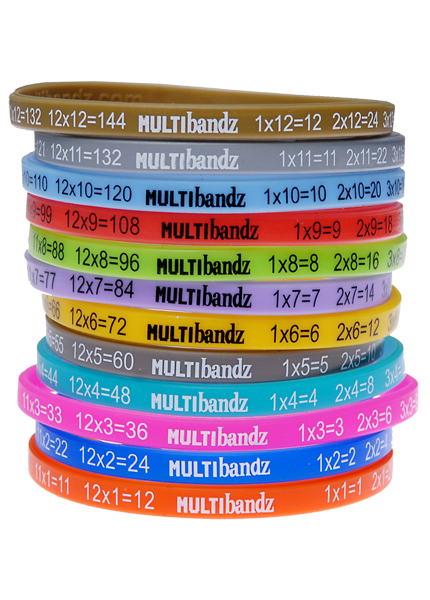
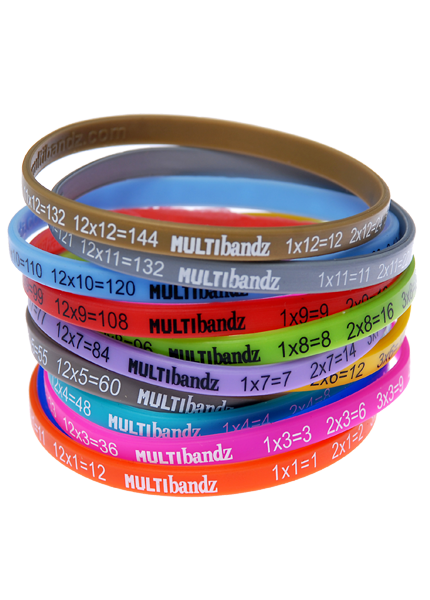
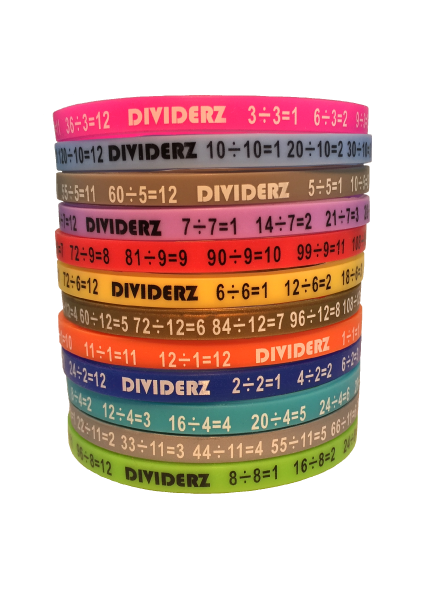
For maths in particular, times table wristbands from our educational wristbands range make spaced repetition tactile — glancing at your wrist during practice is a natural review moment.


5. Eliminate Distractions Deliberately
Every phone notification during study costs roughly 23 minutes of focused attention to recover from, according to research from the University of California. Put your phone in another room during study blocks. Use website blockers for social media. Set a specific “check messages” time that is not during study hours.
Create a Study-Only Environment
Your brain forms associations between spaces and behaviours. If you study at the same desk at the same time each day, your brain begins to shift into study mode automatically when you sit there. If you study in bed, your brain associates that space with sleep — which is why studying in bed often leads to falling asleep.
6. Teach What You Have Learned
The Feynman Technique is simple: explain what you have just studied as if you were teaching it to a 10-year-old. Where your explanation breaks down is where your understanding is weakest. This immediately shows you what to study next. Study groups are ideal for this — take turns teaching each other topics and questioning each other.
7. Take Care of Your Body
Sleep is when the brain consolidates memories. Cutting sleep to study more is counterproductive — an extra hour of sleep before an exam beats an extra hour of cramming. Aim for 8 hours consistently during exam periods. Exercise increases blood flow to the brain and reduces cortisol (the stress hormone). A 20-minute walk before a study session measurably improves focus and retention.
8. Use Motivational Wristbands as Physical Anchors
A motivational wristband with a word like “FOCUS,” “PERSIST,” or “BELIEVE” serves as a physical anchor for your intentions. Each time you look at it, you reinforce your commitment to the goal. Athletes have used physical anchors for performance psychology for decades — there is no reason students cannot apply the same principle.
Some teachers give students a wristband at the start of exam season with an encouraging message. It becomes a shared symbol for the class — creating positive group identity around the effort of studying.
9. Review and Reflect Weekly
Set aside 30 minutes every Sunday to review what you covered during the week, identify what still needs work, and plan the following week’s study schedule. This metacognitive practice (thinking about how you learn) consistently separates high performers from the rest.
10. Celebrate Milestones
Reward yourself when you hit milestones. Finish a full week of consistent study? Treat yourself. Pass a hard practice test? Acknowledge it. Rewards do not need to be expensive — sometimes a new wristband for completing a tough unit is all the motivation a student needs to power through the next one.
Explore our full wristband products range for motivational and educational options suited to students of all ages.
Frequently Asked Questions
Do educational wristbands actually help students learn?
Research on tactile learning supports the use of physical objects as memory anchors. Times table wristbands and motivational bands act as spaced repetition cues — each time a student glances at their wrist during the day, they are performing a micro-review. For kinaesthetic learners especially, wearing the material is more effective than reading it from a page.
What should I write on a motivational wristband for studying?
Keep it short and personally meaningful. Words like FOCUS, PERSIST, BELIEVE, or a specific goal (90% average) work well. Avoid vague phrases — specificity creates stronger psychological anchors. Some students write their exam date so they are reminded of the deadline with every glance.
Are silicone wristbands safe to wear all day during study sessions?
Yes. High-quality silicone wristbands are hypoallergenic, flexible, and non-irritating. If you experience any skin reaction, switch to a fabric option. Most students find silicone bands comfortable for all-day wear, including during exams where no electronic devices are permitted.
How do I use a wristband as part of a study routine?
Use a write-on band to note your daily study goal in the morning. Wearing the goal on your wrist means you see it repeatedly throughout the day, reinforcing commitment. Some students use a colour-coded system: one colour per subject or per week of their study plan.
April 12, 2026

Share on Facebook

Share on X

Share on Pinterest
Comment(s)
Recent Posts