
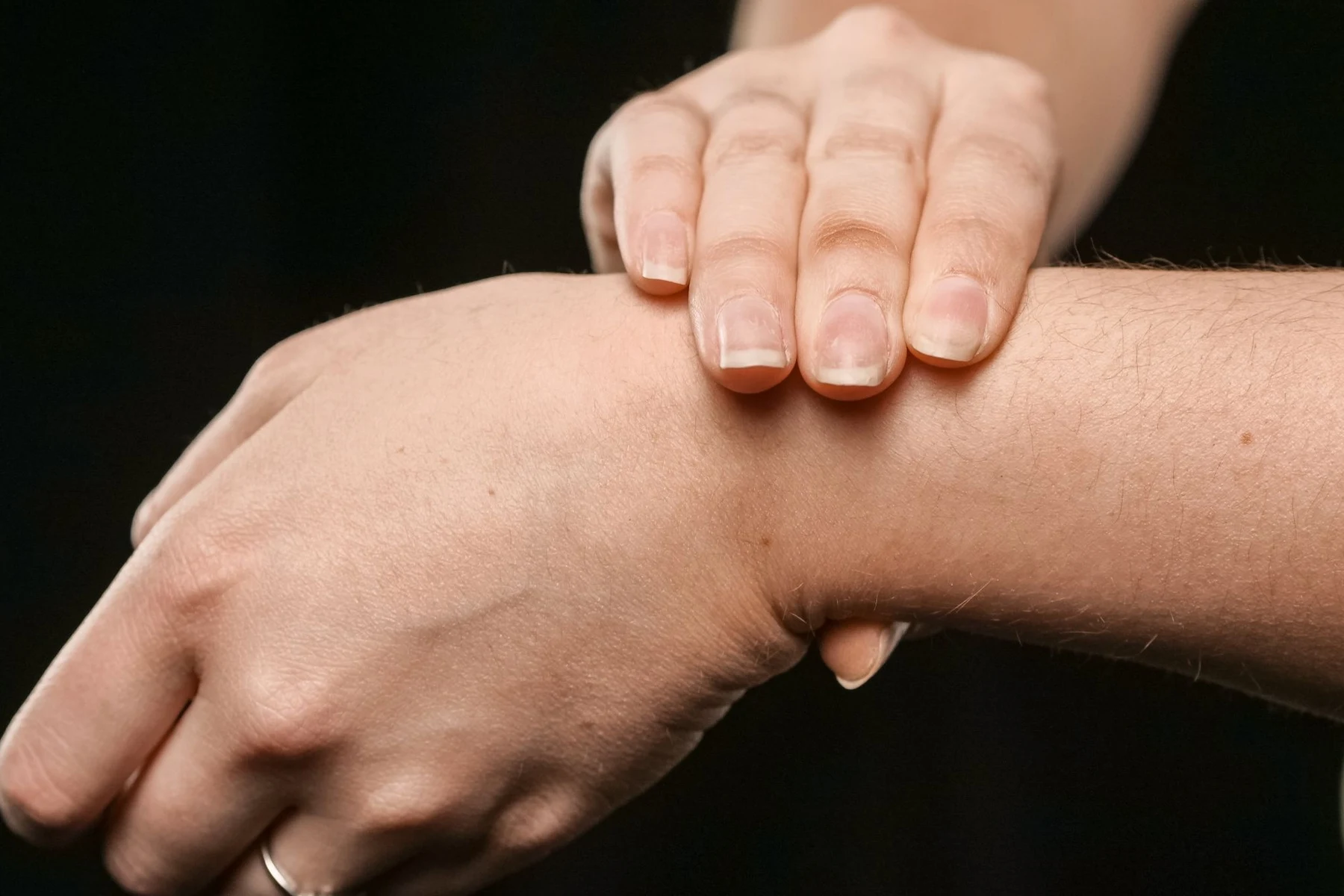
Anyone who reacts to jewellery asks the same question before ordering a wristband for a school, a workplace or a medical programme: will this irritate people's skin? It is a fair question, and for silicone the answer is unusually reassuring — but "unusually reassuring" is not the same as "never a problem", and the difference is worth understanding.
Why silicone is used where skin contact matters
Silicone is chemically inert. It does not react with skin, does not leach the compounds that cause most contact allergies, and does not contain latex or nickel — the two substances behind the overwhelming majority of wearable-related reactions.
That is why silicone is the standard material for medical devices in prolonged skin contact: tubing, seals, prosthetic liners, infant products. If it were a common irritant, none of those applications would exist.
For a silicone wristband, that means the material itself is about as safe a choice as exists for something worn continuously against skin.
Latex and nickel — the two usual suspects
Latex
Latex allergy is well recognised and can be serious. Natural rubber latex is a different material to silicone entirely — silicone is synthetic and contains none of the plant proteins that cause latex reactions. For anyone with a latex allergy, silicone is specifically the alternative recommended.
Nickel
Contact dermatitis from nickel is one of the most common metal allergies. A plain moulded silicone band contains no metal at all, so the issue does not arise. Worth checking if you are ordering a band with a metal clasp or charm, where the metal component becomes the consideration rather than the band.
When skin does react
Genuine allergy to silicone is rare. What people usually experience is one of three things that are not allergy at all, and all three are fixable.
Trapped moisture
By far the most common. A band worn tight over sweat or water holds moisture against the skin, which softens it and causes redness and itching. It looks like a reaction to the band and is actually a reaction to being damp.
The fix is fit, not material. A band that rotates freely lets air and moisture move. Removing it occasionally to dry the skin underneath sorts it out entirely.
Friction
A band that is too tight rubs continuously in the same spot. The result is mechanical irritation — the same as a watch strap worn too tight.
Trapped residue
Soap, sunscreen and hand sanitiser collect under a band and stay there. That residue, held against skin for hours, is a far more likely irritant than the silicone. Rinsing the band and the wrist occasionally resolves it.
Ordering for a school or care setting?
Tell us the setting and we will recommend sizing and finish that suits continuous wear. Browse silicone wristbands or school wristbands.
Tell us the setting and we will recommend sizing and finish that suits continuous wear. Browse silicone wristbands or school wristbands.
Ordering for sensitive skin
Size slightly loose. Comfort and airflow matter more than a snug fit when the band is worn continuously. A band that rotates freely is the single best protection against irritation.
Choose a narrower width. A 12mm band covers less skin than a 25mm one and lets more air reach the wrist. For all-day wear on sensitive skin, narrower is kinder.
Prefer moulded finishes. Debossed and embossed messages are formed in the silicone with no surface coating at all, which keeps the number of materials in contact with skin to exactly one.
Avoid metal components. If someone reacts to jewellery, a plain moulded band with no clasp or charm removes the most likely culprit.
Practical advice for group settings
If you are issuing bands to a class, a workforce or a care setting, a few habits prevent almost all complaints.
Tell people they can take them off. A band worn continuously for weeks with no break is the scenario where trapped moisture becomes a problem. Removing it overnight, or during showers, solves it.
Order a few larger sizes than your headcount strictly requires. There will be people for whom the standard size sits tighter than ideal, and having an alternative to hand avoids the band being abandoned.
Have a plan for anyone who does react. In a school or workplace, that means knowing who to tell and having an alternative available rather than leaving someone to simply stop wearing it.
An honest caveat
This is general guidance about a material, not medical advice. Genuine silicone allergy exists, even though it is uncommon, and anyone with a history of skin reactions should treat a new band the way they would any new product in prolonged contact — try one, watch the skin underneath, and stop if it reacts.
If someone does develop a persistent reaction, that is a conversation with a doctor rather than something to work around. For general guidance on skin conditions and allergy, Healthdirect Australia is a reliable starting point.
Frequently asked questions
Are silicone wristbands safe for sensitive skin?
Generally yes. Silicone is chemically inert, contains no latex or nickel, and is the standard material for medical devices in prolonged skin contact. Genuine silicone allergy is rare — most irritation traces to fit, trapped moisture or residue rather than the material.
Do silicone wristbands contain latex?
No. Silicone is synthetic and contains none of the natural rubber proteins that cause latex allergy. It is specifically the material recommended as an alternative for people with a latex allergy.
Why is my wrist itchy under my wristband?
Most often trapped moisture or residue rather than the silicone. Sweat, soap, sunscreen and sanitiser collect under a band and sit against the skin. A looser fit that rotates freely, plus an occasional rinse of both band and wrist, resolves it in most cases.
What wristband is best for someone who reacts to jewellery?
A plain moulded silicone band with no metal clasp or charm. Most jewellery reactions are to nickel, which a plain silicone band does not contain. Choose a narrower width and a slightly looser fit for continuous wear.
Can you be allergic to silicone?
It is possible but uncommon. Anyone with a history of skin reactions should try one band first and watch the skin underneath. A persistent reaction is worth discussing with a doctor rather than working around.
What to do if a band is causing a problem
If someone reports irritation, work through it in order rather than assuming the material is at fault.
Take it off for a day. If the skin settles quickly, the cause was almost certainly moisture or friction rather than an allergic response.
Wash the band and the wrist. Warm water and soap on both removes trapped residue, which is a common and easily missed cause.
Try a looser or narrower band. If the irritation was friction or trapped damp, a band that rotates freely usually resolves it entirely.
If it returns on a clean, loose band, stop using it. At that point you have ruled out the easy explanations and it is worth proper advice rather than further experimentation.
Order wristbands for continuous wear
- Custom silicone wristbands — latex-free, nickel-free, moulded finishes
- School wristbands — sizing for continuous daily wear
- OSHC ID wristbands — identification in care settings
- Event wristbands — short-wear alternatives
Tell us the setting and we will recommend a spec that suits continuous wear. Designed in Sydney, shipped Australia-wide.

Written by
Founder, Handband
Founder of Handband; specialist in custom wristbands and promotional products for events, schools, charities, and brands.
← Previous
Custom Wristbands for Career Fairs & Recruitment Events
Next →
Custom Wristbands for Corporate Team-Building & Staff Retreats
Comment(s)