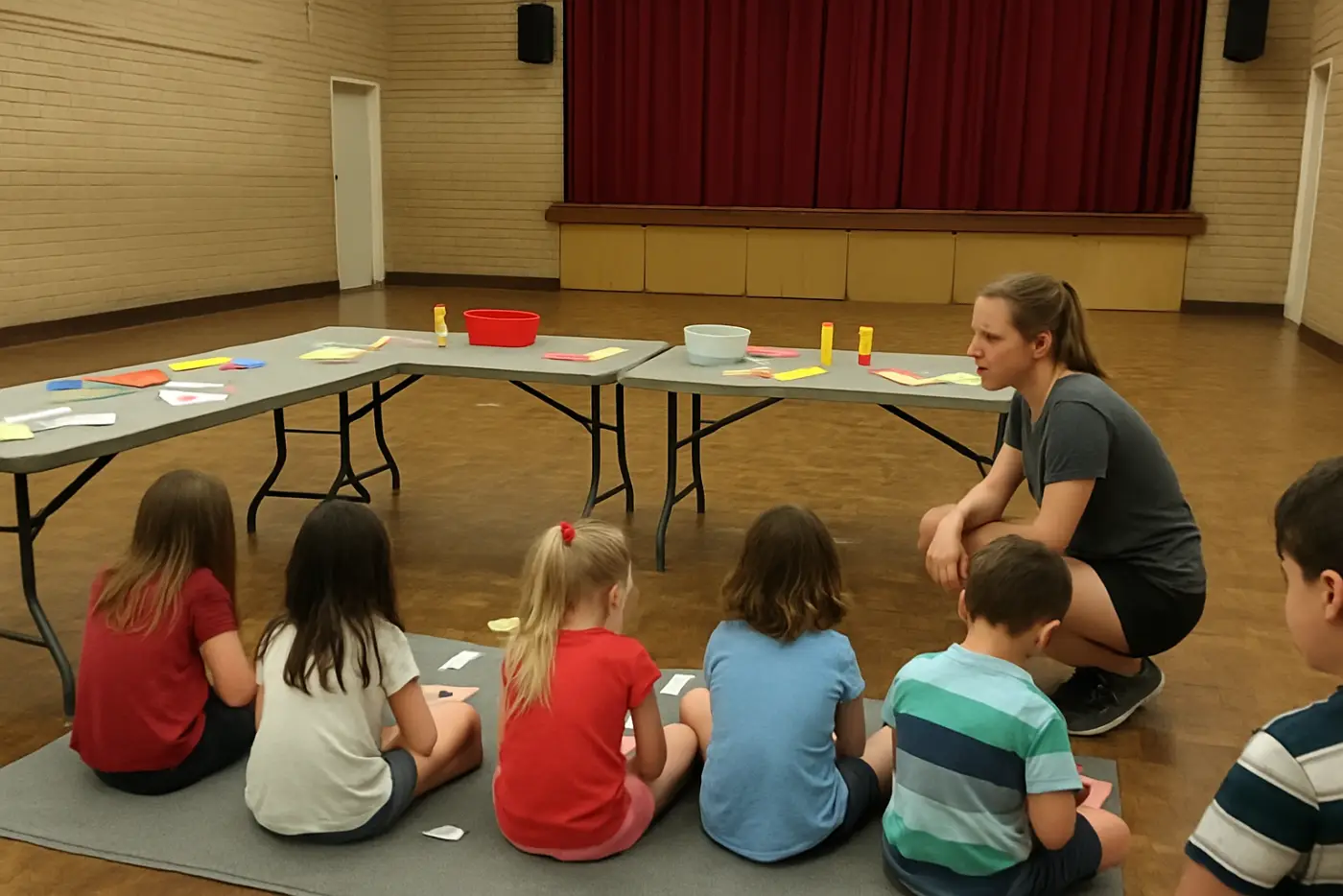

A dance concert puts a large number of children backstage in a venue their teachers do not control, with parents who all want to be in the wings. Wristbands are how schools hold the line: performers, approved chaperones and everyone else become three visibly different groups, so venue staff can enforce it without knowing anybody.
The wings are the problem, not the stage
Once a concert starts, the backstage area fills with children waiting to go on, parents wanting to help, and siblings who wandered in. Venue staff will enforce a rule but cannot judge who is a legitimate chaperone. Three clearly different bands turn a judgement call into a check anyone can make.

Mark performers by class or item
A concert runs to a running order, and getting the right group into the wings at the right time is most of the job. Colour-coding by class means a backstage coordinator can call a group without reading names off a list. A patterned band per class is easy to call out and hard to confuse under work lighting.
Recommended for you
Products related to this article
Hand-picked to go with what you just read.


Chaperones need to be obvious to venue staff
Most venues require a set ratio of approved adults backstage, and some require working-with-children checks. Give approved chaperones a single distinct band, issue it against a list, and collect it at the end. Anything less means venue staff are guessing, which is exactly what the requirement exists to prevent.
Eisteddfods add a second layer of organisers
At an eisteddfod your school is one of many, and the organiser controls the venue. Coordinate with them before printing anything, because a colour that means performer to you may mean adjudicator to them. A plain unmarked band is often the safest choice when a third party owns the colour scheme.
Costumes, bags and the lost-property problem
Dance concerts generate an enormous pile of unclaimed shoes, hairpieces and costume bags. A named tag on each bag prevents most of it. A silicone bag tag in the school colours survives a season of concerts and doubles as something students keep.
Issue at the door, collect at the end
Bands handed out in advance get lost, forgotten or given to a friend. Issue them at the stage door against the chaperone list on the day, and collect chaperone bands as people leave so the same set works for the next performance in a multi-show weekend.
Frequently Asked Questions
Quick answers from the Handband team
Why do dance concerts need wristbands?
Because the wings fill with performers, parents and siblings, and venue staff cannot judge who is a legitimate chaperone without a visible marker.
How should performers be marked?
By class or item, so a backstage coordinator can call the right group into the wings without reading names off a list.
How many chaperone bands should we issue?
Only as many as your approved list allows, issued against that list and collected at the end. Venues usually set a required ratio.
What changes at an eisteddfod?
The organiser controls the venue and the colour scheme. Coordinate before printing — your performer colour may be their adjudicator colour.
Can wristbands help with lost property?
A named bag tag prevents most of it. Dance concerts generate large piles of unclaimed shoes and costume bags.
Should bands be handed out in advance?
No. Issue at the stage door on the day, or they get lost, forgotten or passed to a friend.
Can we reuse bands across a weekend of shows?
Yes if you collect chaperone bands as people leave, so the same set covers each performance.

Written by
Founder, Handband
Founder of Handband; specialist in custom wristbands and promotional products for events, schools, charities, and brands.
← Previous
Testicular Cancer Awareness Wristbands (2026 Guide)
Next →
Custom Wristbands for Student Social Enterprise & Business Programs
Comment(s)